There was no plan. That’s the whole story, really.
Friends came to visit, the kind of visit where you sit down with coffee and an hour later you’re still talking. One conversation leads into another. Someone mentions a drive. Someone else says they haven’t been that way in a while. Before anything is agreed to officially, people are standing up and looking for car keys.
That’s how this one started. No route loaded on the GPS, no campsite booked, no cooler box packed with a plan in mind. Just a general direction east and the understanding that we’d figure it out as we went.
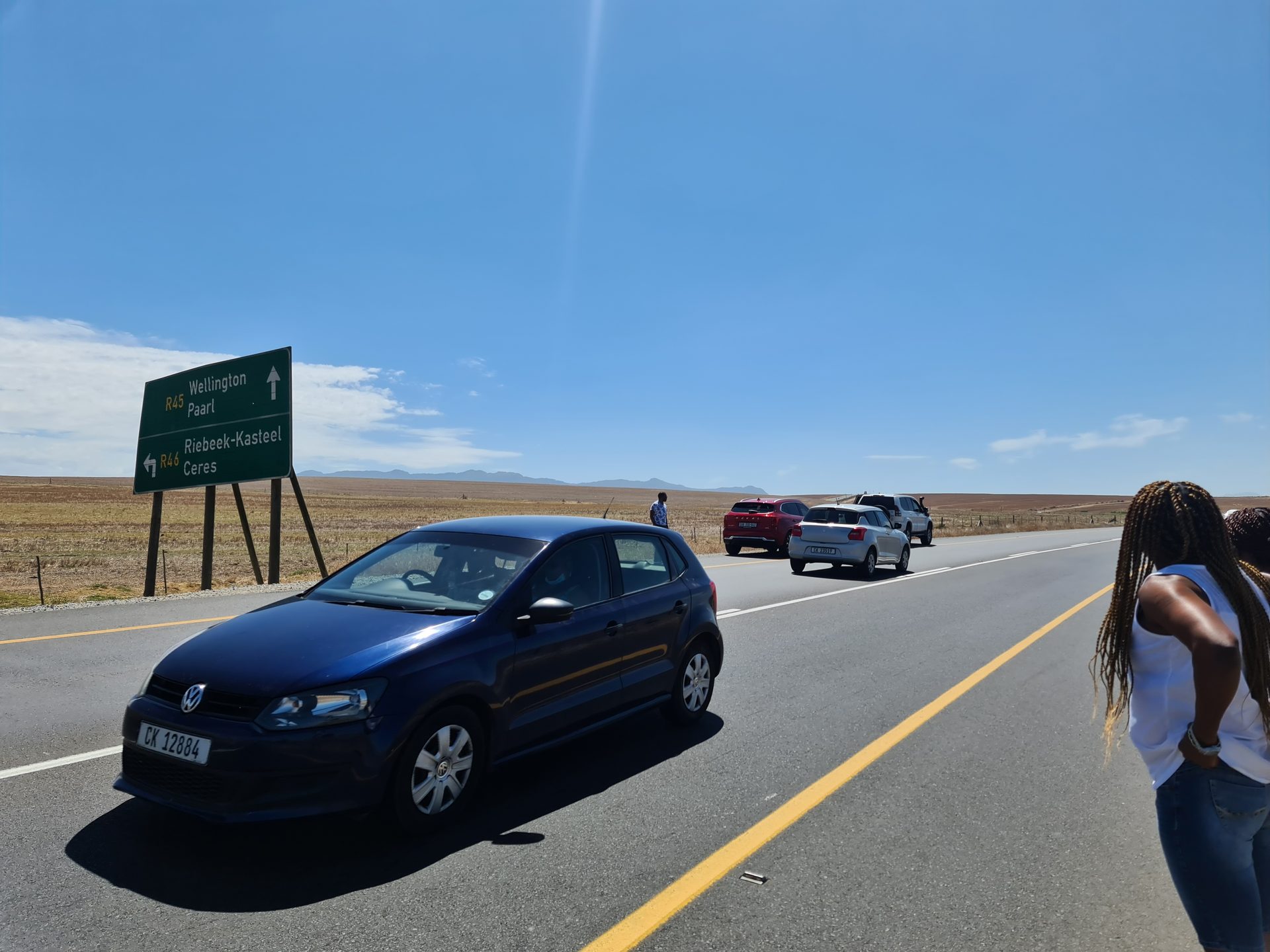
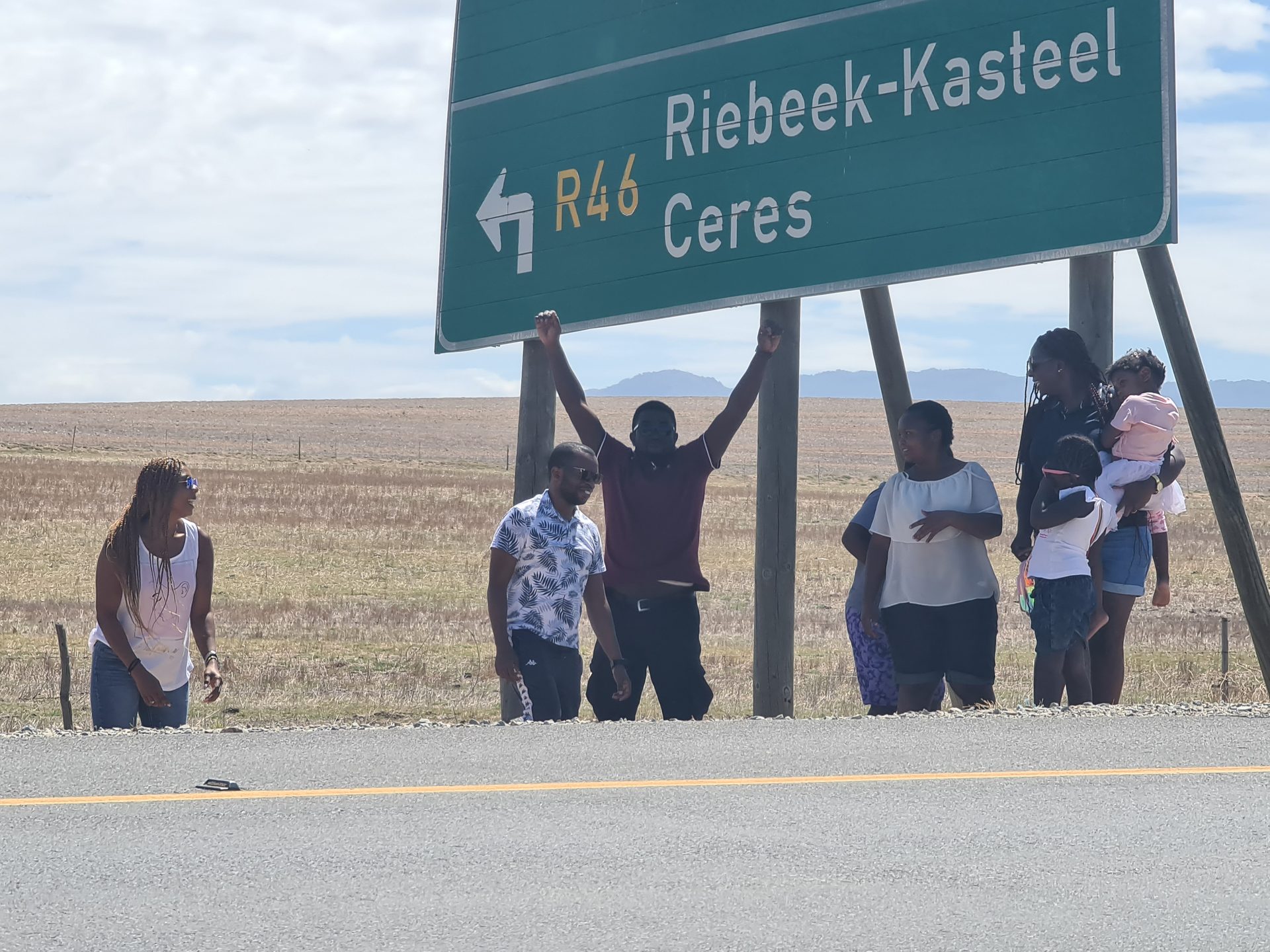
R62
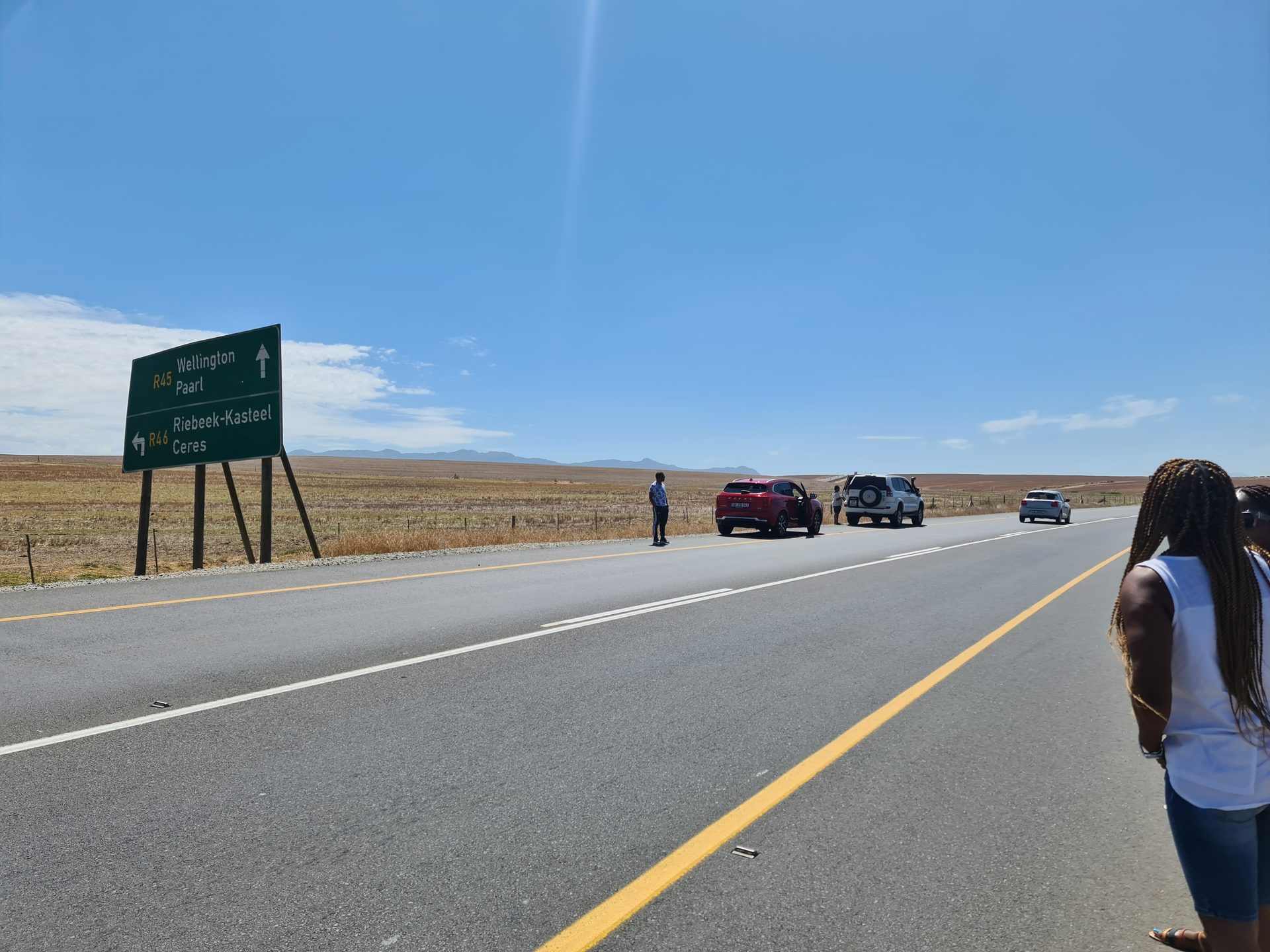
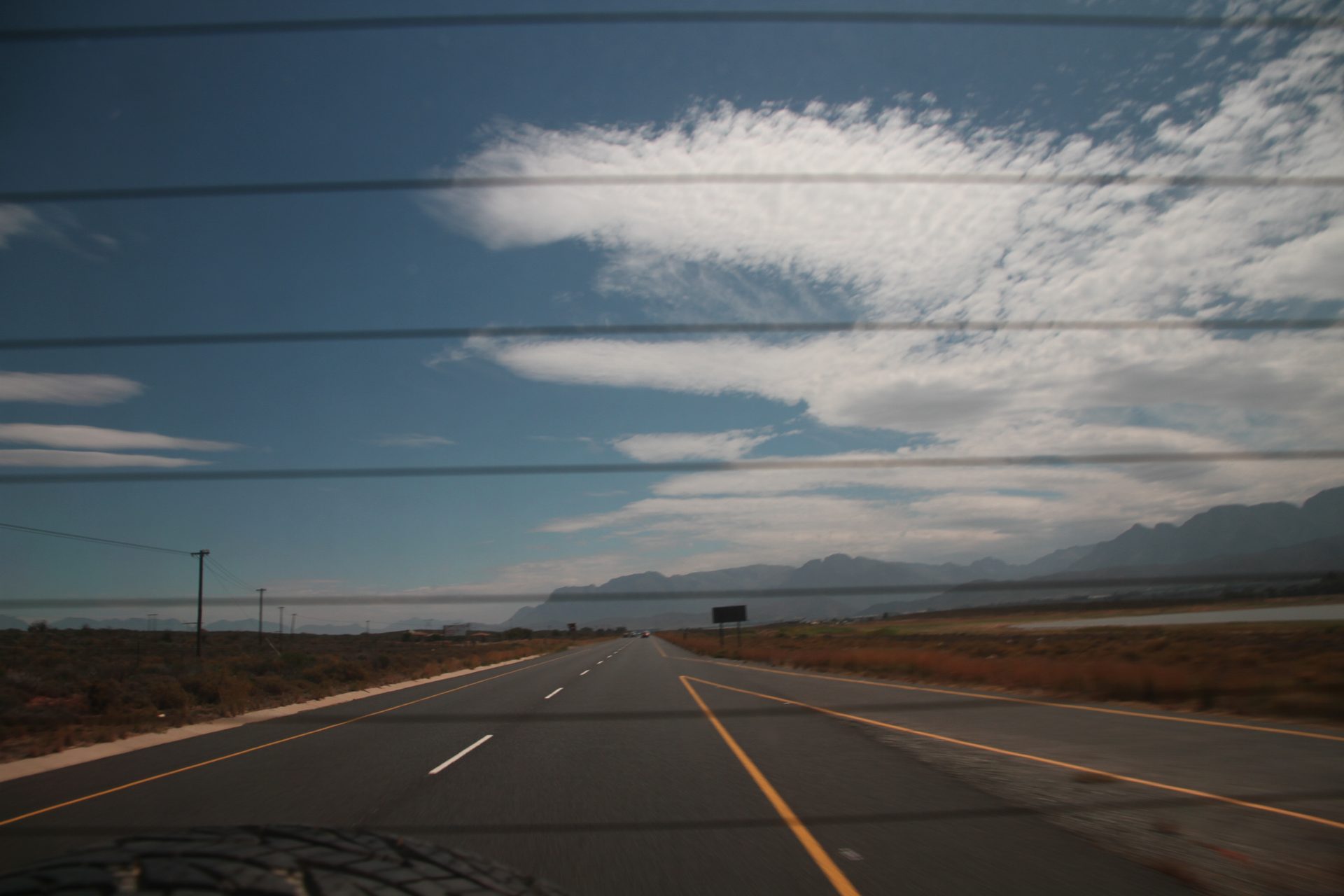
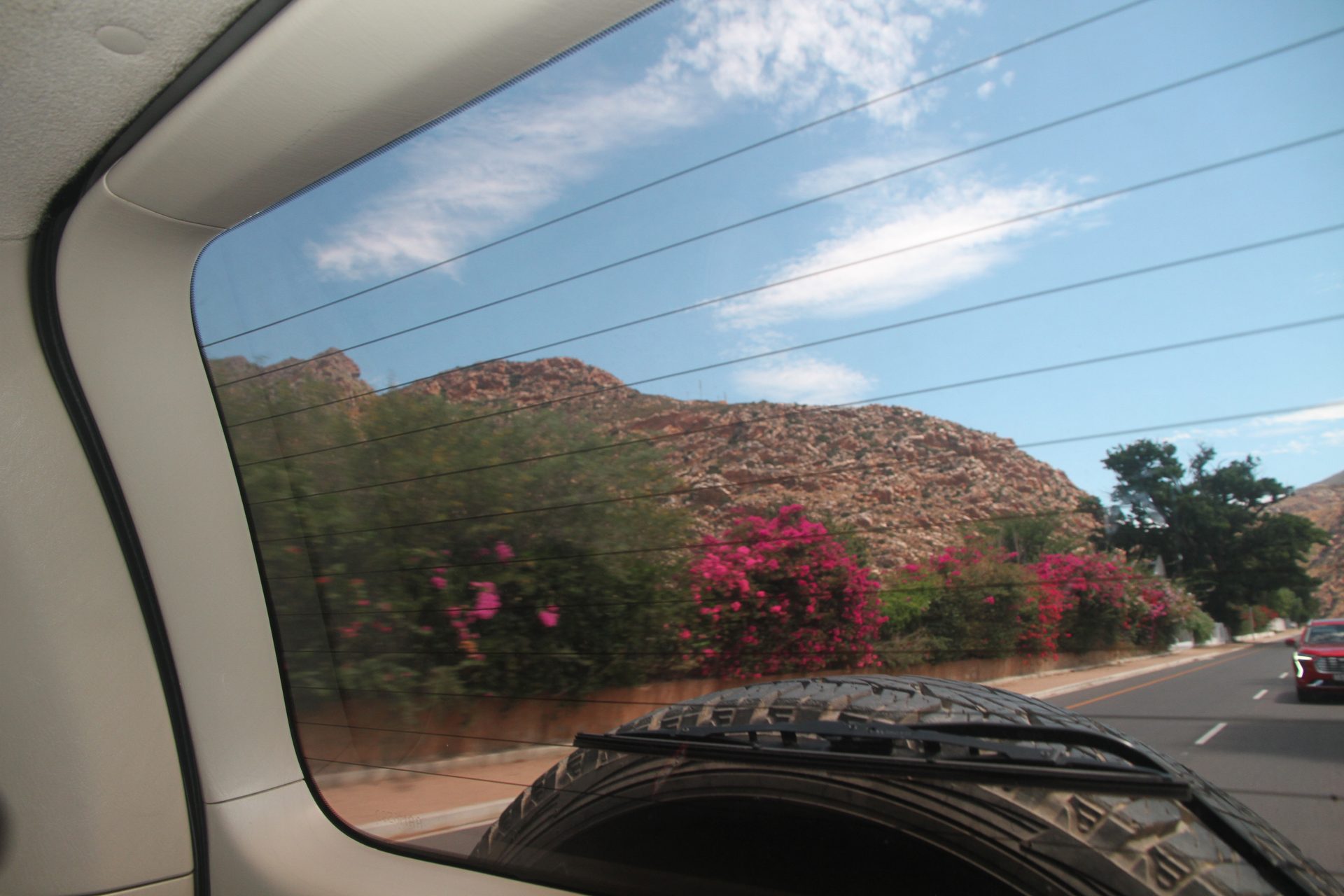
The R62 is one of those roads that doesn’t announce itself. The N1 through the Hex River Valley has that drama baked in — the pass, the mountain walls, the scale of it. The R62 is quieter. It slips through the Klein Karoo without making too much of the scenery, which is how the Klein Karoo works in general. You have to slow down before you notice what’s around you.
We went through the wine towns without any urgency. Robertson. Montagu. Barrydale. The kind of small Karoo towns where the main street has everything you need and nothing you don’t, where a coffee stop turns into a longer conversation than intended because there’s no reason to rush.
The road through Barrydale always feels like the transition point — on one side of it, the valley is lush and green, draped in vineyards and fruit orchards. On the other side, the vegetation thins out and the Karoo starts to assert itself. The road gets a bit more honest. The mountains get a bit bigger.
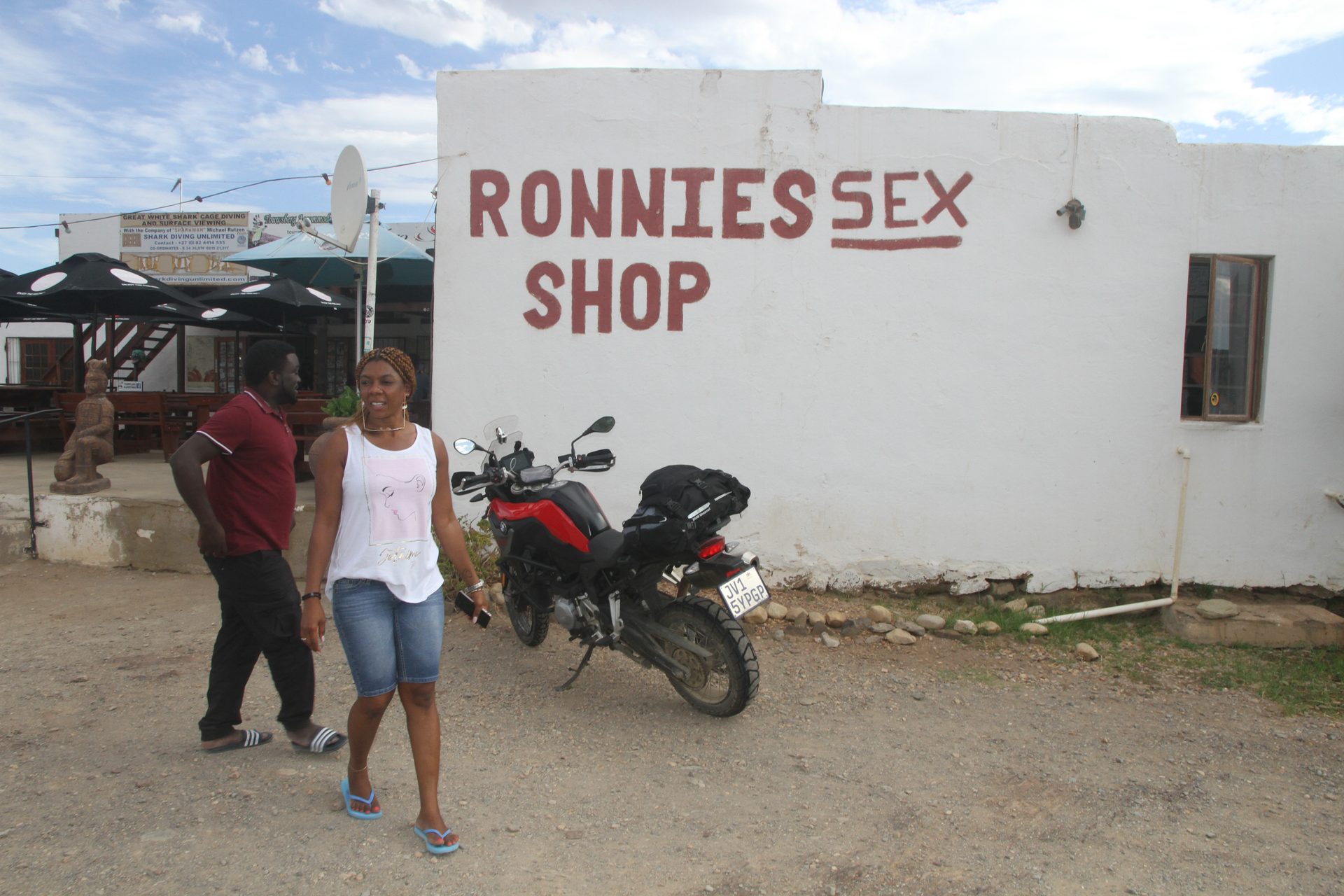
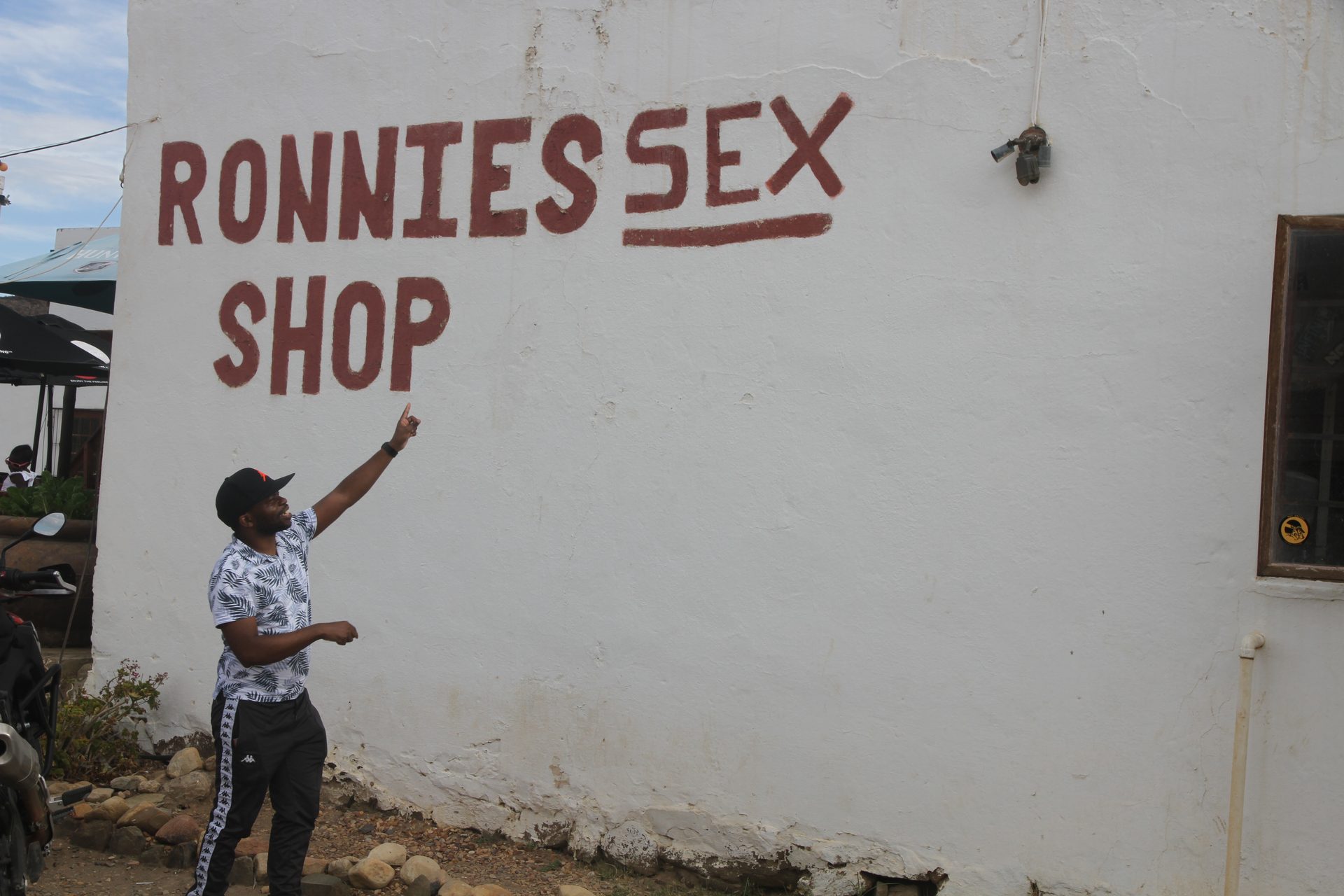
Ronnie’s Sex Shop
If you’re on the R62 between Barrydale and Ladismith and you don’t stop at Ronnie’s, you’ve done the road wrong.
It’s a bar. Just a bar. Out in the Karoo with a hand-painted sign and a reputation that travels faster than most people on the R62. The story goes that Ronnie painted “Ronnie’s Shop” on the wall and woke up the next morning to find his friends had added the middle word overnight. That was in 1982 and he never changed it.
The walls inside are covered in bras. The kind of place that describes itself badly in words but makes complete sense the moment you’re there. It’s dark inside, it’s cold, it’s exactly what you want after a few hours on the R62 in February.
Guano Caves
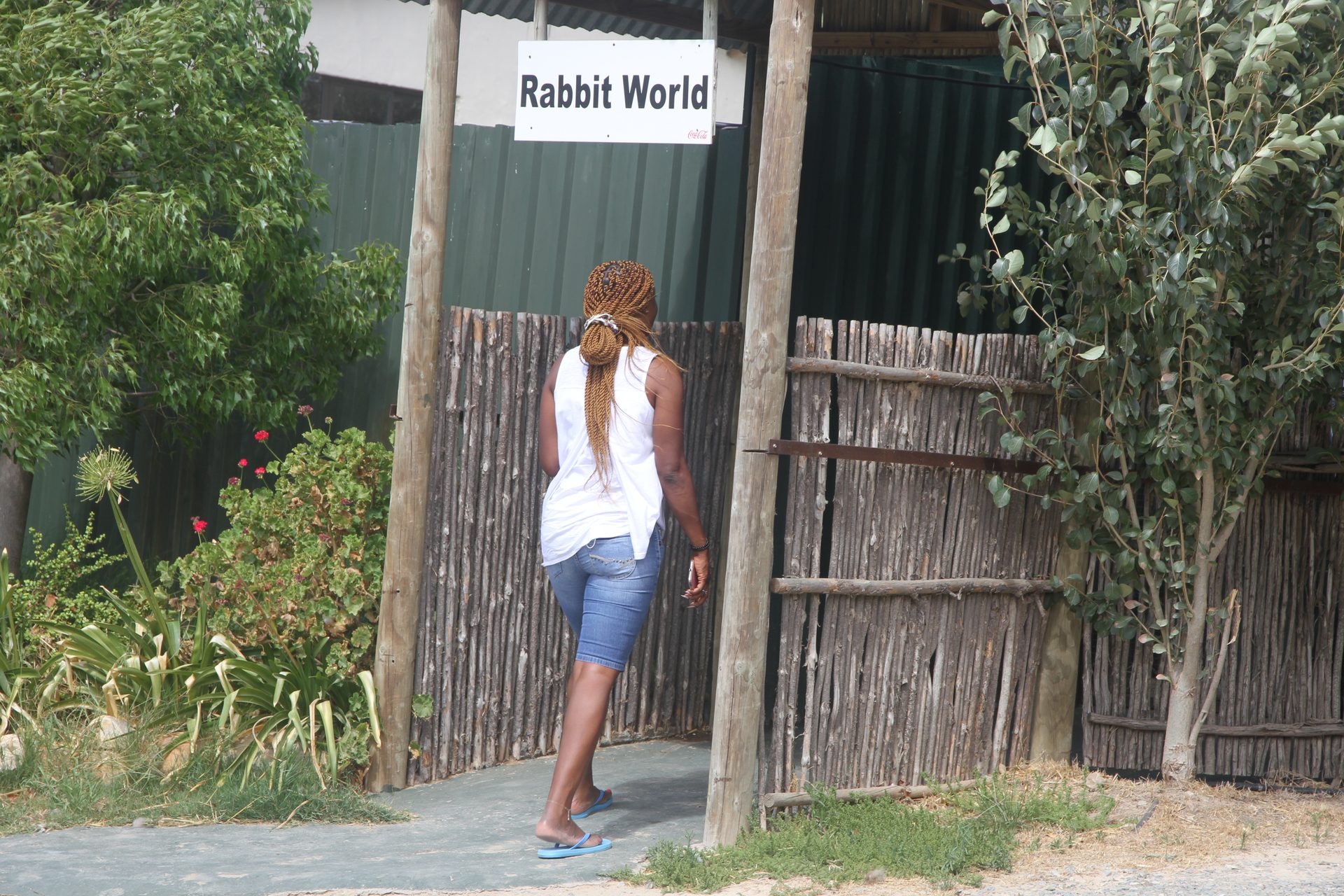
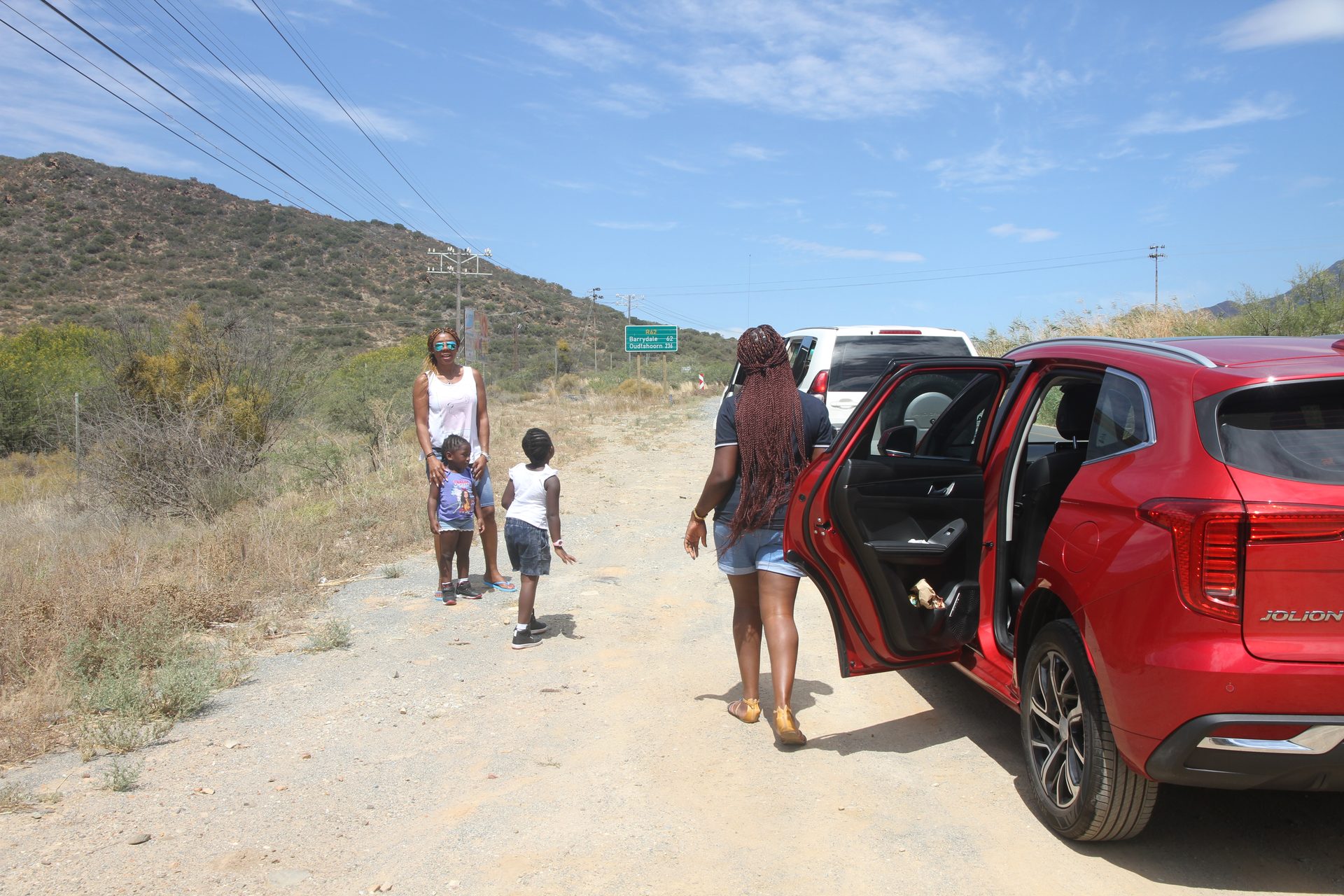
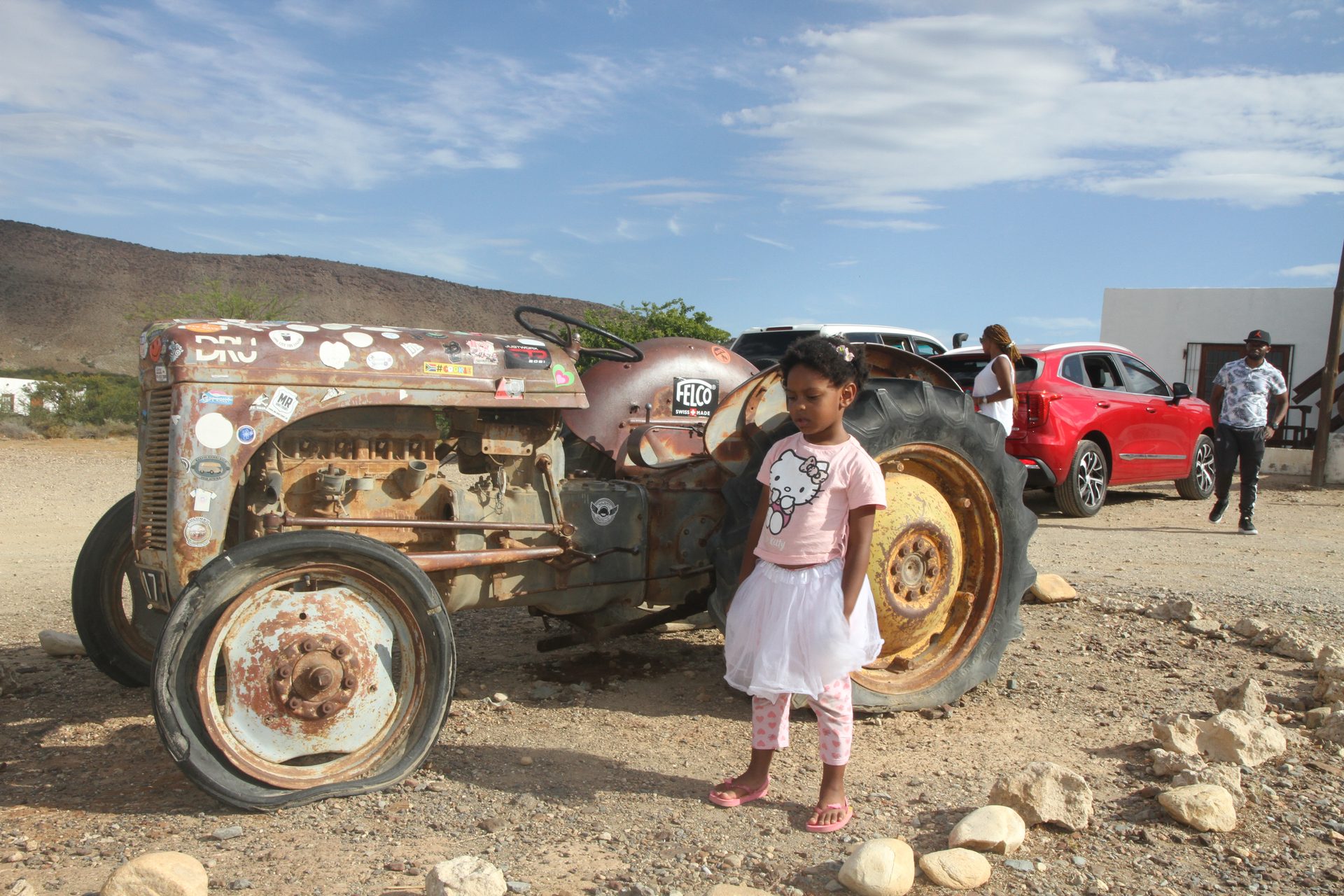
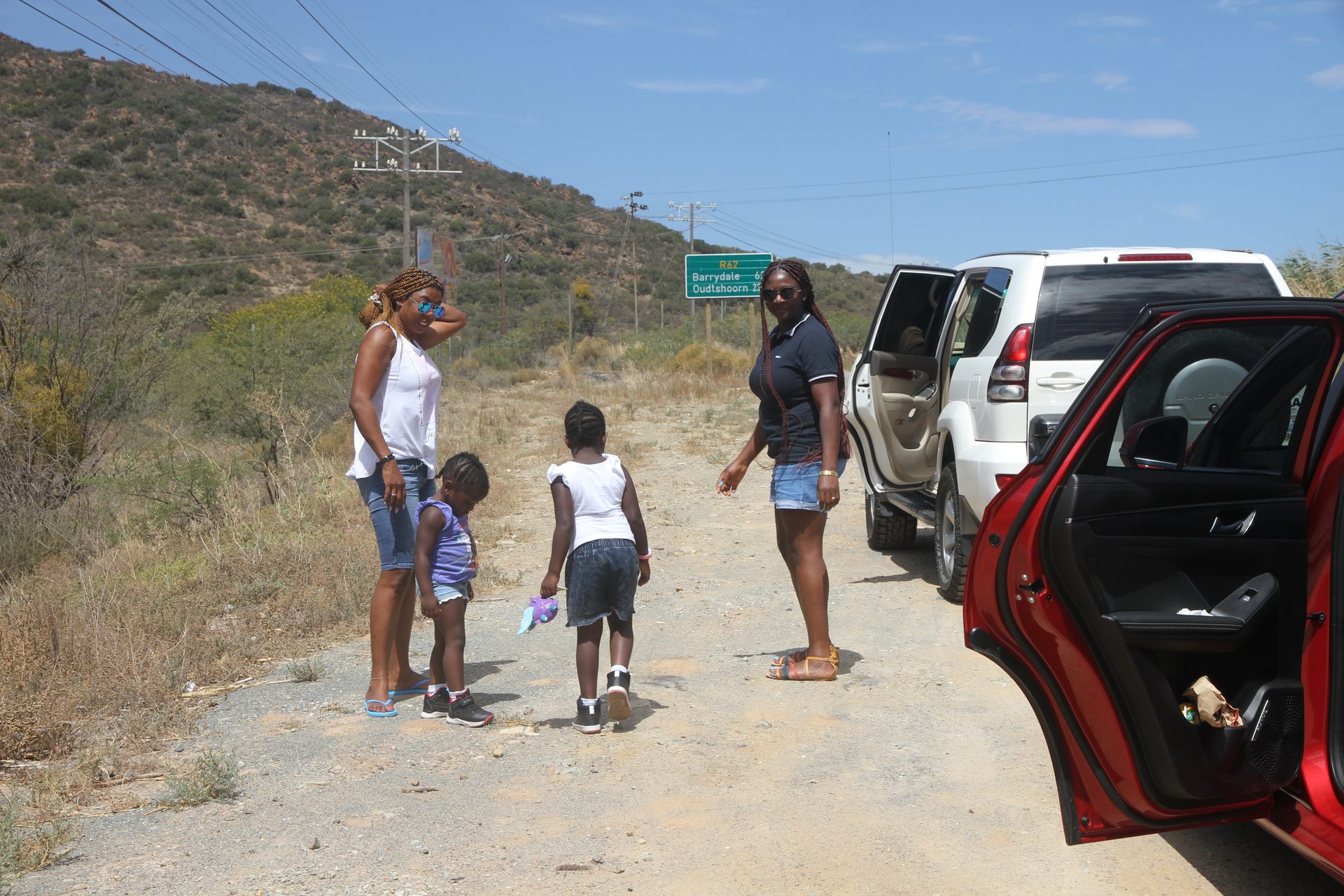
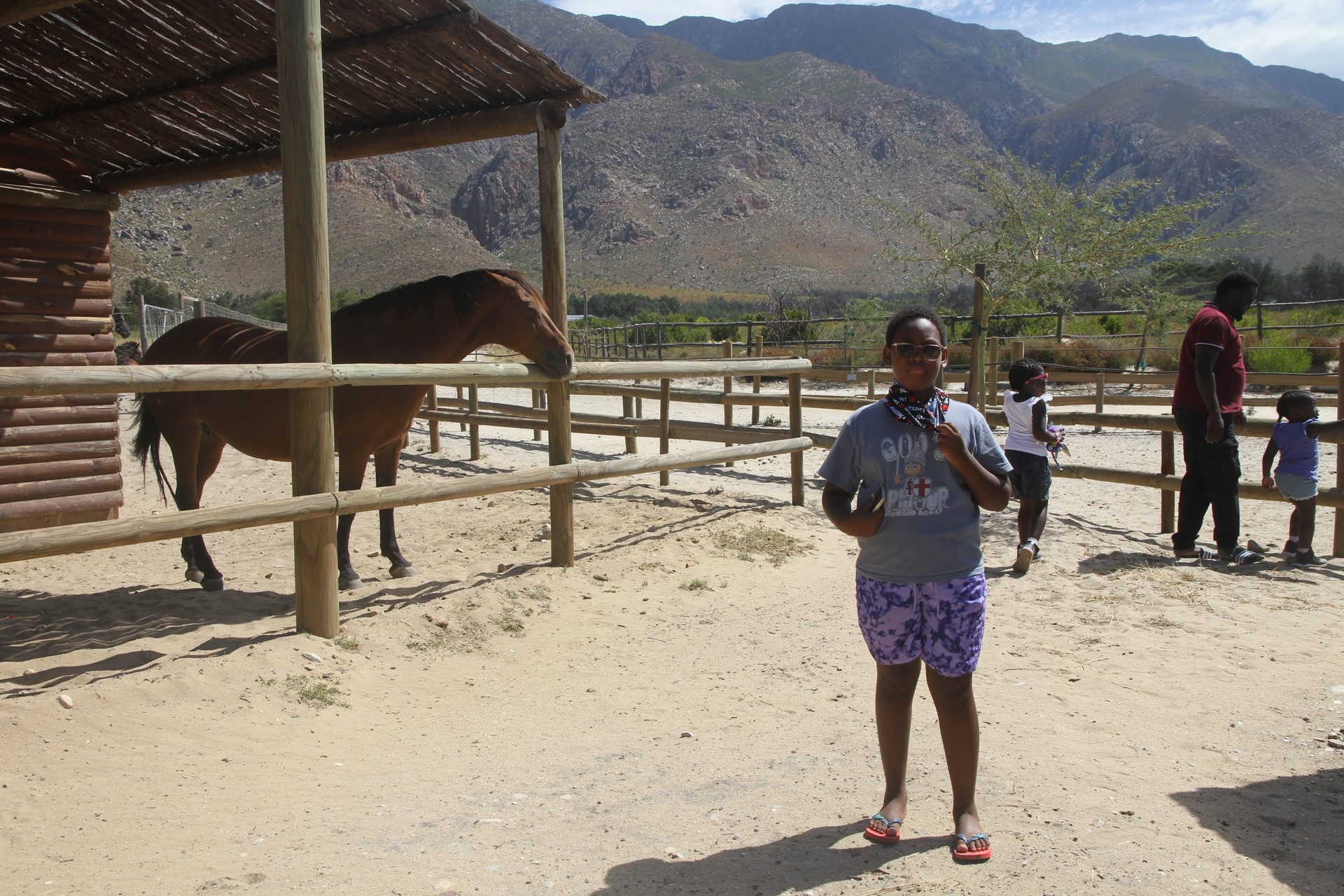
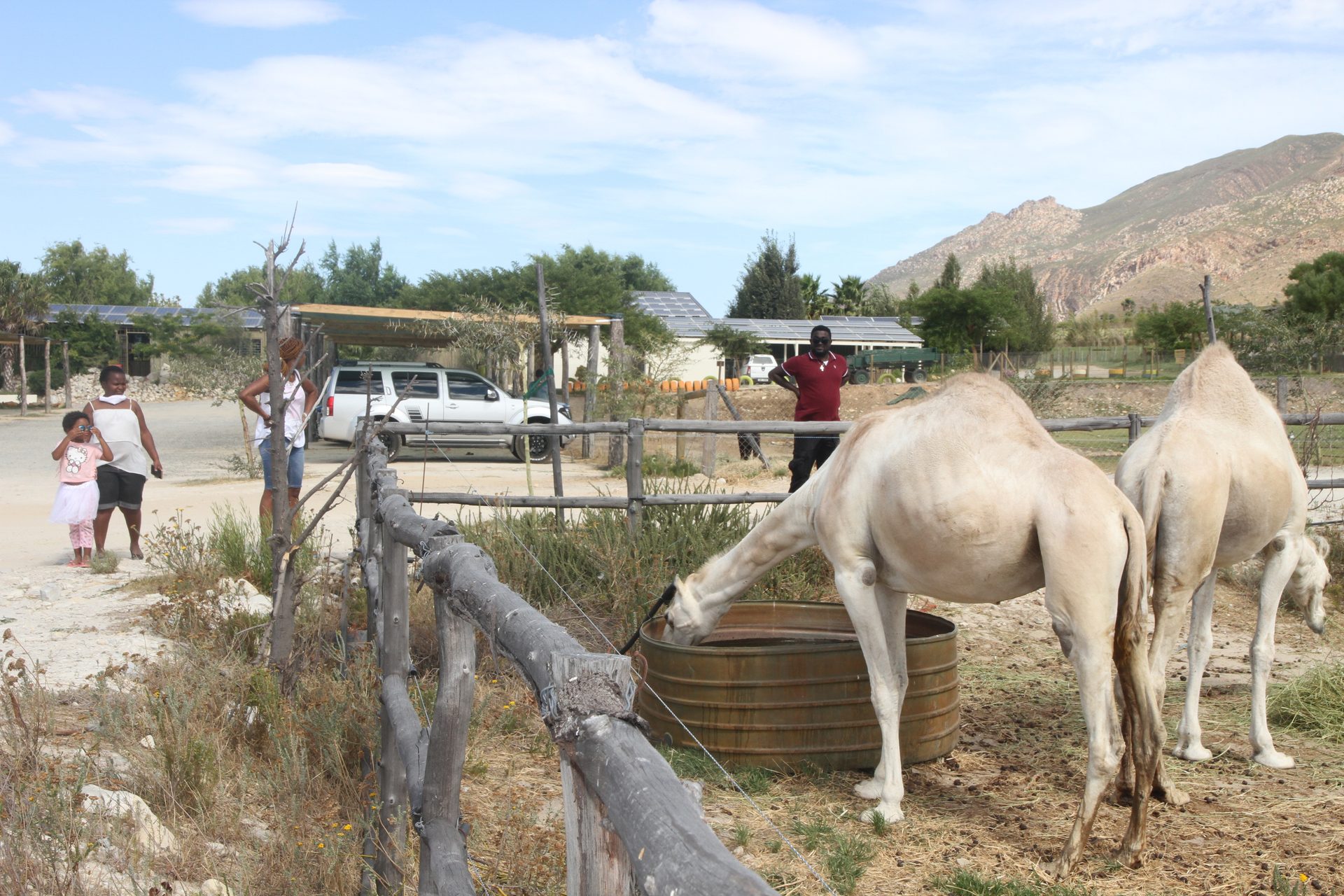
From Ronnie’s the road continues east through Ladismith and Calitzdorp toward Oudtshoorn. First stop in the area was the Guano Caves — smaller and less famous than the Cango Caves nearby, but with something Cango doesn’t have: animals on the grounds. Ostriches with strong opinions about personal space. A horse that had clearly been photographed before and was not particularly impressed by the audience.
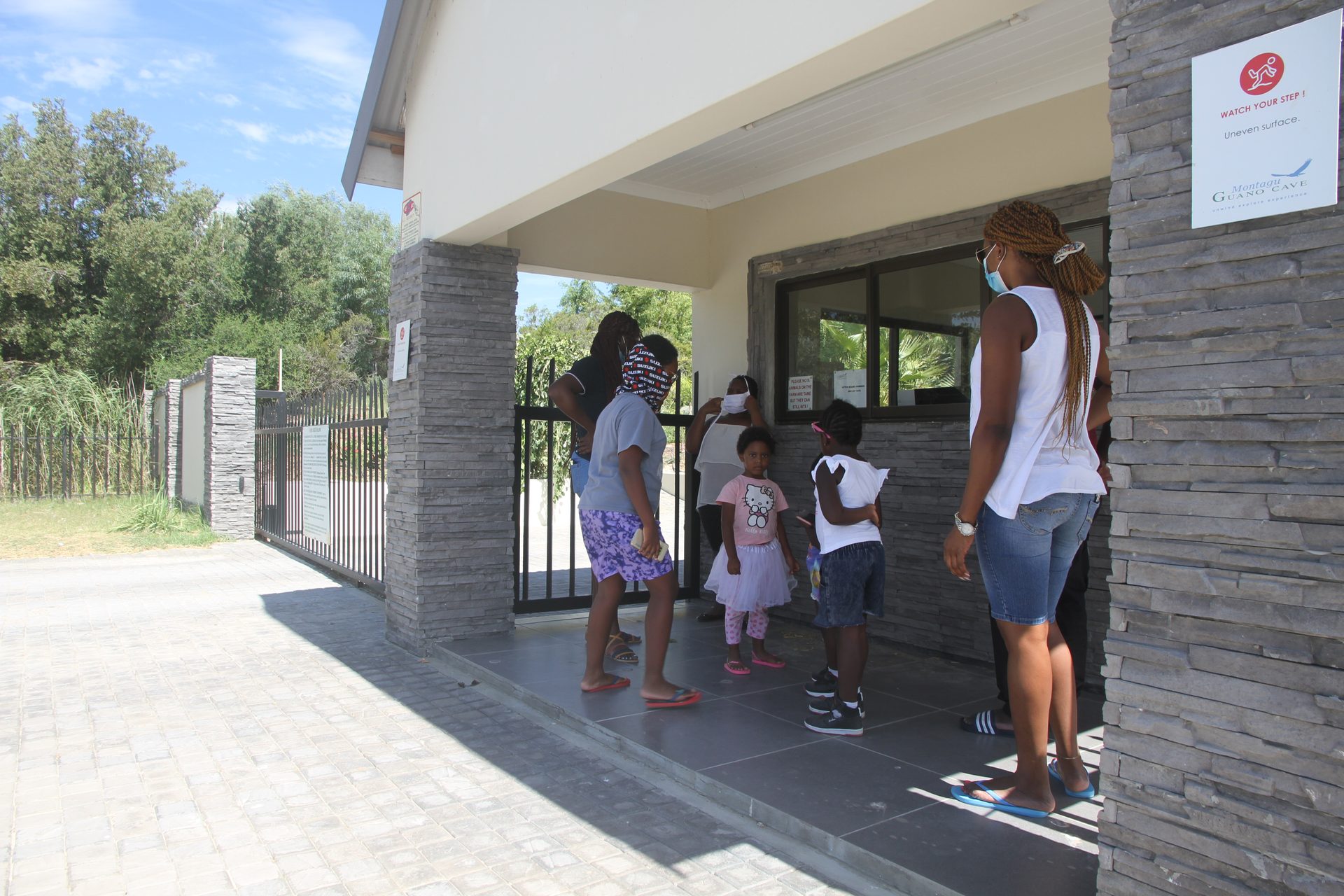
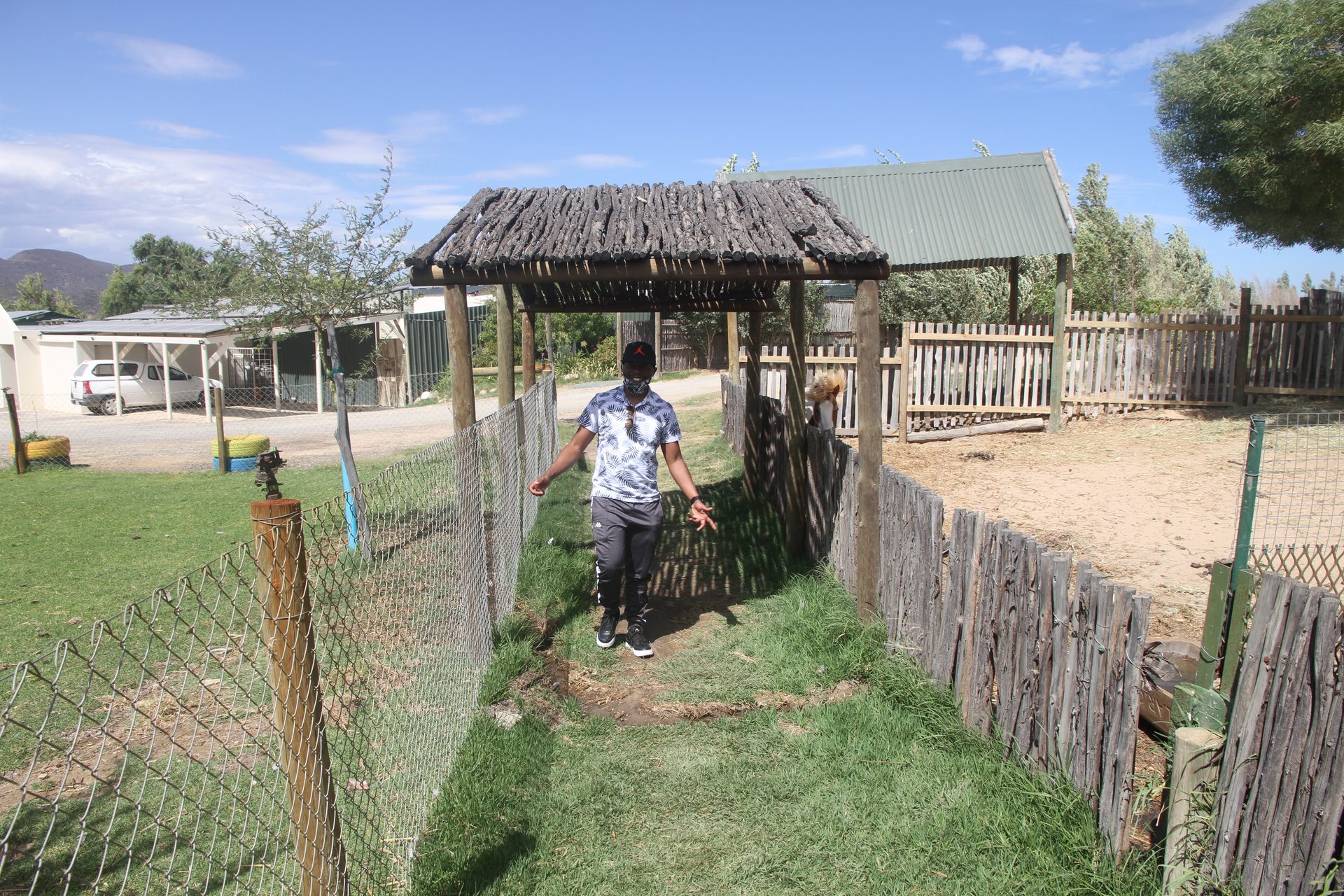
The cave itself is smaller and quieter than Cango, which isn’t a criticism. Formations do what formations do regardless of how famous the cave is.
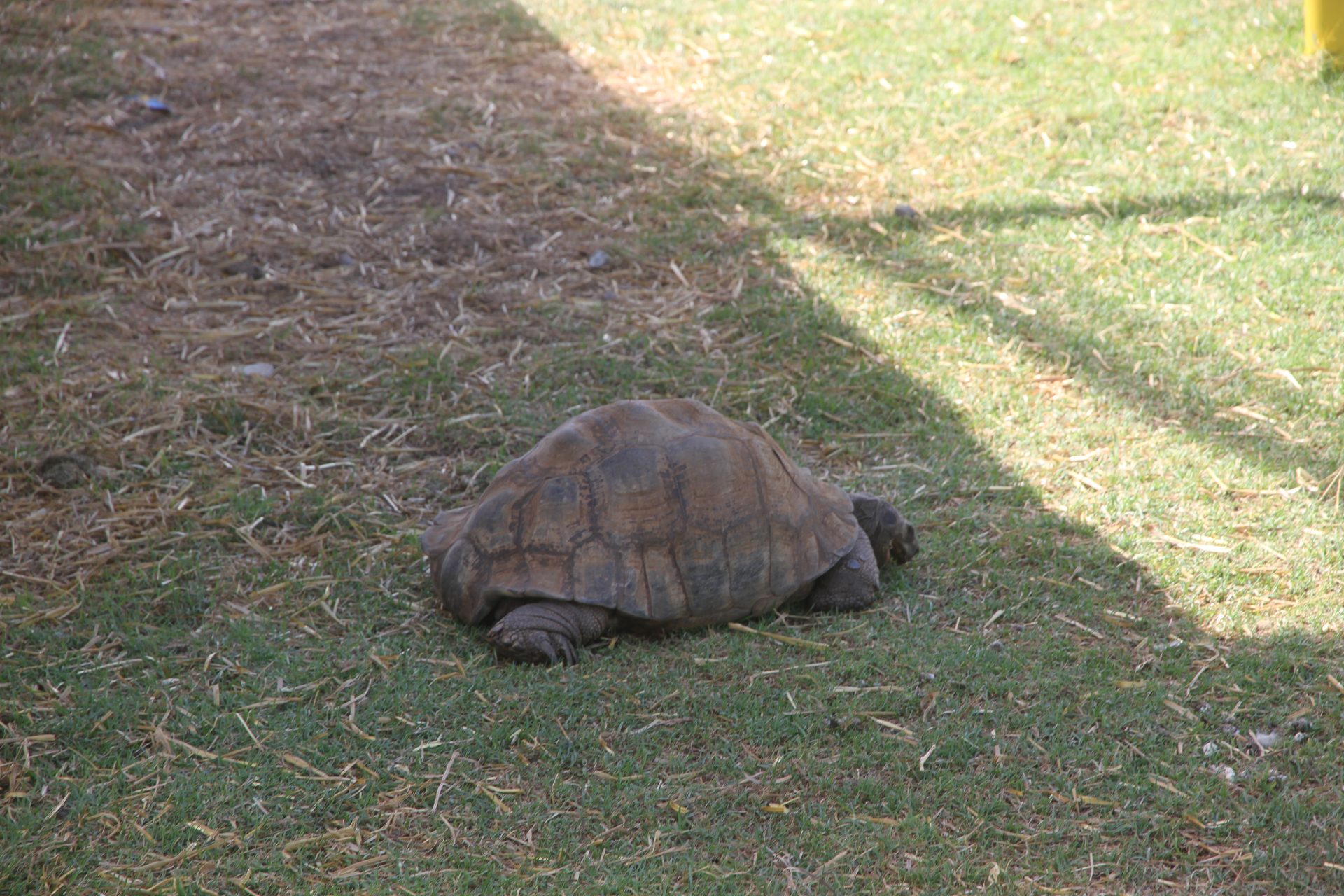
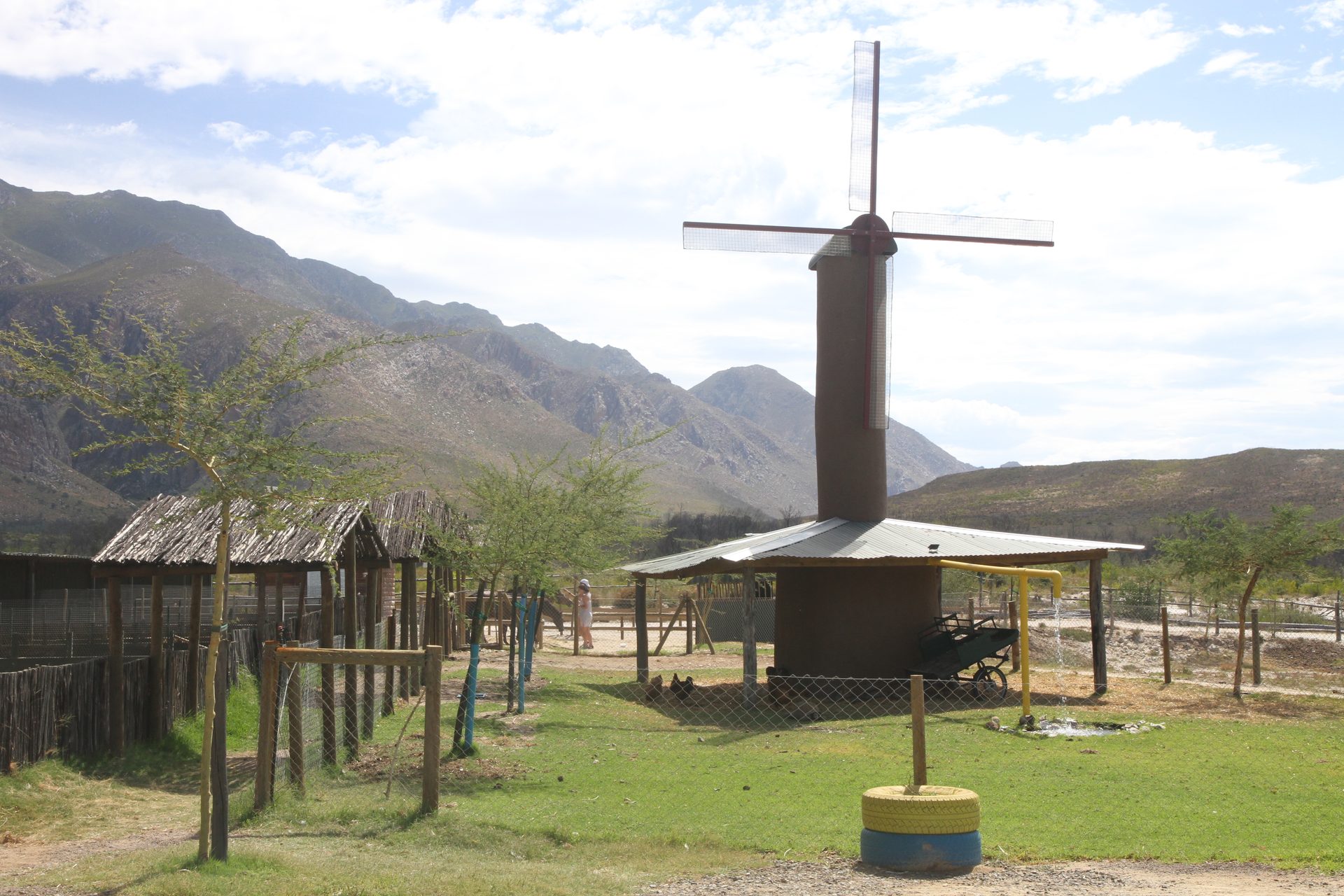
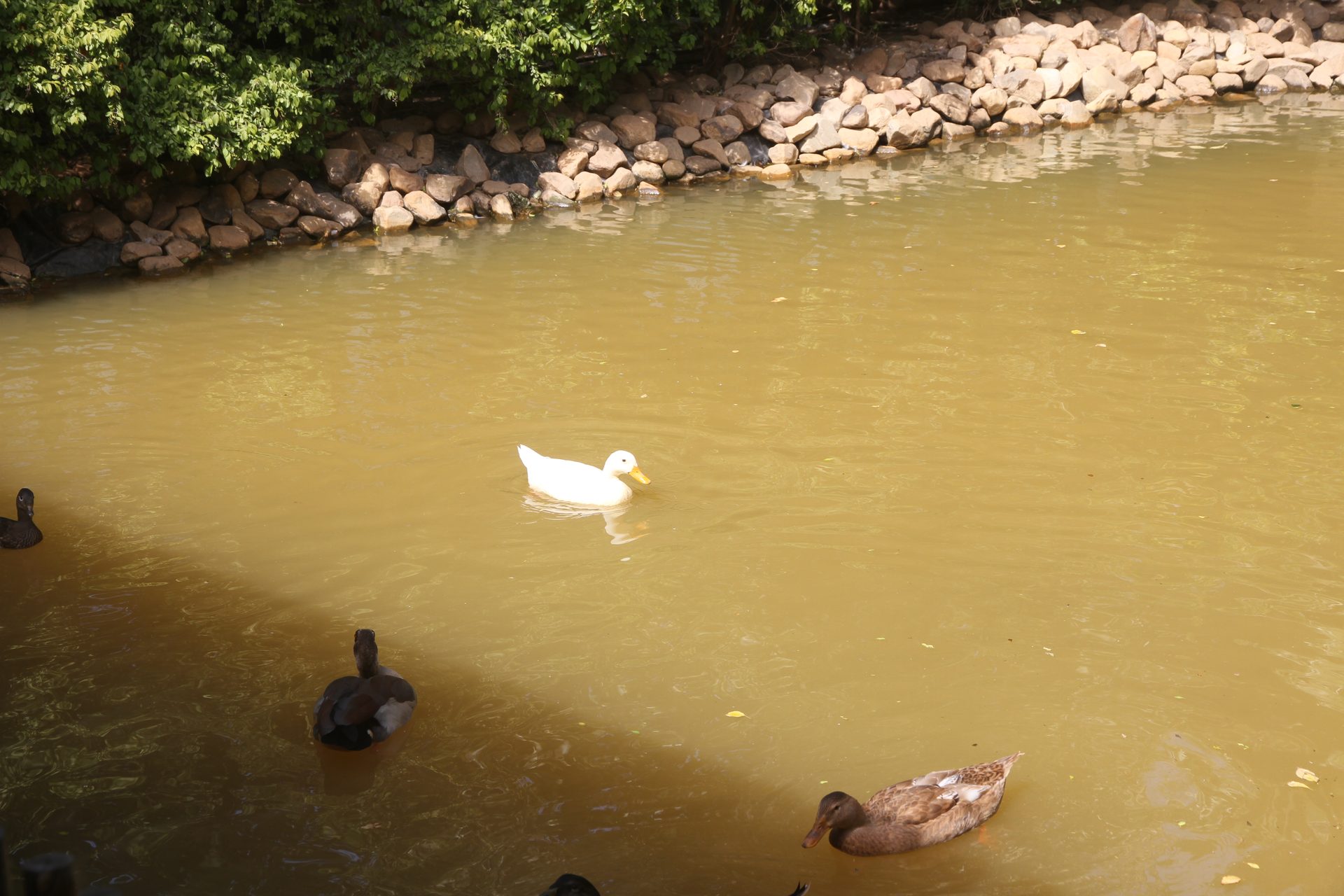
Done. Next stop: see if Cango was still open.
Cango Caves — After Hours
It wasn’t. We pulled up to the Cango Caves entrance and found it closed for the day. The camel ride attraction down the road had also already wrapped up.
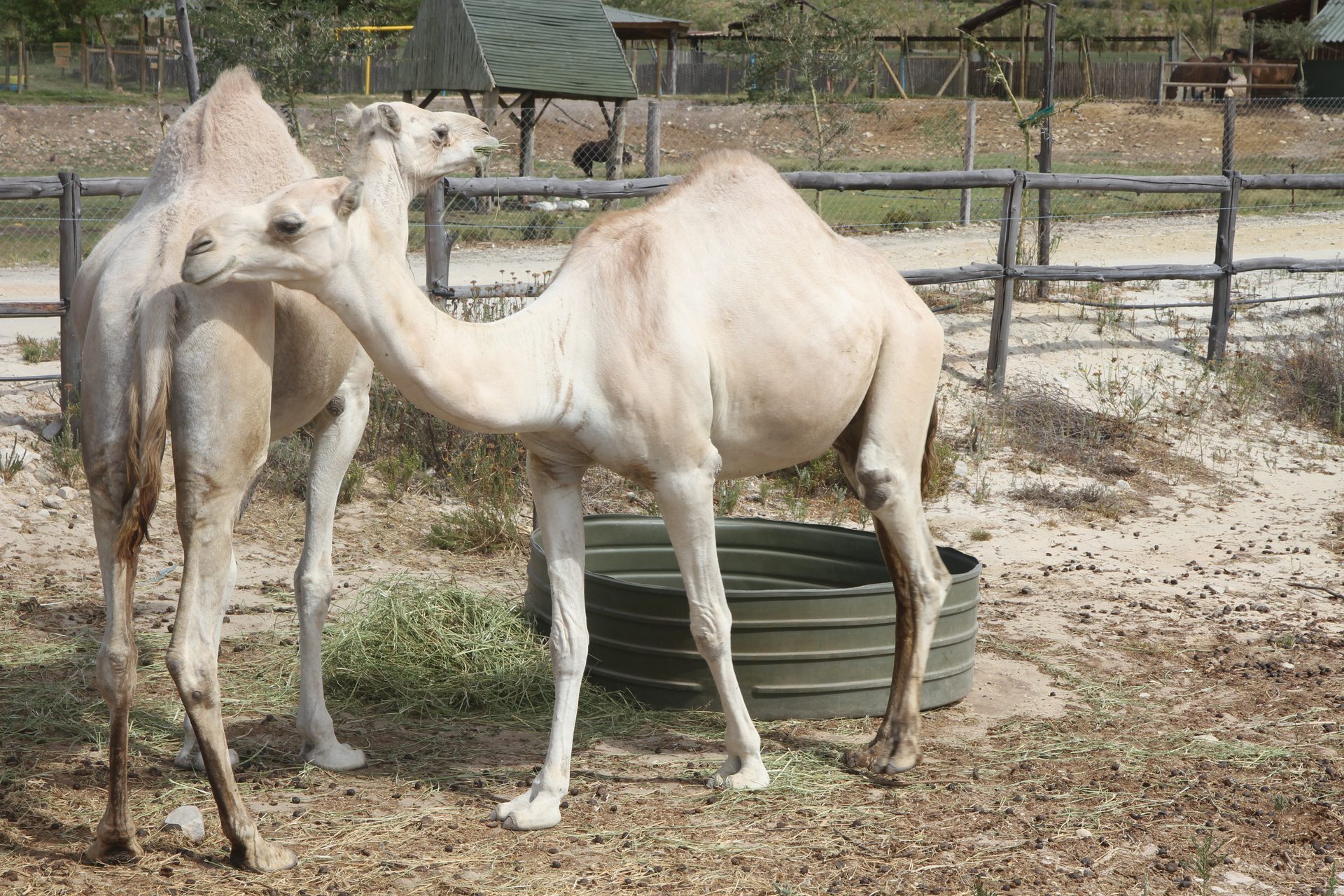
Two for two. There wasn’t much to do except accept it and point the vehicles at the Swartberg, which was about an hour away and doesn’t have a closing time.
Swartberg Pass — At Night
Here’s the part nobody planned.
We love the Swartberg Pass. It’s one of the passes we keep coming back to — the gravel, the scale, the way it sits in the mountains with no apology for being as dramatic as it is. We’d driven it before, in daylight, with time to stop and take photos and feel appropriately small.
We had not driven it at night.
That wasn’t a decision we made. The afternoon took longer than expected — in the good way, the way afternoons do when you’re not watching the clock. By the time we were pointing back towards home and it became clear the Swartberg was the route, the sun had already set.
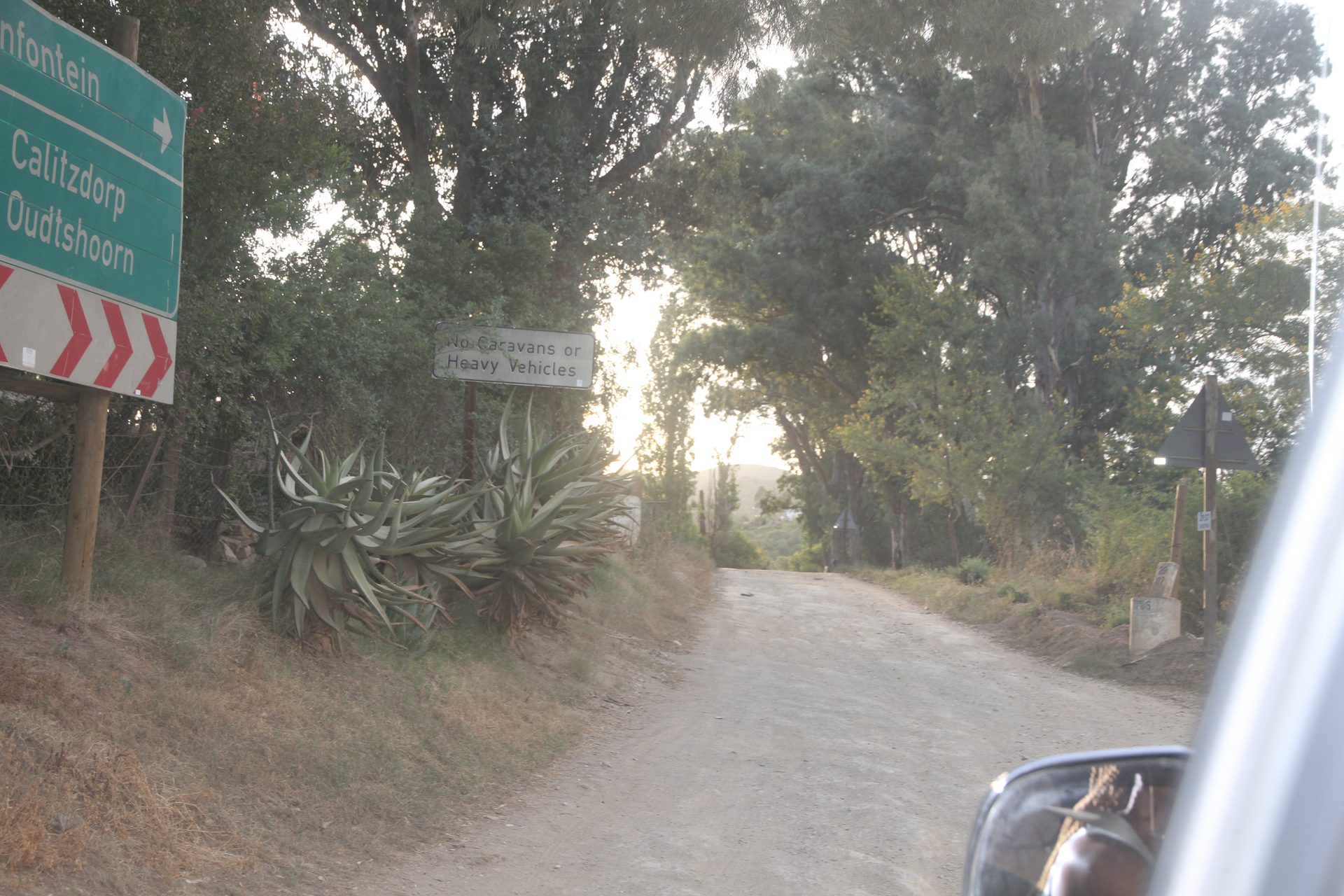
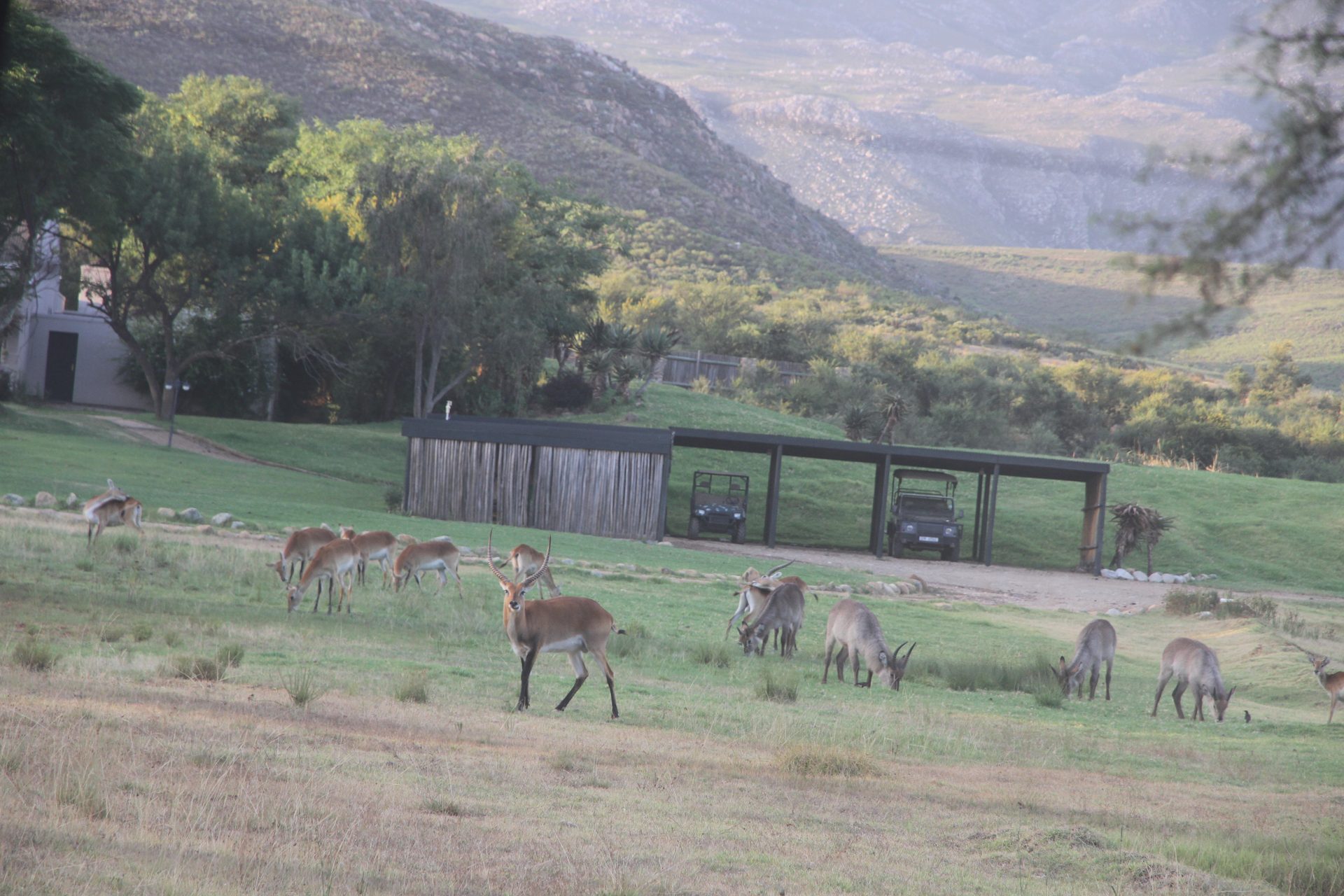
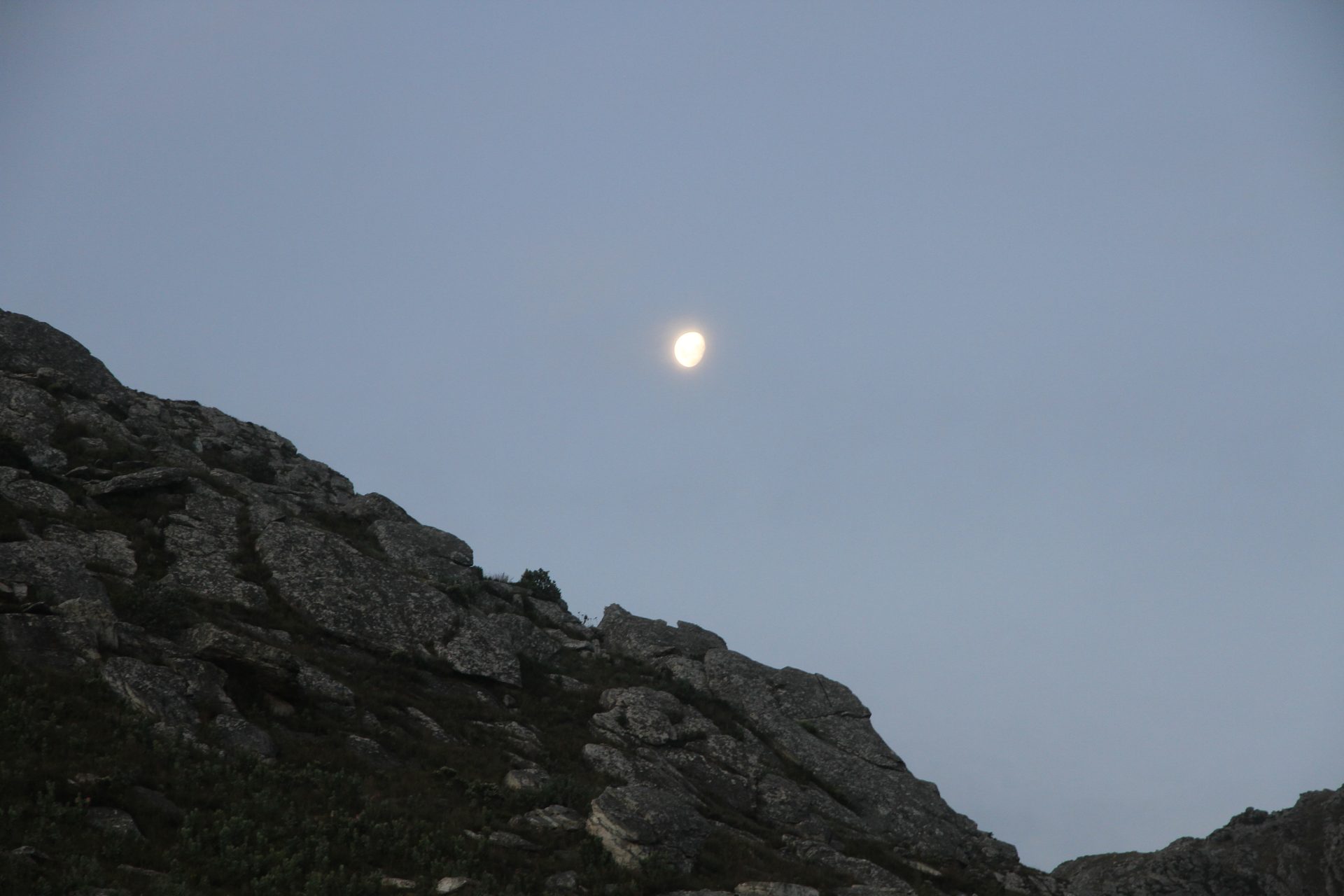
It’s a different pass at night. During the day, the height registers visually — you can see the valley below, the drop off the edge, the distance you’ve climbed. At night, your headlights give you about fifty metres of gravel and rock wall, and the rest is dark. You know you’re high. You know the drop is there. You can feel it in the road and hear it in the way the wind moves differently when there’s nothing on the other side of the verge. But you can’t see it.
It should be more frightening. It isn’t, quite. It’s quieter. More focused. The pass demands your attention during the day too, but at night it takes all of it.
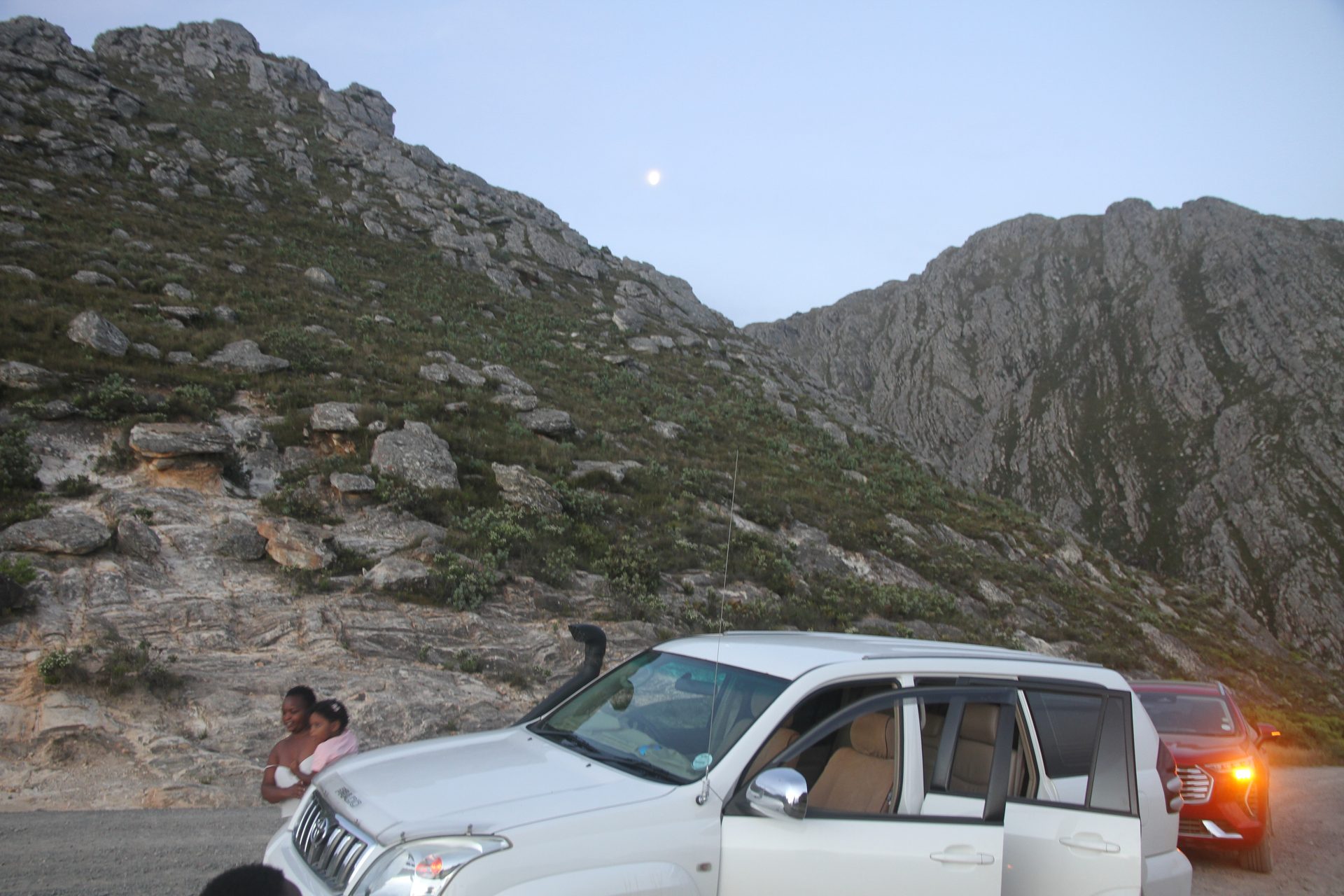
We drove it slowly. Not because we were nervous, but because there’s no reason to be anywhere fast at the top of the Swartberg at night. The gravel was good, the road was quiet, and we had the whole pass to ourselves.
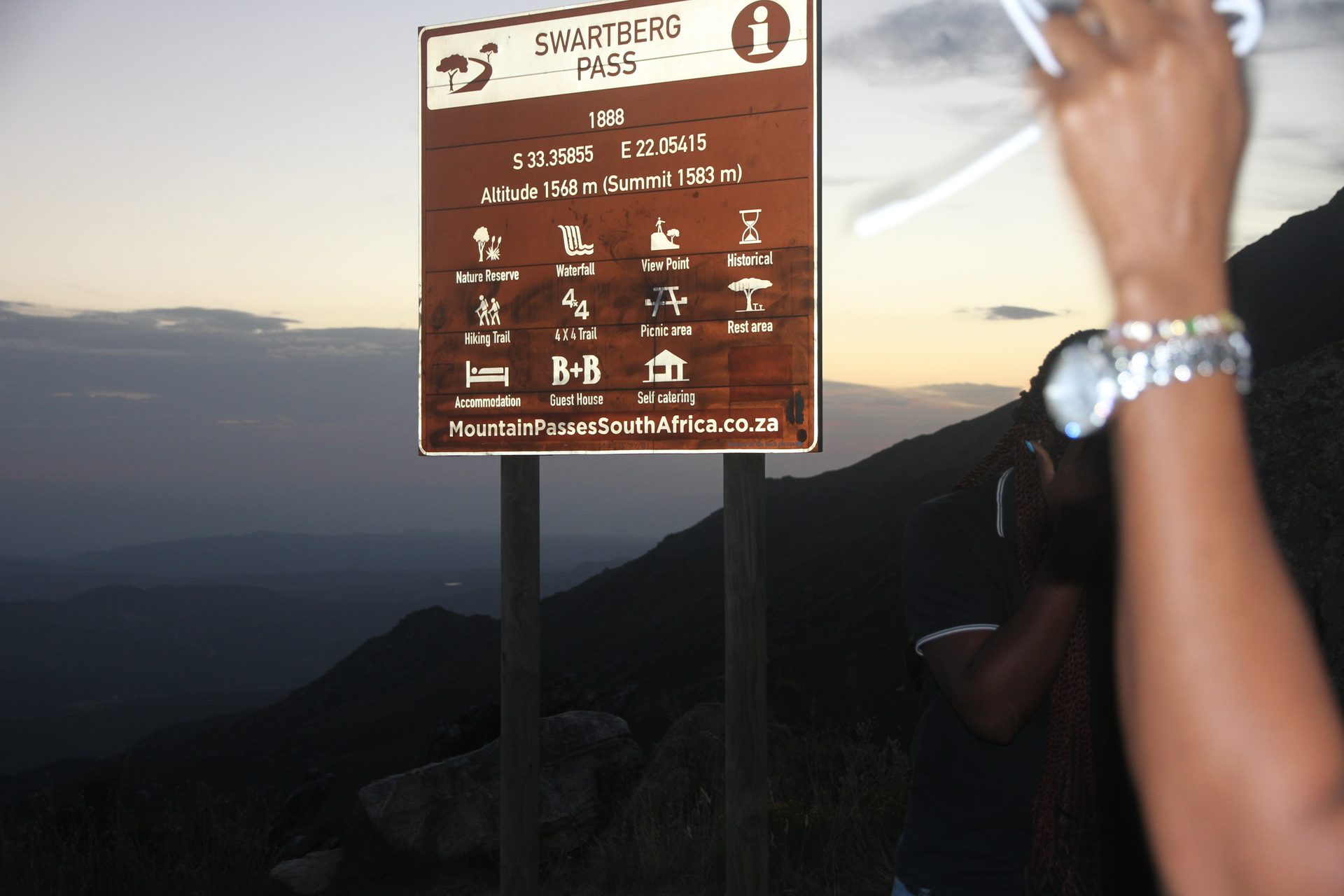
The Descent
Coming down the Prince Albert side of the Swartberg in the dark is its own experience. The town lights below give you a reference point for how high you still are, and then they disappear as you wind through the lower switchbacks and the rock walls close in again.
By the time we rolled into Prince Albert, found something to eat, and pointed the vehicles towards home, it was well past when anyone would have predicted we’d be back.
That’s the thing about trips with no plan. They end when they end. The route was the trip, not a means to a destination — and the Swartberg Pass at night turned out to be the kind of thing you wouldn’t have thought to put on an itinerary but won’t forget either.
We’ll do it again. Probably planned next time. Probably not.