This trip needs context.
Sarabi had been running without a roof tent for long enough. We had the trailer — solid, dependable — but the roof tent was always the next thing on the list. There was a window: drive up to Johannesburg, visit Front Runner, get the brakes sorted at Toyota Sunninghill while we were there, and come back properly kitted for the first time. Not just a vehicle trip. A fitment trip.
That’s how we ended up leaving Cape Town on a Sunday night with both tanks full — ninety litres each, one hundred and eighty litres total — pointed north on the N1.
Night One — Cape Town to Johannesburg
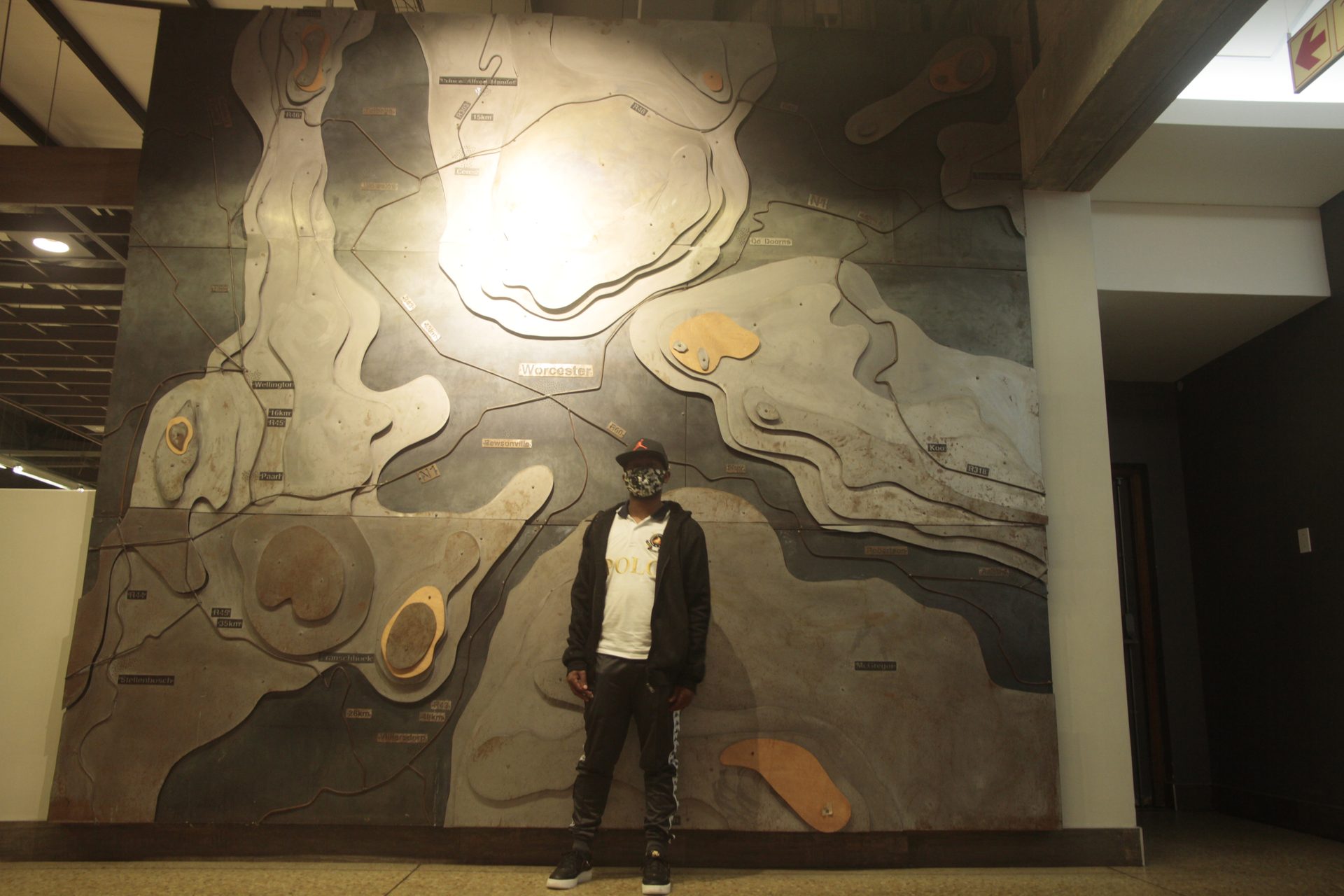
Leaving late is deliberate when you’re doing the Cape Town to Joburg run. The city traffic is dead by nine o’clock and the N1 opens up properly once you’re through Paarl. We fuelled in Worcester first — topped up what we’d already used, confirmed both tanks were full — and then the Hex River Valley folded in behind us and the Karoo began.
The N1 at night through the Klein Karoo and into the main Karoo is a particular kind of drive. It’s one of South Africa’s longest stretches of national road and it doesn’t apologise for it. You settle into the rhythm. Coffee from a flask. The instrument panel. The occasional set of eyes at the roadside catching the headlights for a moment and then disappearing back into the dark. Red Karoo gravel on the shoulder. The road just keeps going.
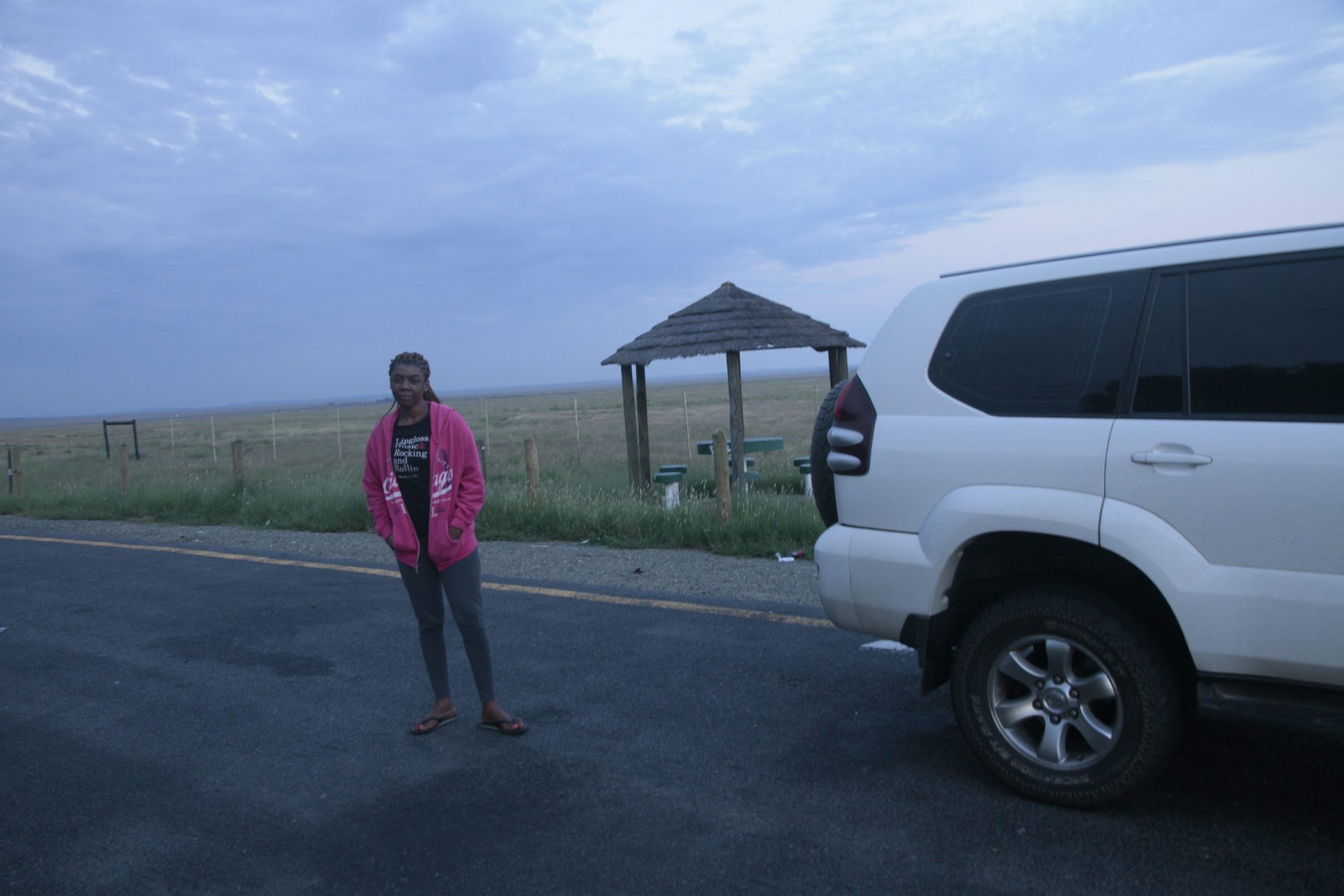
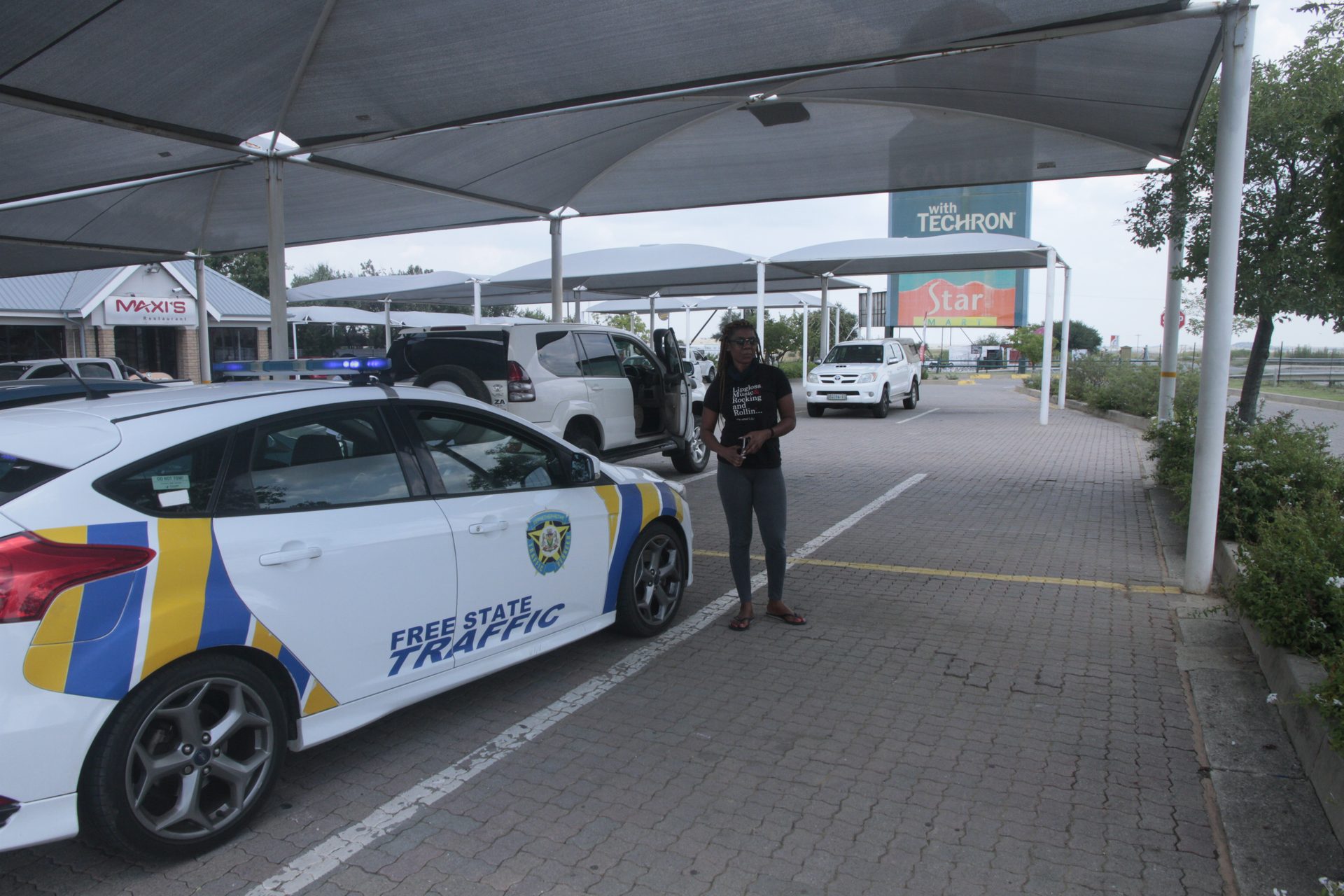
We crossed into the Northern Cape in the middle of the night, then briefly into the Free State somewhere around Colesberg. That’s where we stopped — a service station, enough light to see properly, enough space to stretch, swap drivers, and drink something warm before the final push.
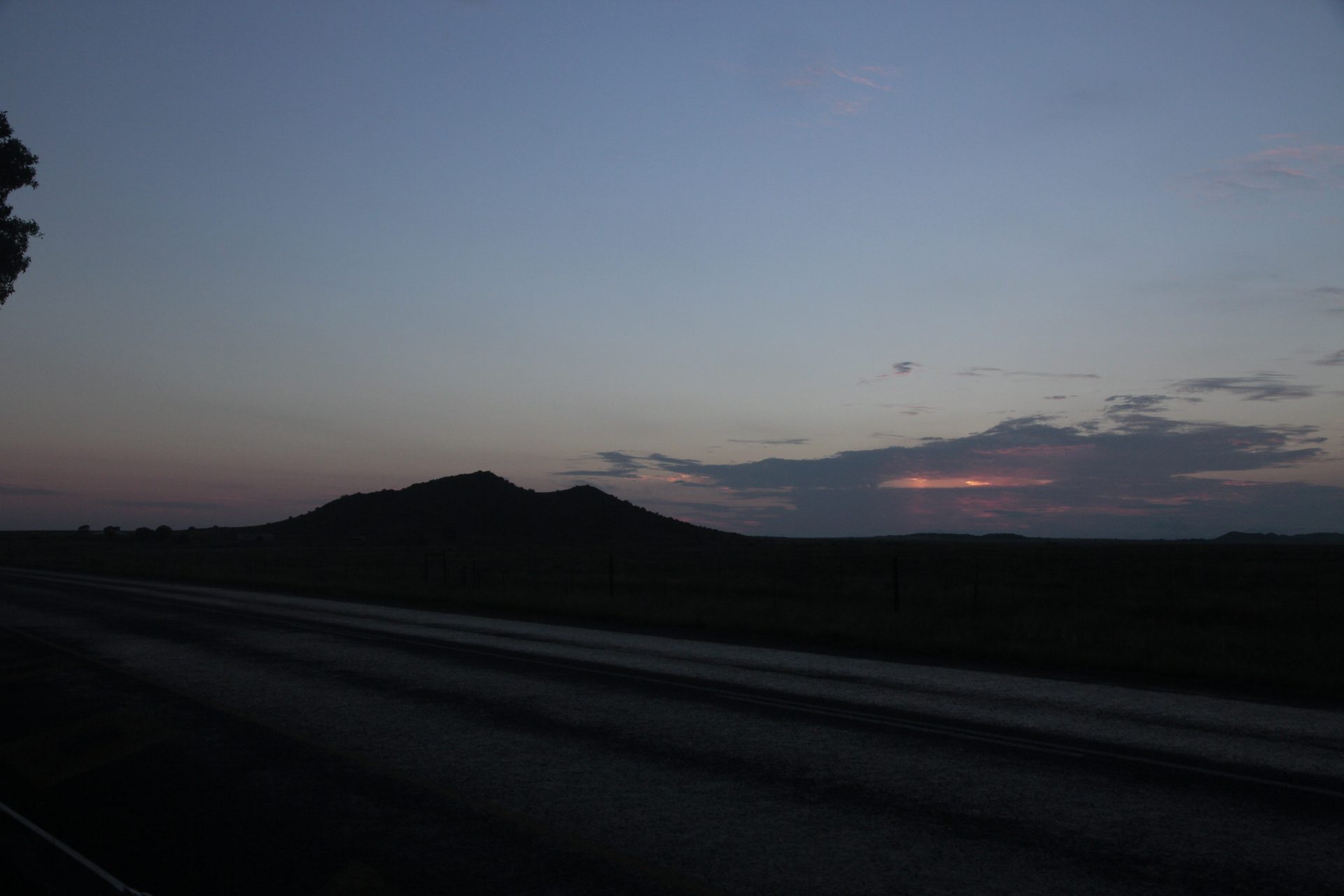
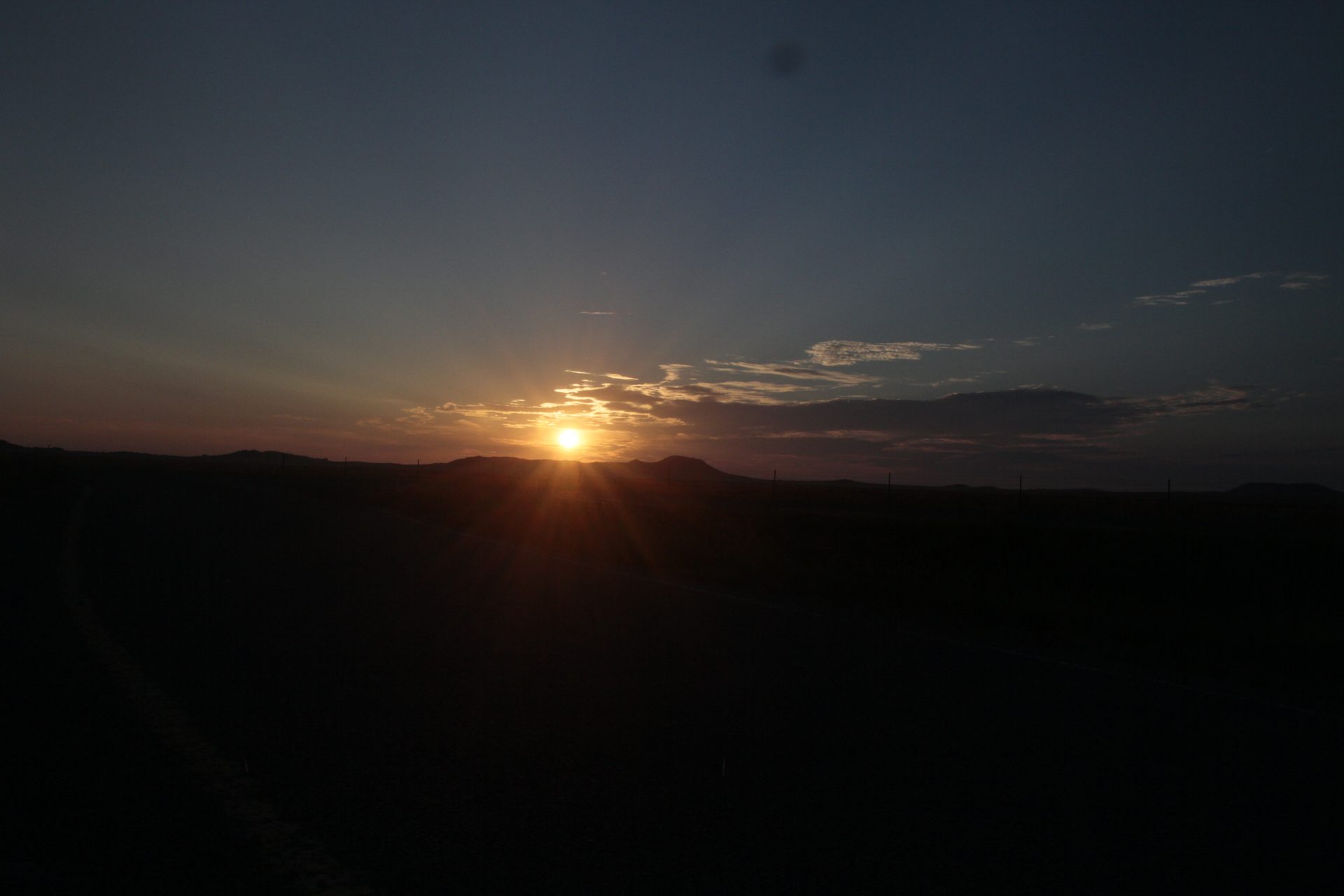
The Highveld sunrise is flat and wide and nothing like the mountain mornings in the Western Cape, but there’s something good about watching the sky light up over the grassland after a night on the road. It means you made it.
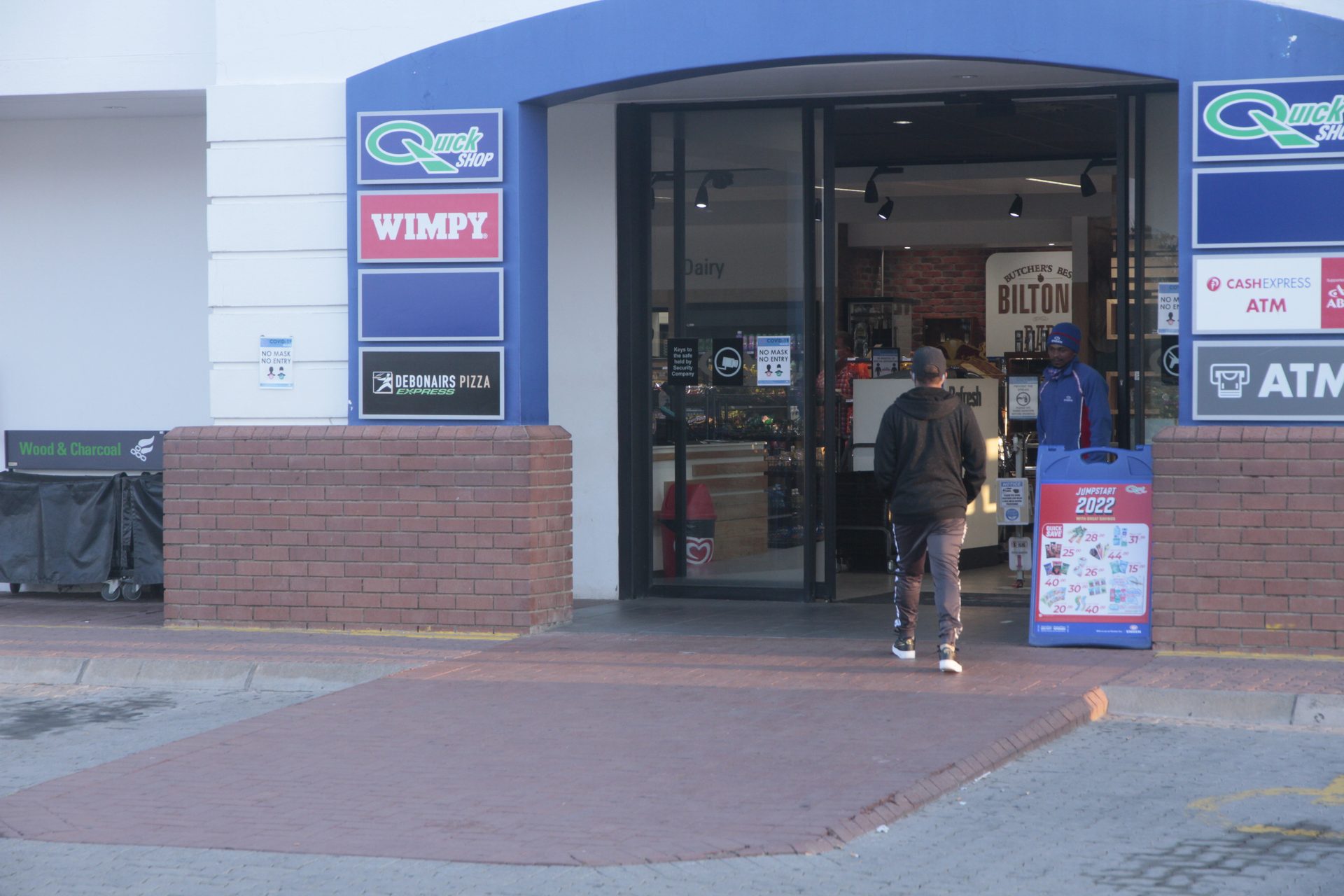
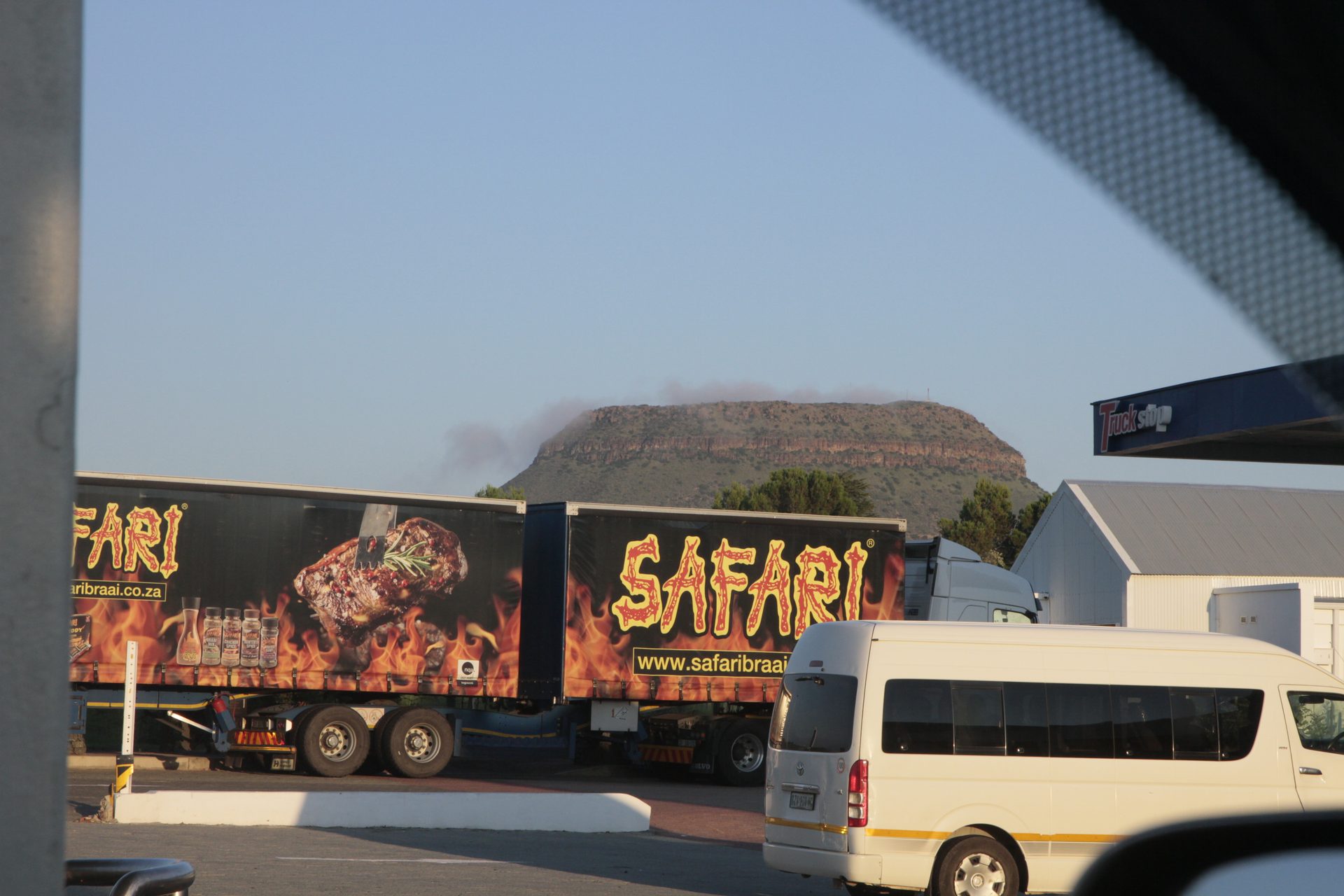
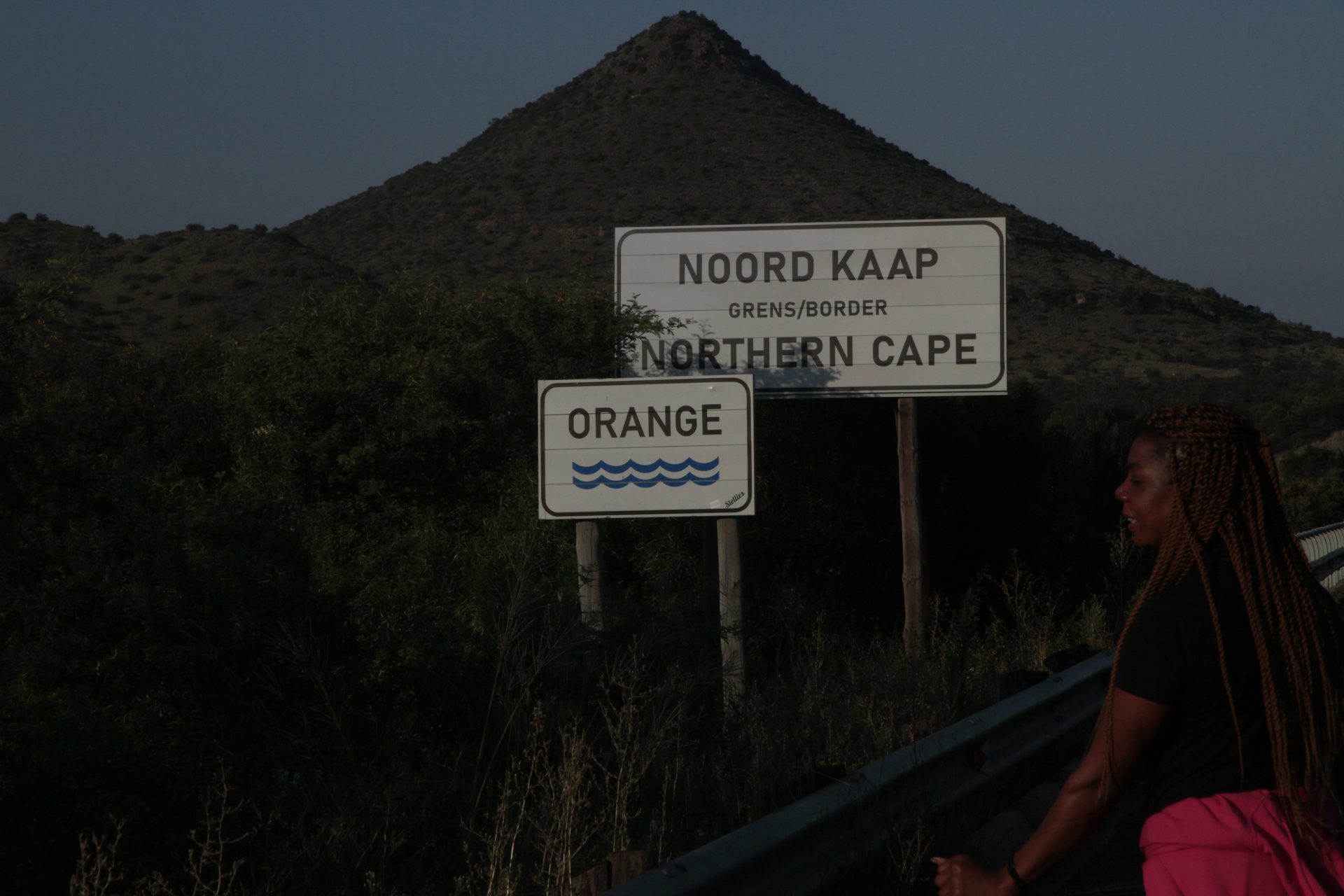
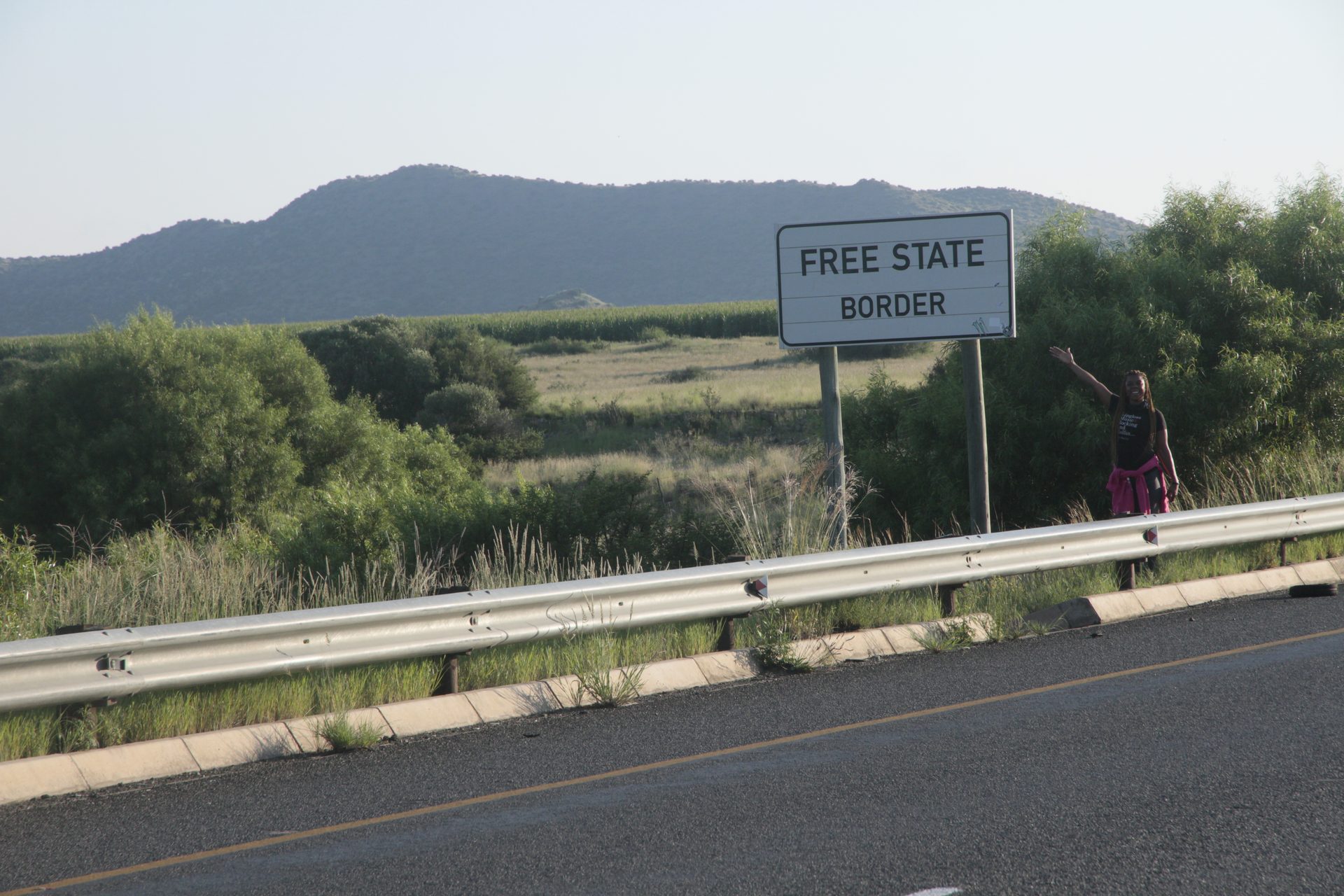
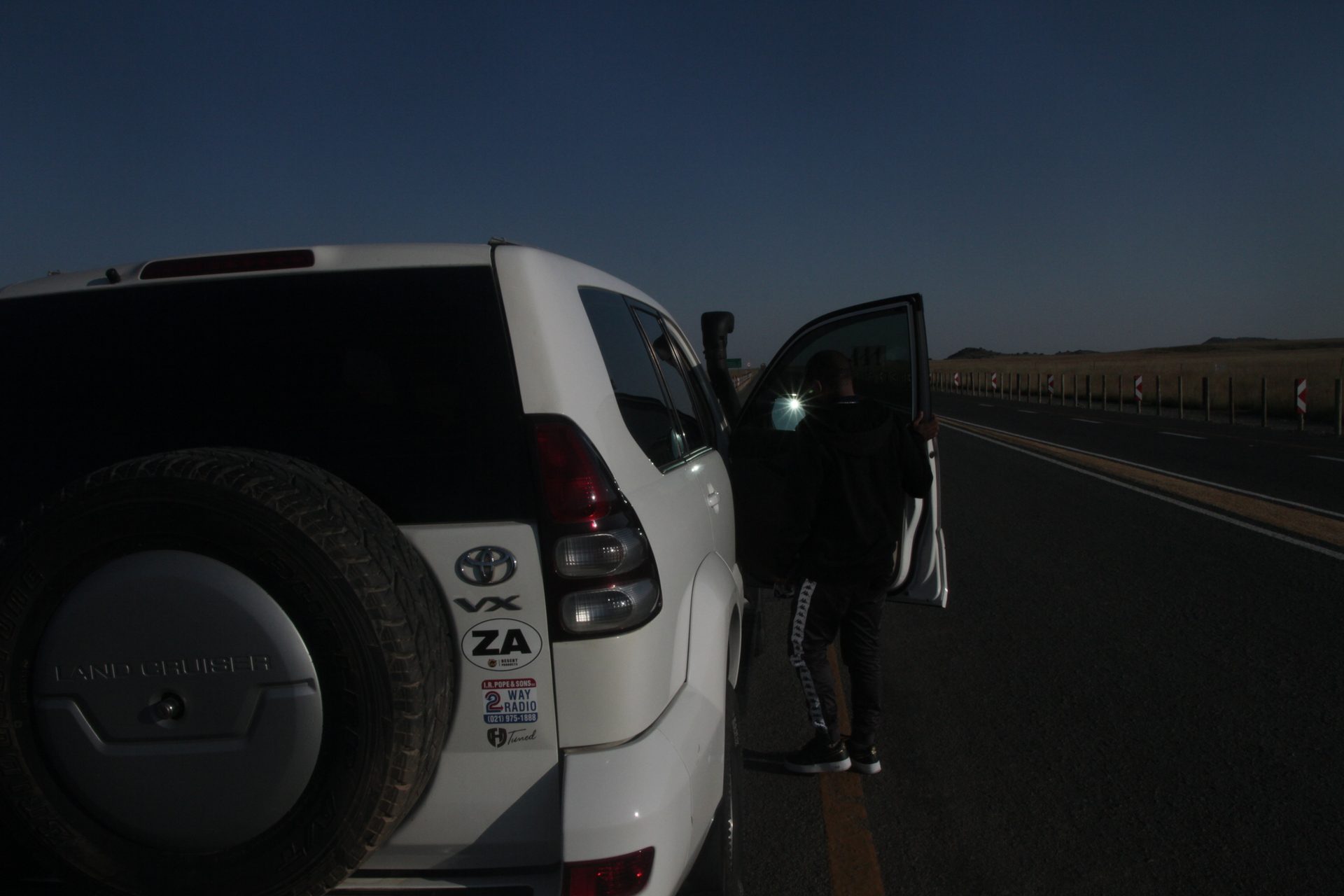
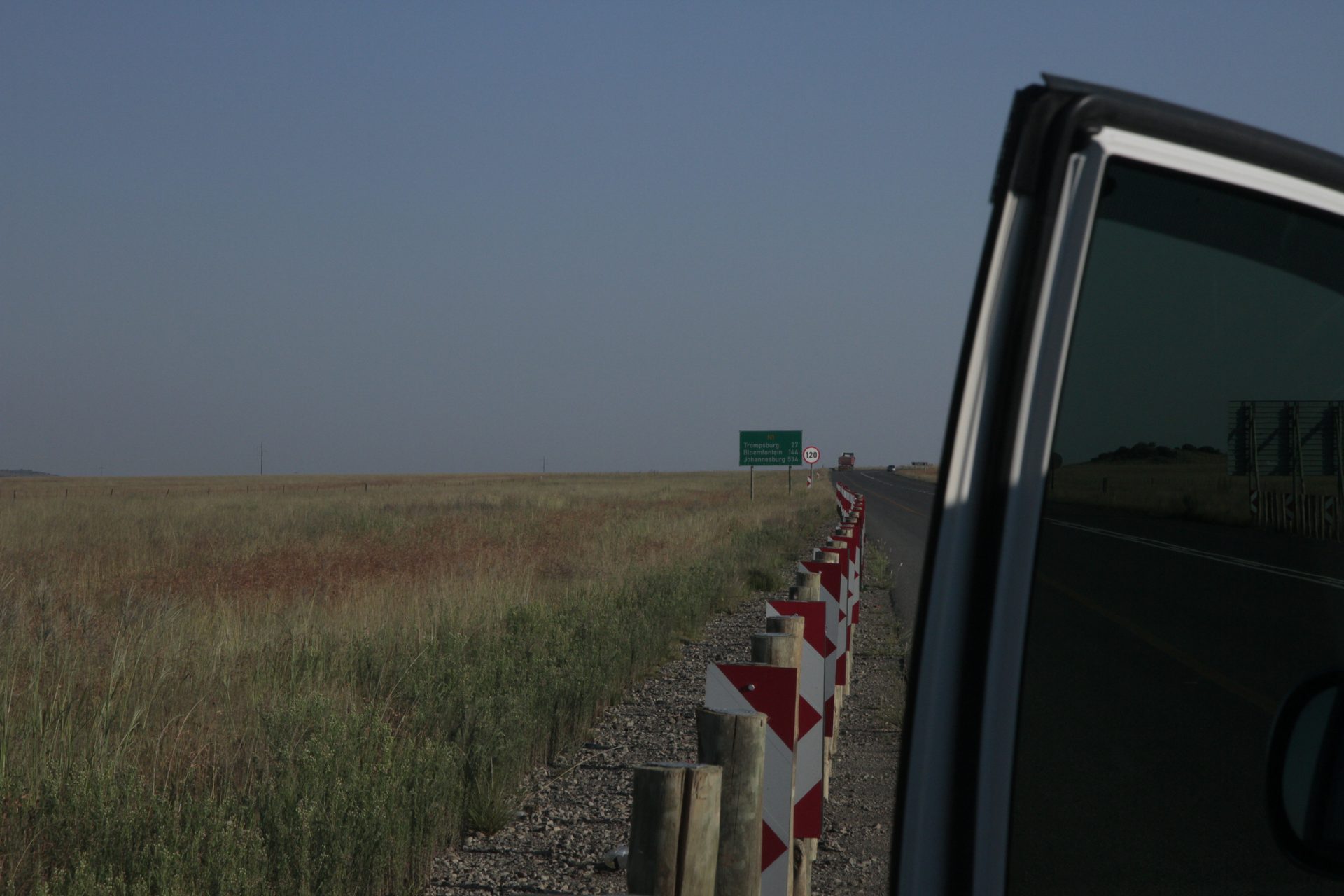
We rolled into Johannesburg on Monday morning. The city was already fully awake by the time we got there.
Front Runner, Sunninghill
There was a short window in Johannesburg. Sleep. Brakes at Toyota Sunninghill — Sarabi was due for them and the Northern Cape roads are not gentle on brake pads. And then Front Runner.
The appointment at Front Runner was the point of the whole exercise. We’d been talking about the rooftop tent long enough. This was the visit that made it happen.
What we left with: a Front Runner 2.0 rooftop tent, a 40-litre water tank, the roof rack, and three Wolf Pack boxes — one of them mounted on the rack itself. Sarabi was a different rig coming out of Front Runner than she’d been going in. Everything we’d been planning, fitted and done.
Roof tent. Forty litres of water. Three Wolf Packs. A roof rack that changed the silhouette of the vehicle completely.
Now we just had to go camping.
Night Two — Johannesburg to Khamkirri
We left Johannesburg at 18:56 on Wednesday evening.
The plan was to meet Ralton and the rest of the convoy at Khamkirri — a farm near Vioolsdrif in the Northern Cape, as close to Namibia as you can get without crossing the bridge. We had the rooftop tent. We had the water tank. We were ready. All that stood between us and the first proper camp with the new kit was roughly nine hundred kilometres of night driving.
The N1 south from Joburg reverses the morning’s approach: the Highveld at night, then the plateau stretching out, then the Karoo beginning to reassert itself as the Free State gives way to the Northern Cape. Same road, opposite direction, a different vehicle on the roof.
The cows were the problem. Northern Cape roads at night have livestock on them — not always, not reliably, just enough that you can’t stop watching. We came across a vehicle that had already had the encounter we were trying to avoid. People were fine. The car was not. The cow, apparently, was also fine. We drove accordingly: eyes open, lights on, speed down.
Around eleven I couldn’t hold my eyes open any longer and handed the wheel over. The next time I woke up, we were on a dirt road in the dark approaching Khamkirri. New obstacle: birds. Sleeping in the road. Literally sleeping in the road. We picked our way through slowly.
The farmer had been tracking our progress through the night — WhatsApp check-ins, making sure we were on the right road and not in trouble somewhere in the Northern Cape dark. At 2:34 in the morning, we arrived.
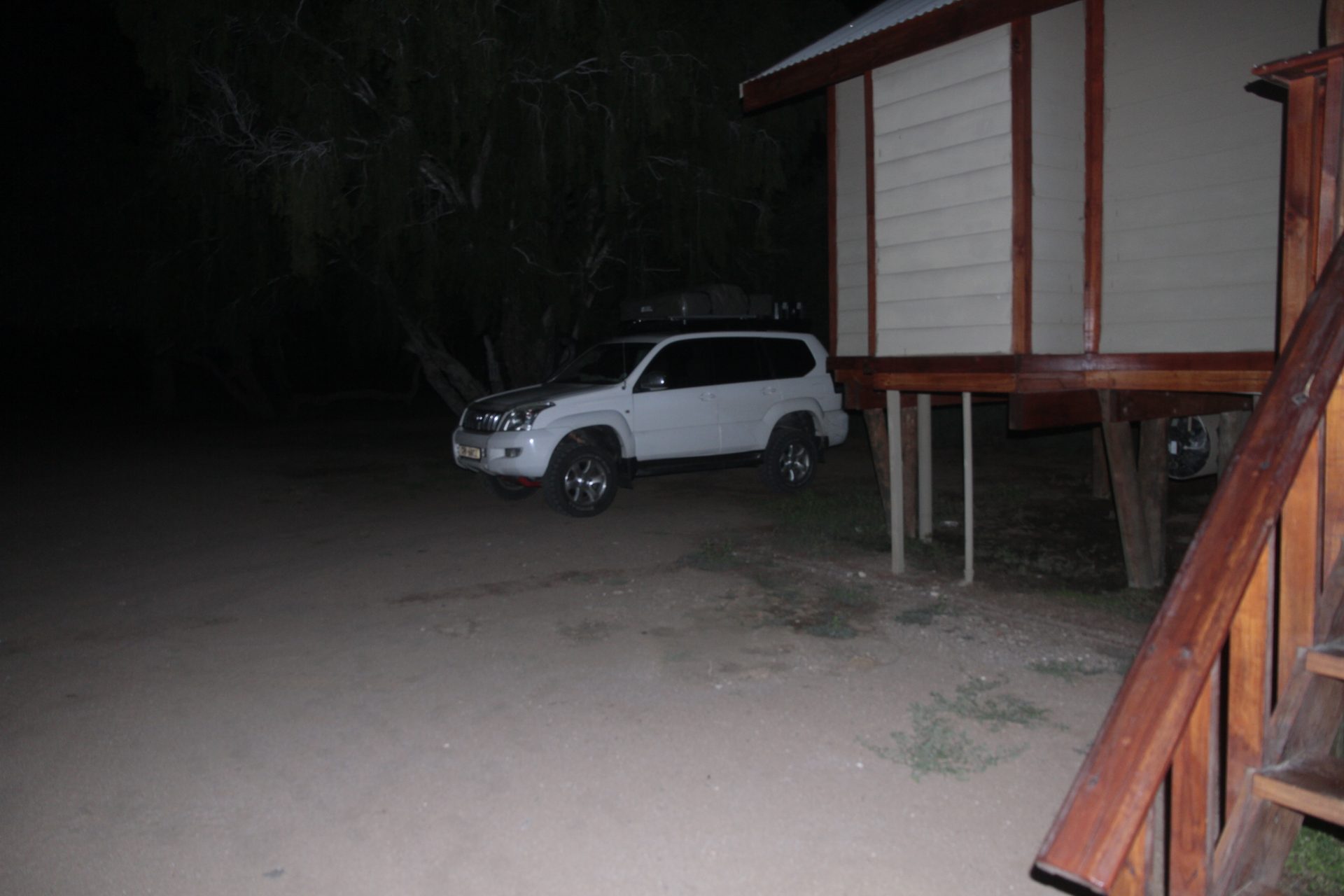
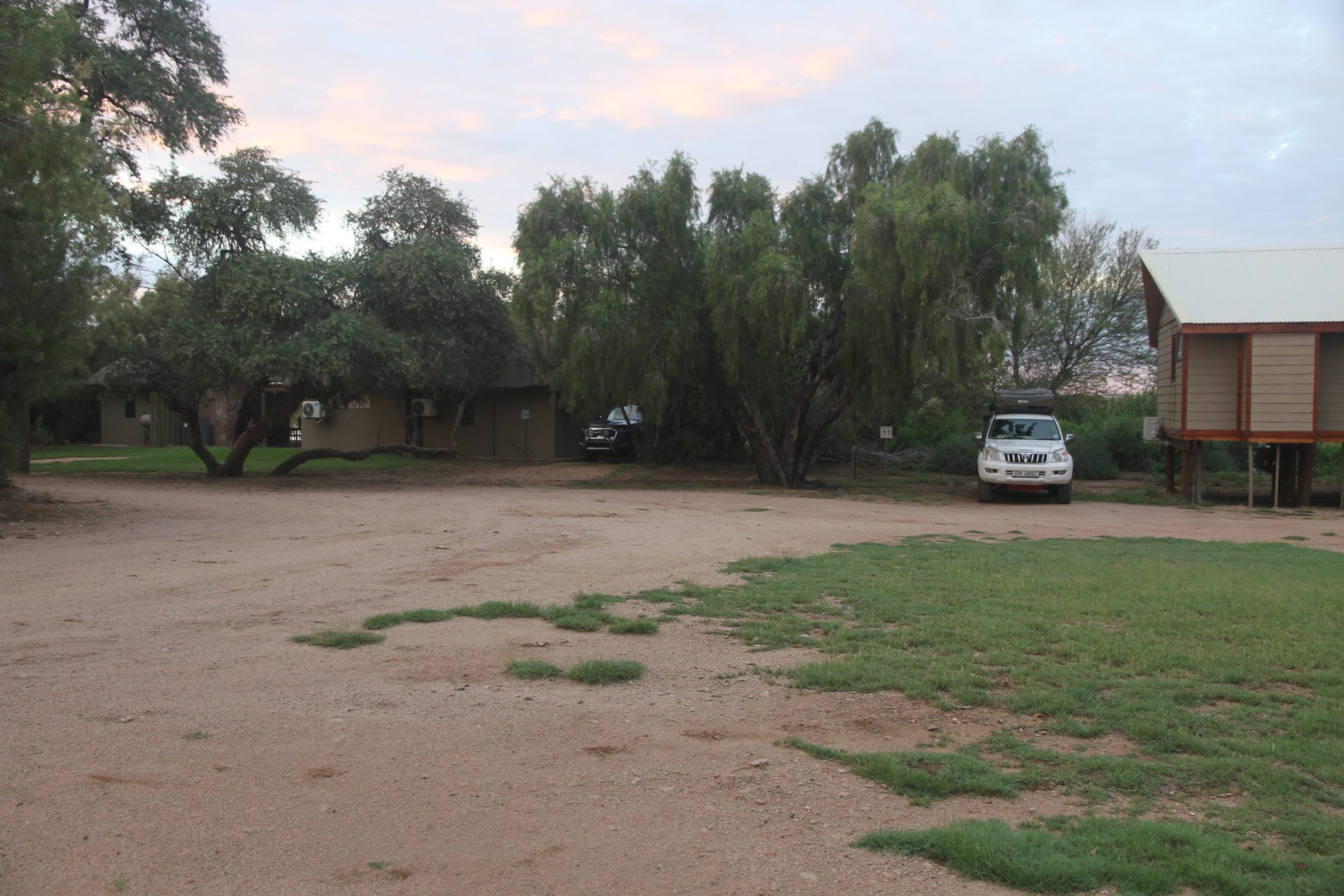
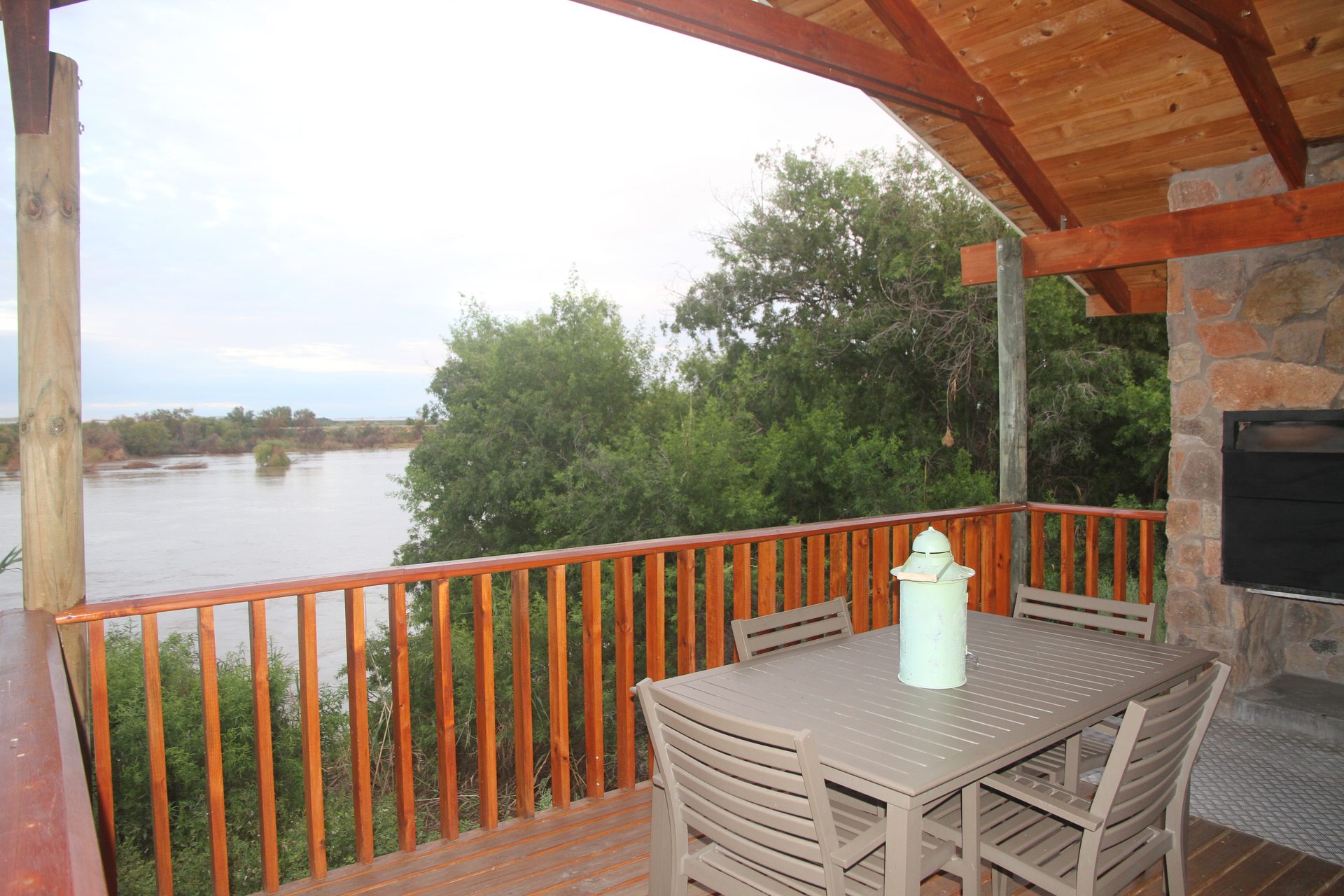
No camping. There were chalets.
Khamkirri — Morning
The chalets were fine. More than fine. We slept well, and when morning came the Northern Cape was doing exactly what it does — the light, the quiet, the kind of open space that doesn’t exist anywhere else.
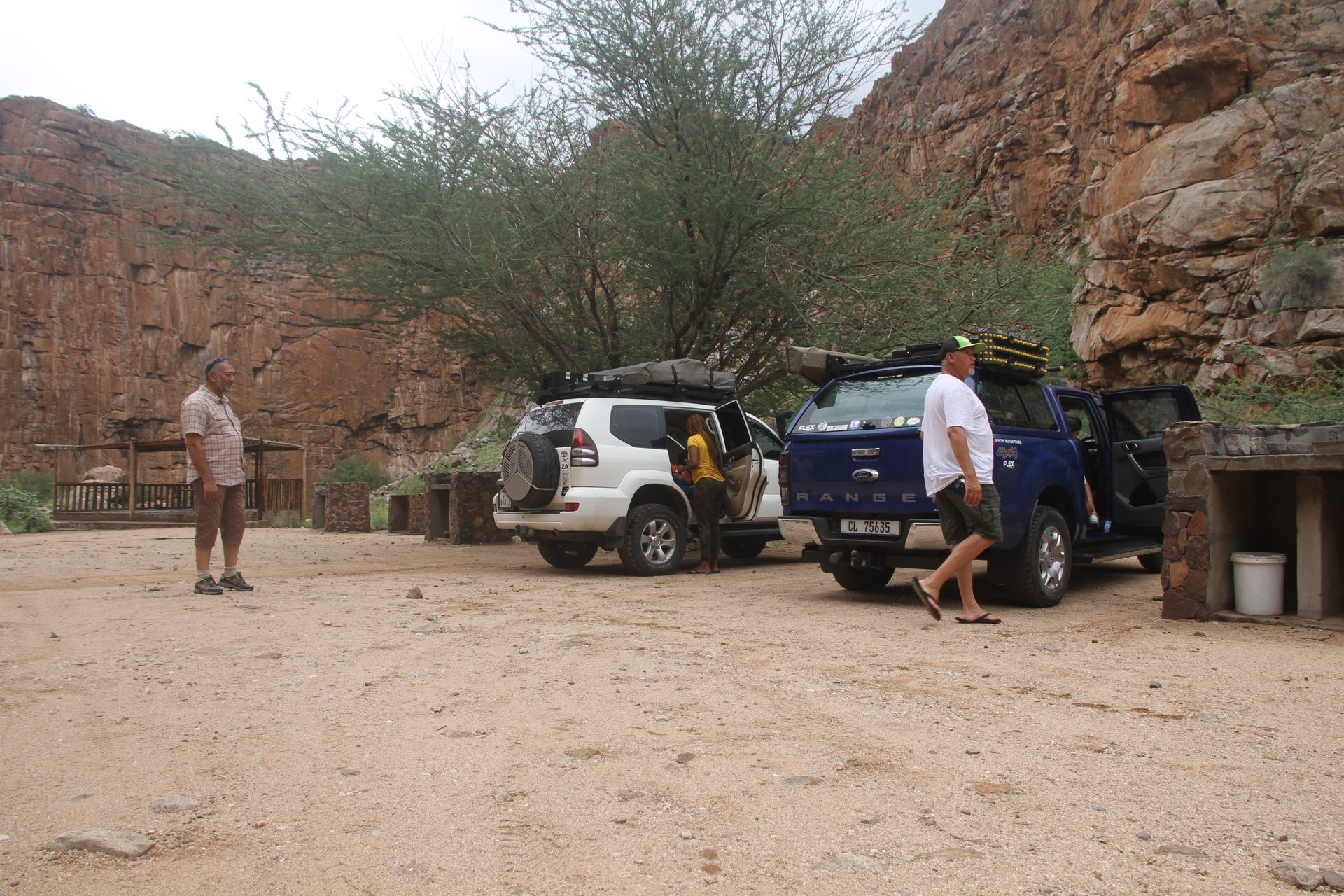
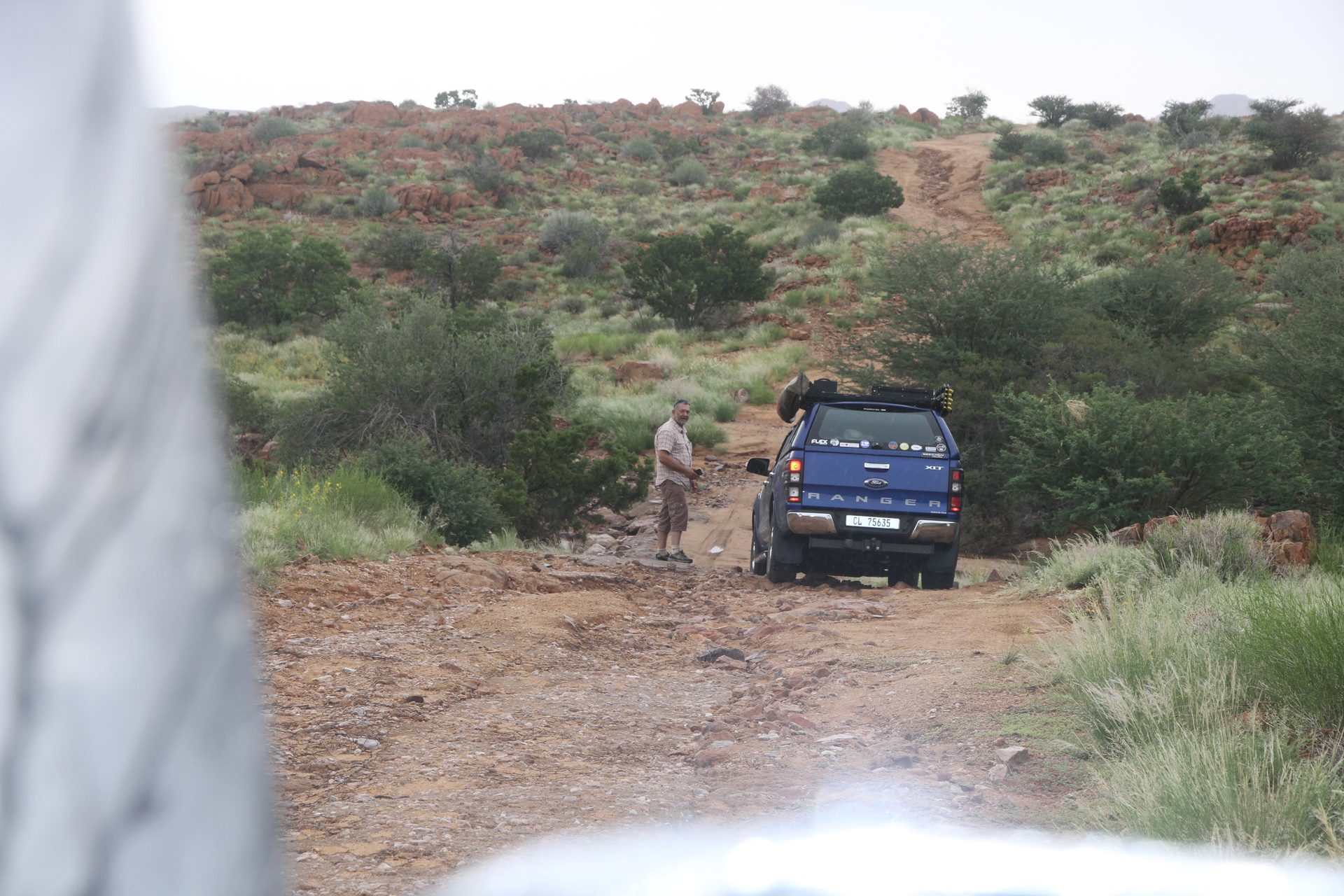
Breakfast with the farmer changed the day. He mentioned a dirt road — not the main route — that would take us directly to the Riemvasmaak hot springs, and from there we could continue on to Augrabies Falls. That sounded significantly better than the tar. We went looking for the dirt road.
Riemvasmaak
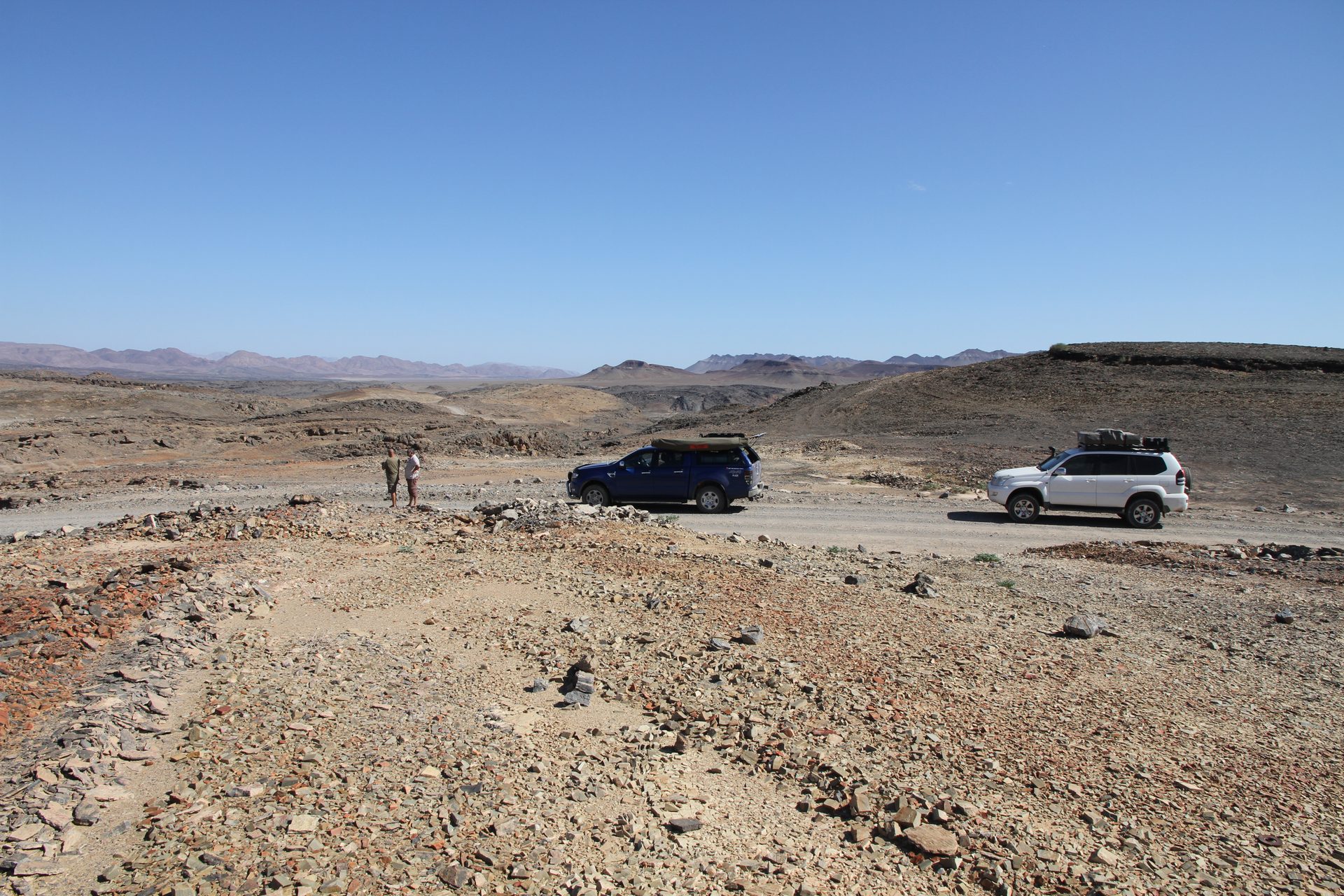
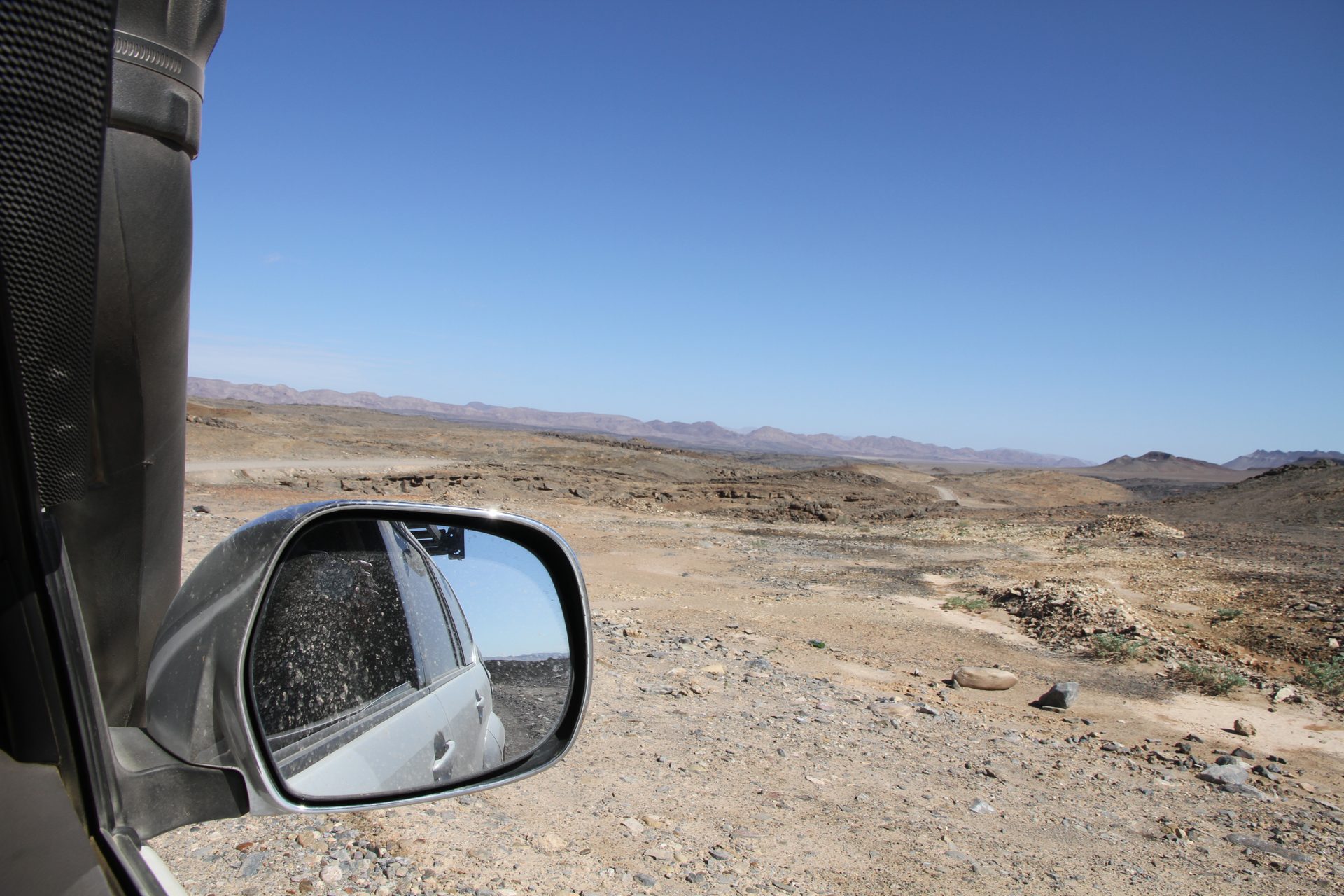
The dirt road to Riemvasmaak is not a road for people in a hurry, which makes it exactly the right kind of road.
Riemvasmaak is a community in the ZF Mgcawu district, close to the Namibian border on the Orange River. Its history is weighted: in the early 1970s, the apartheid government removed the community to make way for a military testing site. For more than two decades this landscape absorbed live artillery fire, air-to-ground rockets, cluster munitions — a range for heavy SADF equipment that used the remote terrain to test things that couldn’t be tested anywhere more populated. The land restitution process in the late 1990s allowed the community to return, and what was once a firing range has become one of the more remarkable places to drive through in the Northern Cape.
The road explains why. We stopped constantly. You couldn’t not.
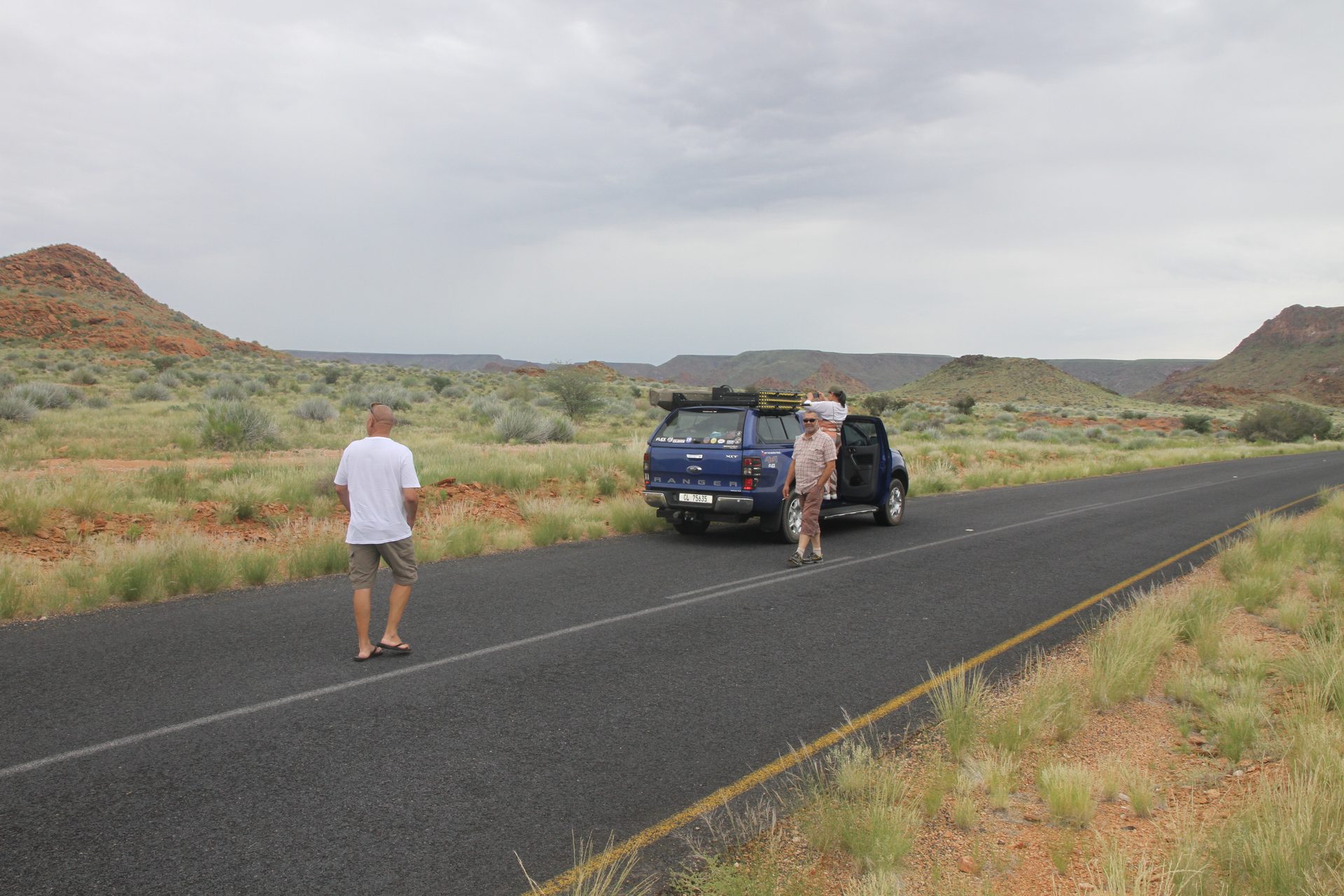
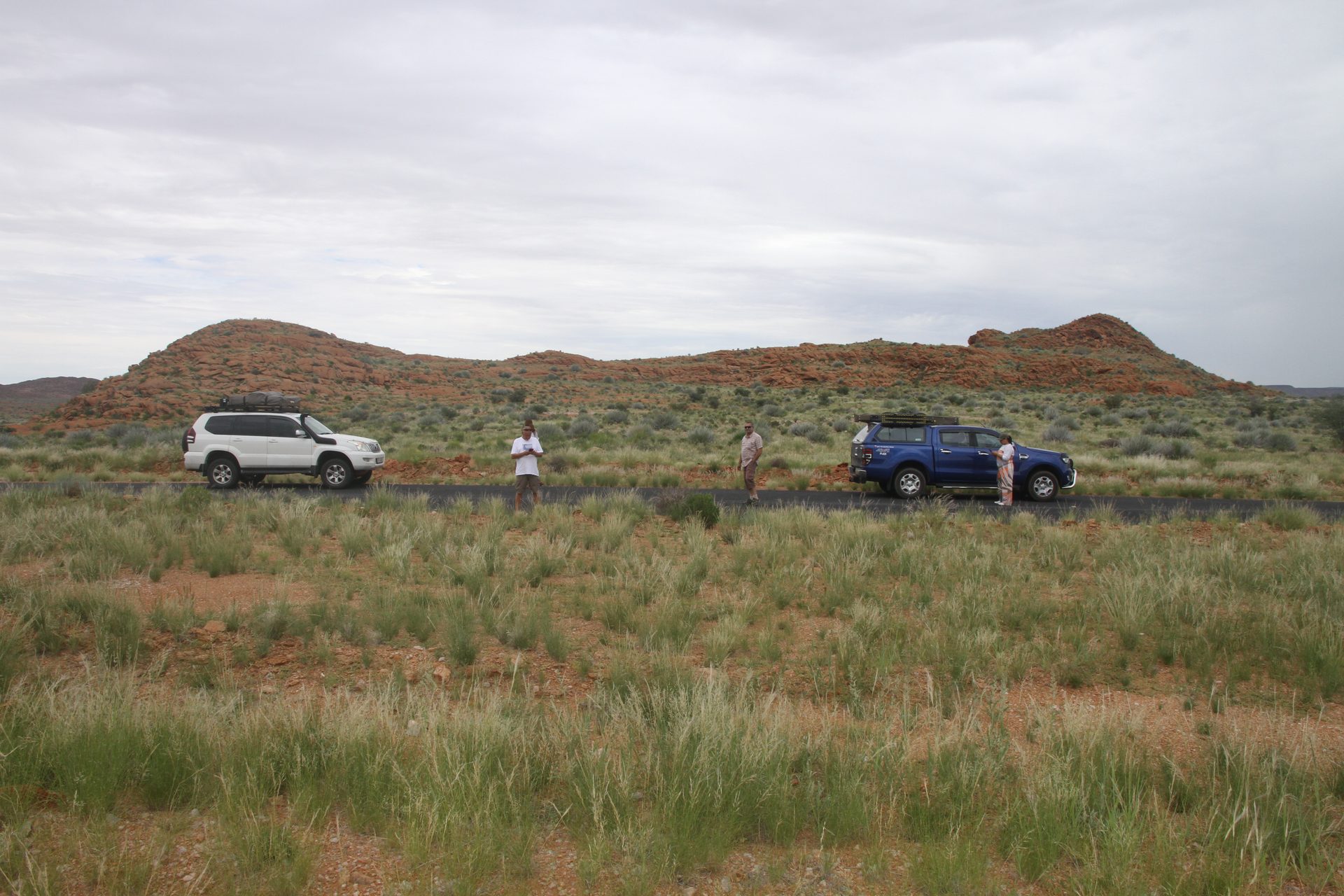
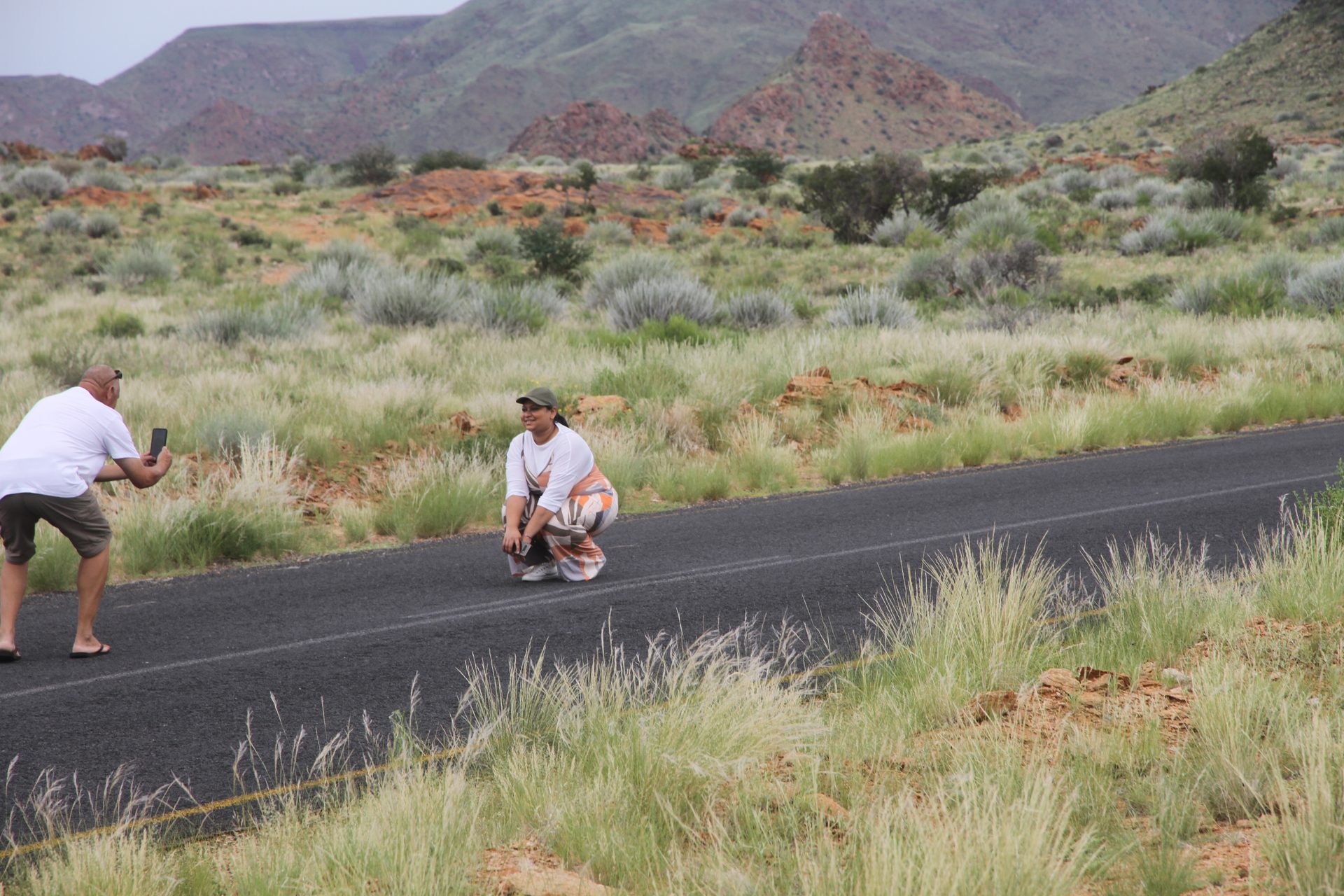
The landscape is a particular combination of things: granite rock faces that look like they’ve been stacked by hand, dry river vegetation pressing through wherever it can, the orange and ochre of the soil set against a sky that’s almost unreasonably blue. It’s the kind of place that earns its remoteness. The further in you go, the more the landscape justifies making the effort to find it.
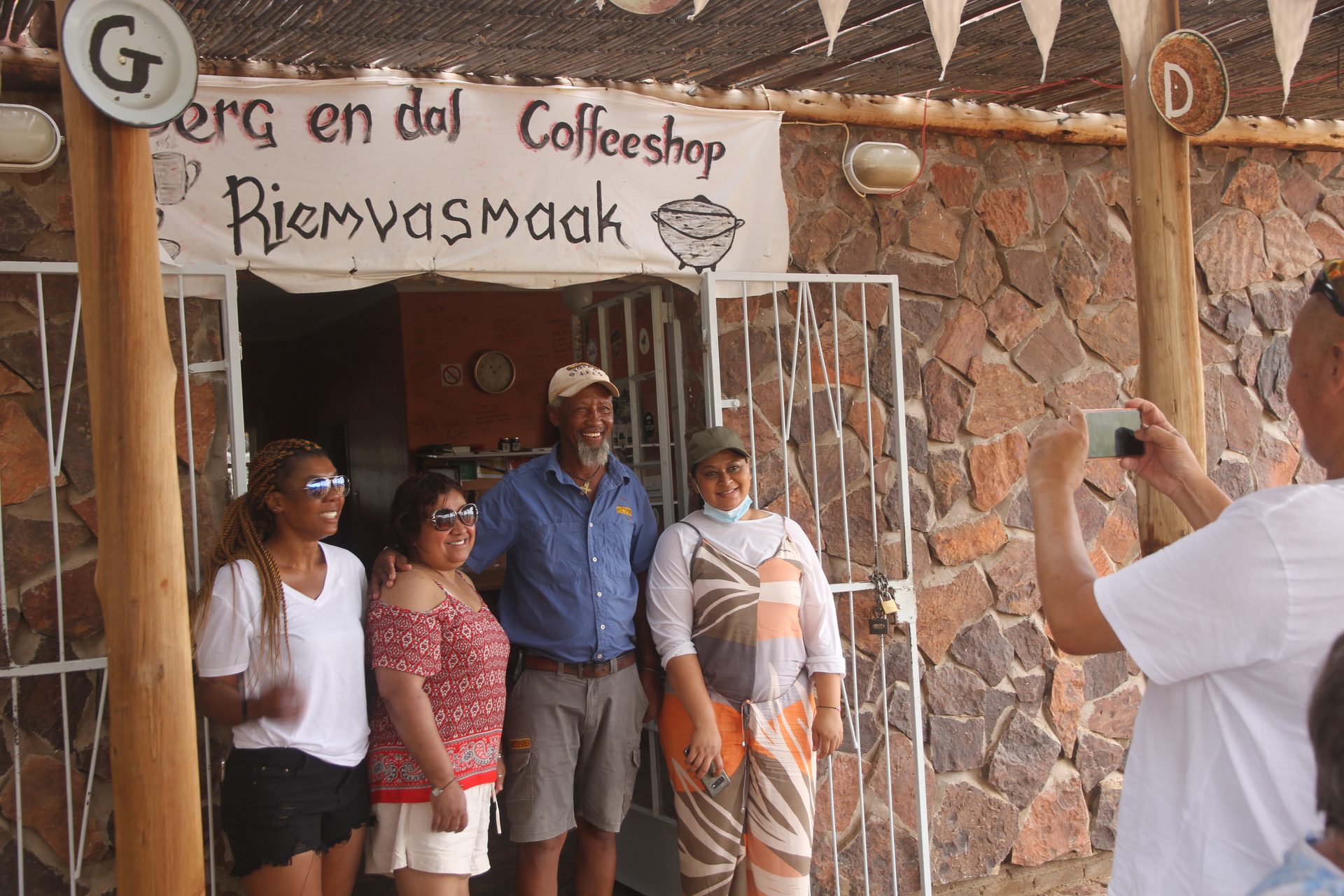
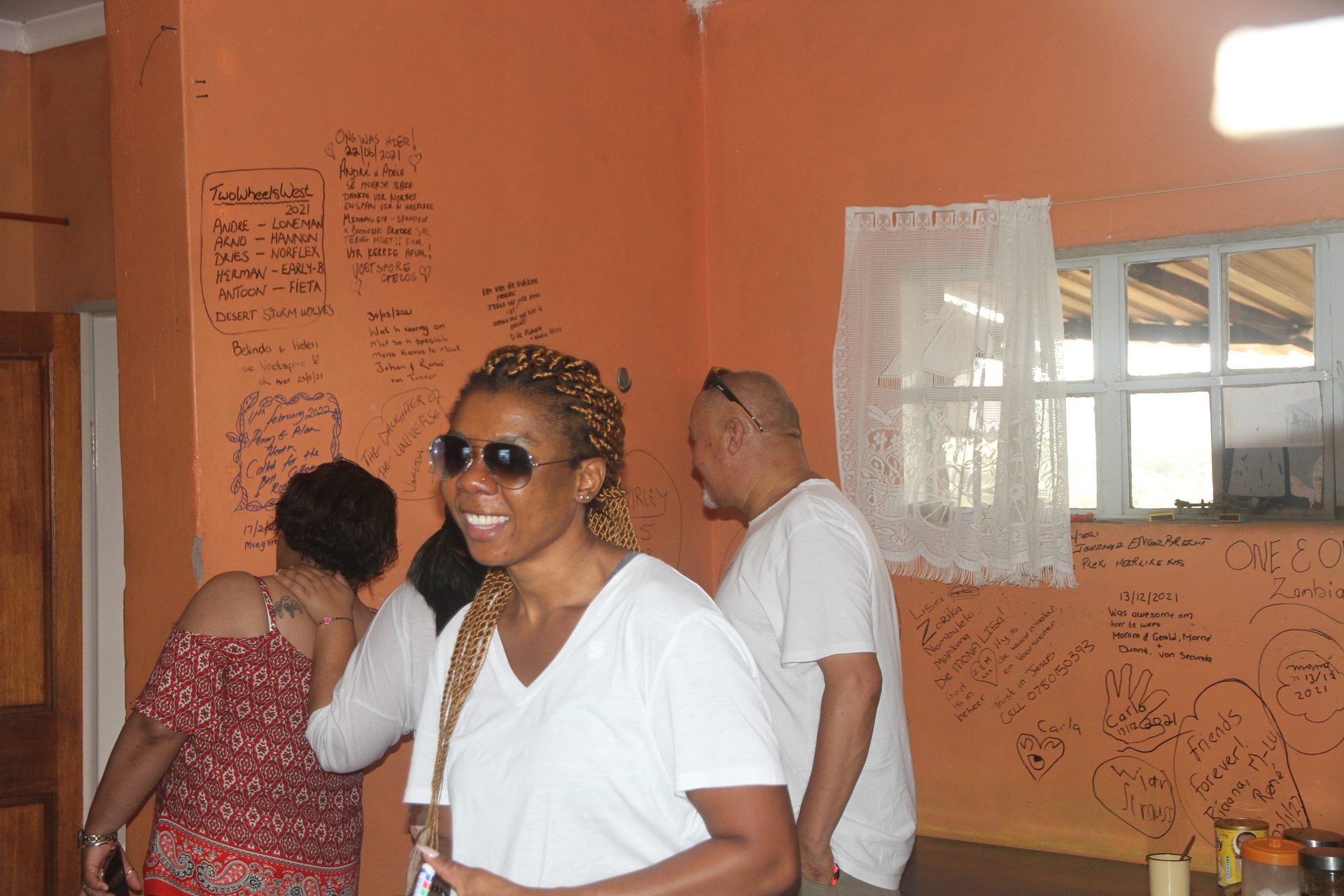
We stopped at Berg en Dal — a coffee shop that operates out here in the middle of everything, which is either completely impractical or exactly where a coffee shop should be. We signed the wall, the way overlanders do. We met the owner: a legendary local overlander who knows this landscape the way most people know their neighbourhood. The kind of conversation that happens when you’re somewhere remote and you meet someone who chose to stay there on purpose.
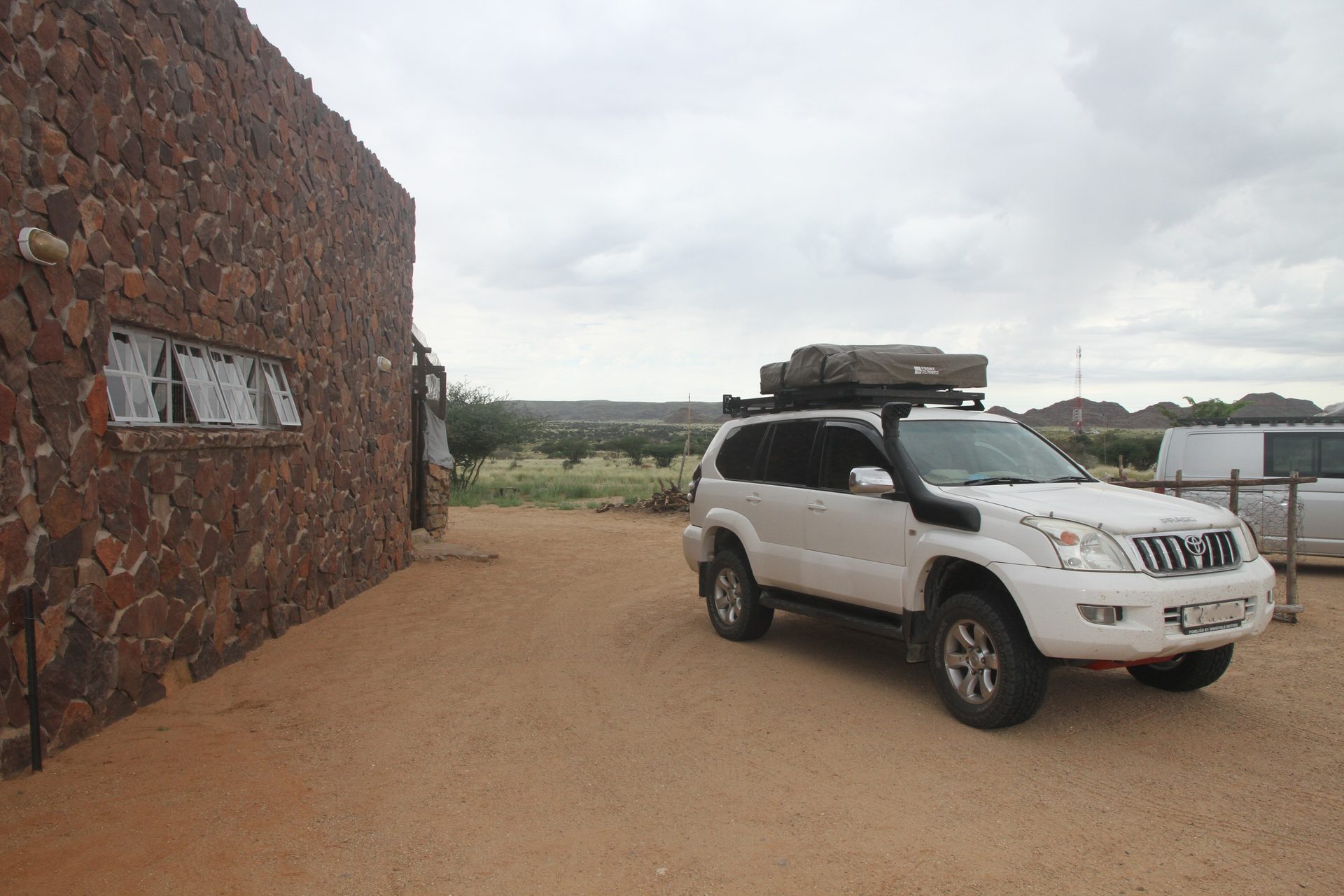
Riemvasmaak Hot Springs
The road to the hot springs announces itself. The climbs and descents on the approach are serious — not terrifying, but demanding. The kind of road that keeps your attention and rewards it.
The hot springs sit at the bottom of all that effort. Natural thermal pools, warm water in the middle of an arid landscape, backed by the same rock faces you’ve been driving through all morning. We paid at the gate and bought stones from the young people there selling them to make an honest living. And then we moved on to the main event.
We had the whole place to ourselves. Not mostly to ourselves — entirely. No other vehicles. Nobody else at all. Just the convoy, the pools, the silence, and the mountains rising up on every side.
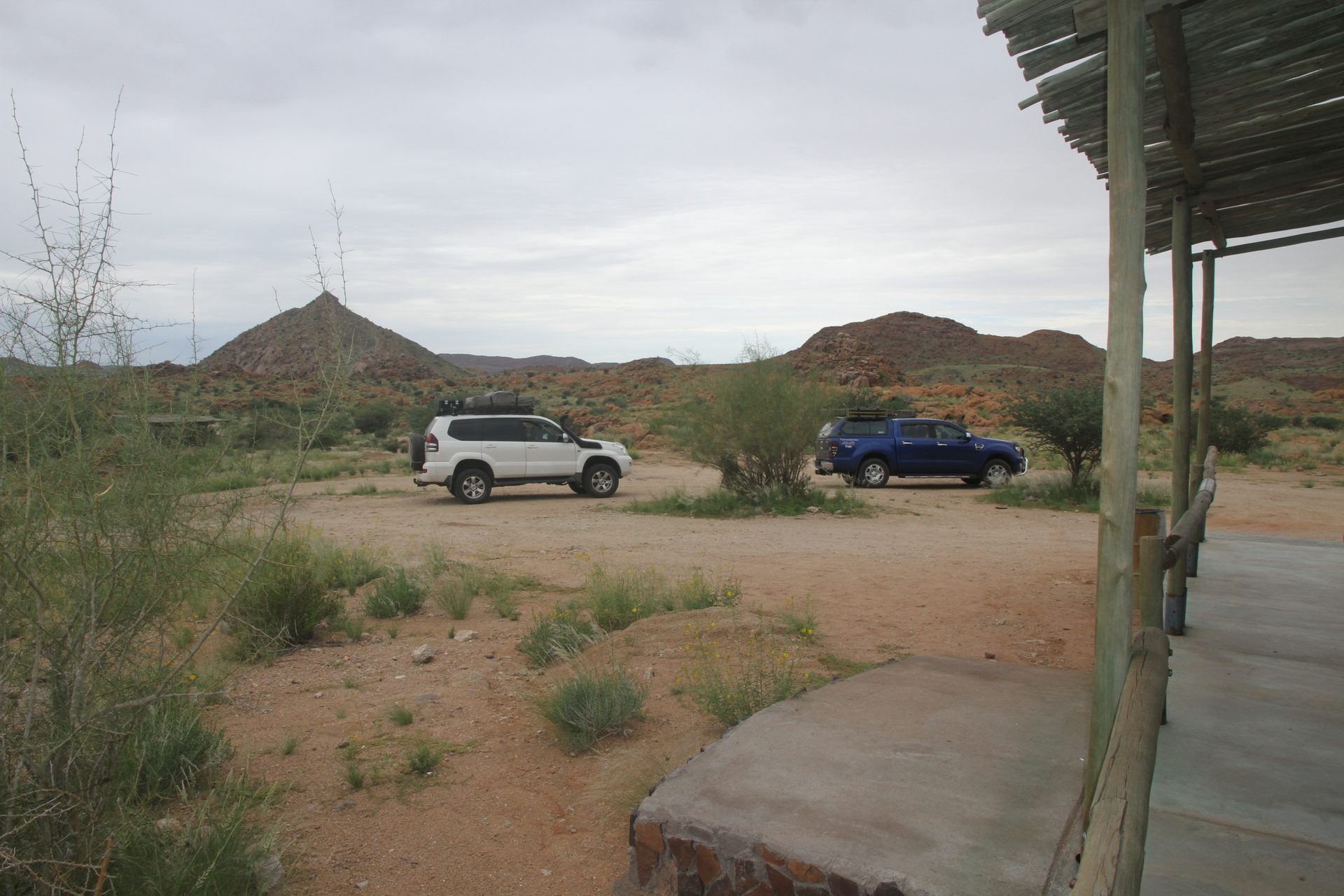
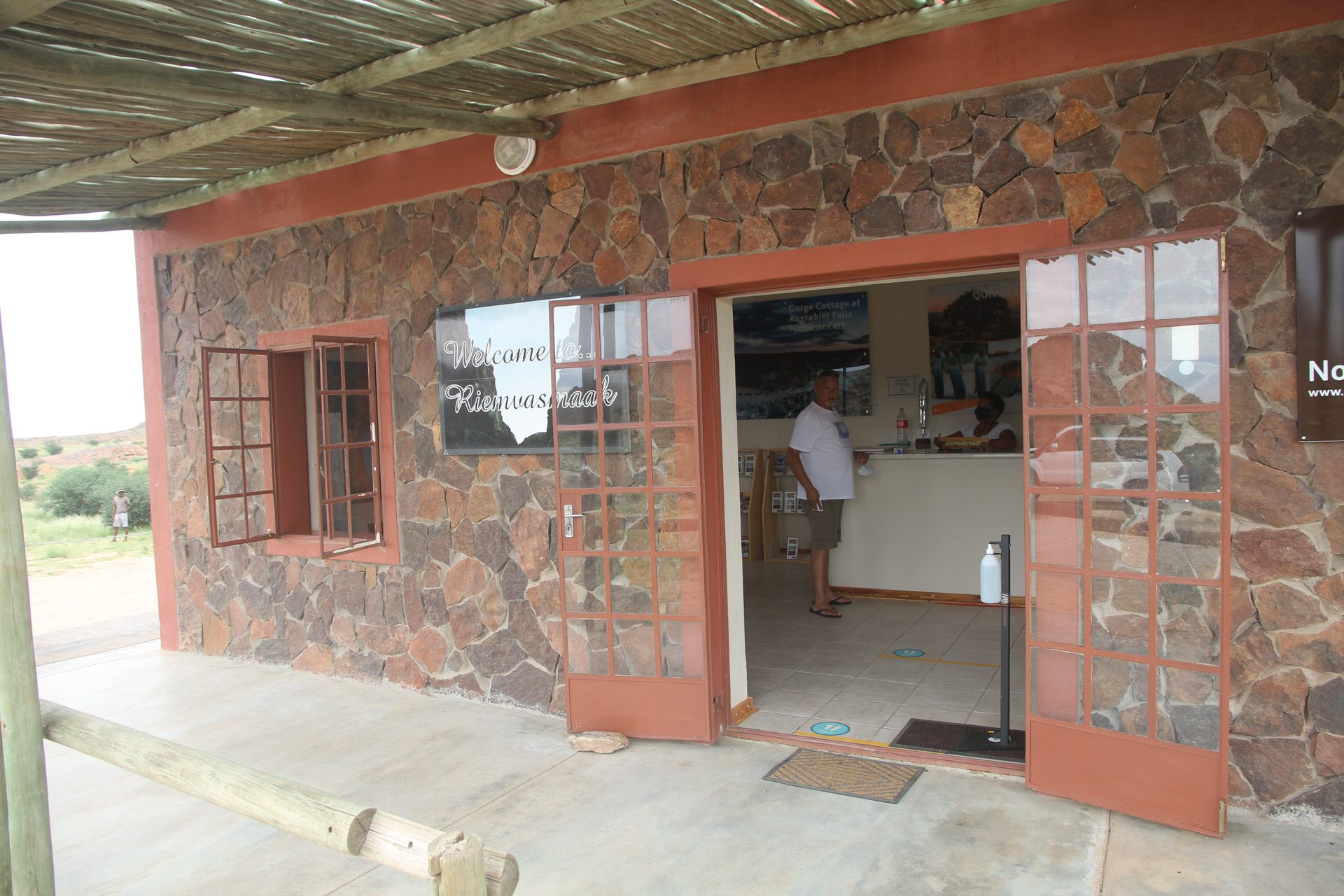
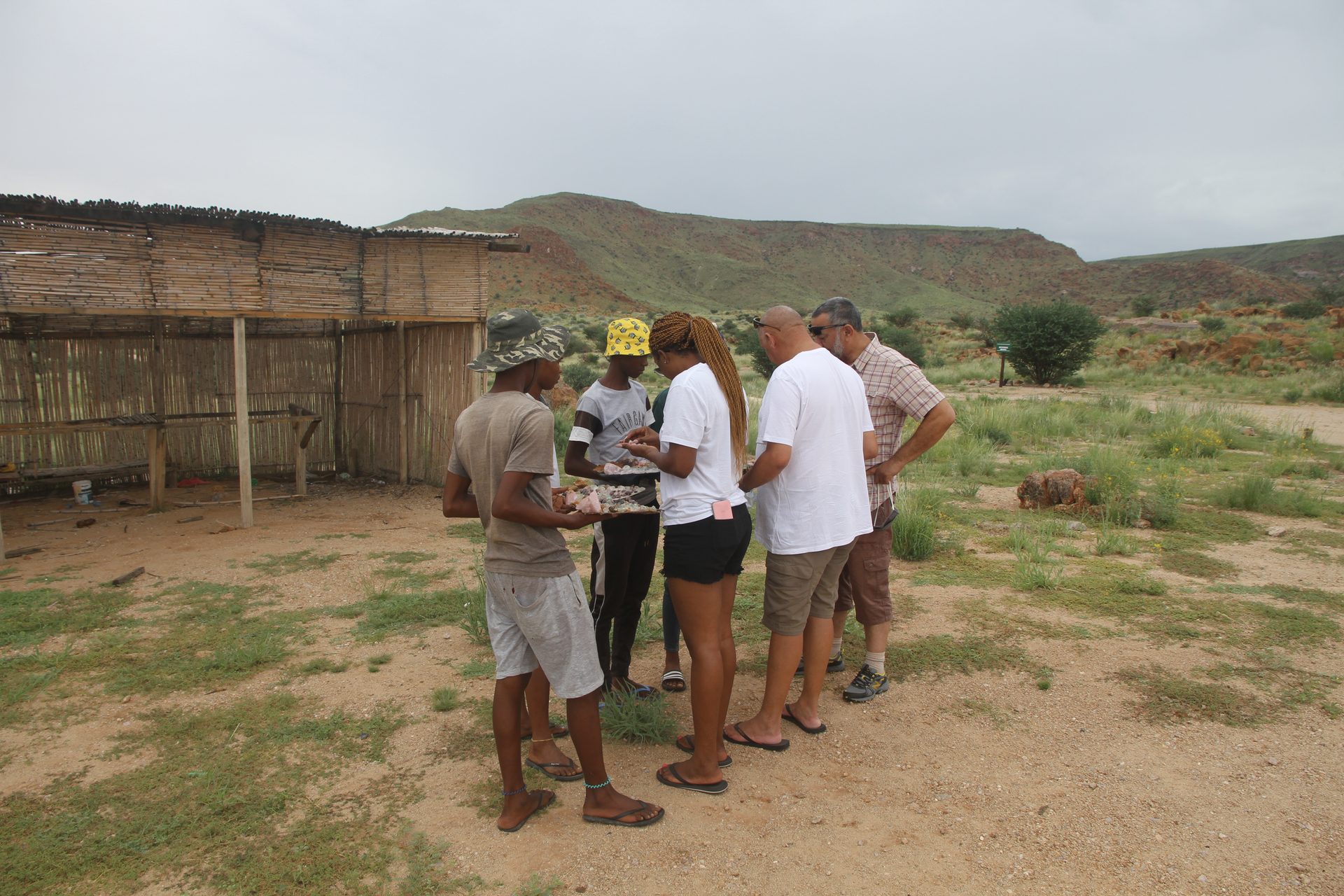
We stayed a good part of the day. There was no reason to leave early. The mountains around the springs don’t move. The water stays warm. Having a place like this entirely to yourselves is not something you rush.
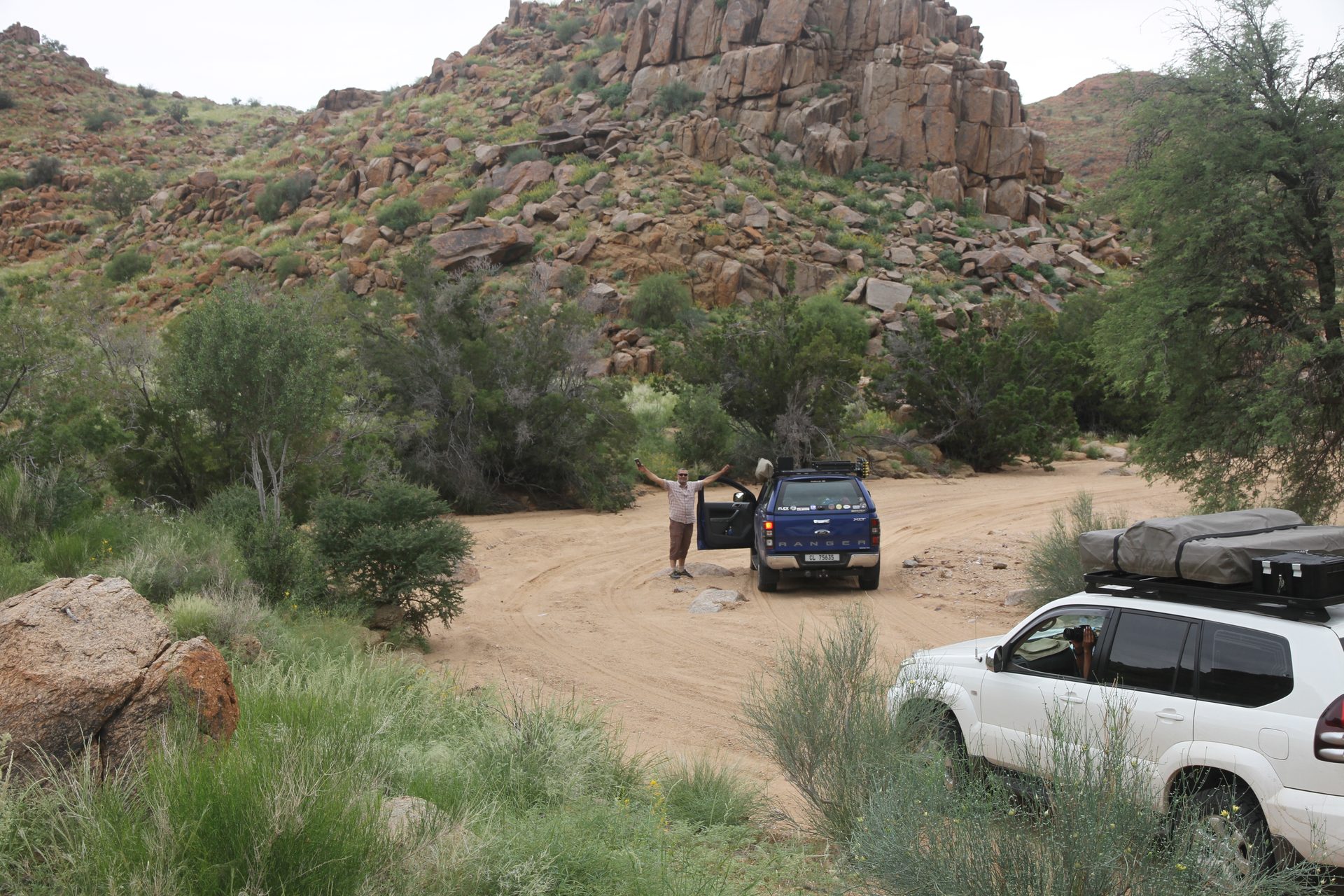
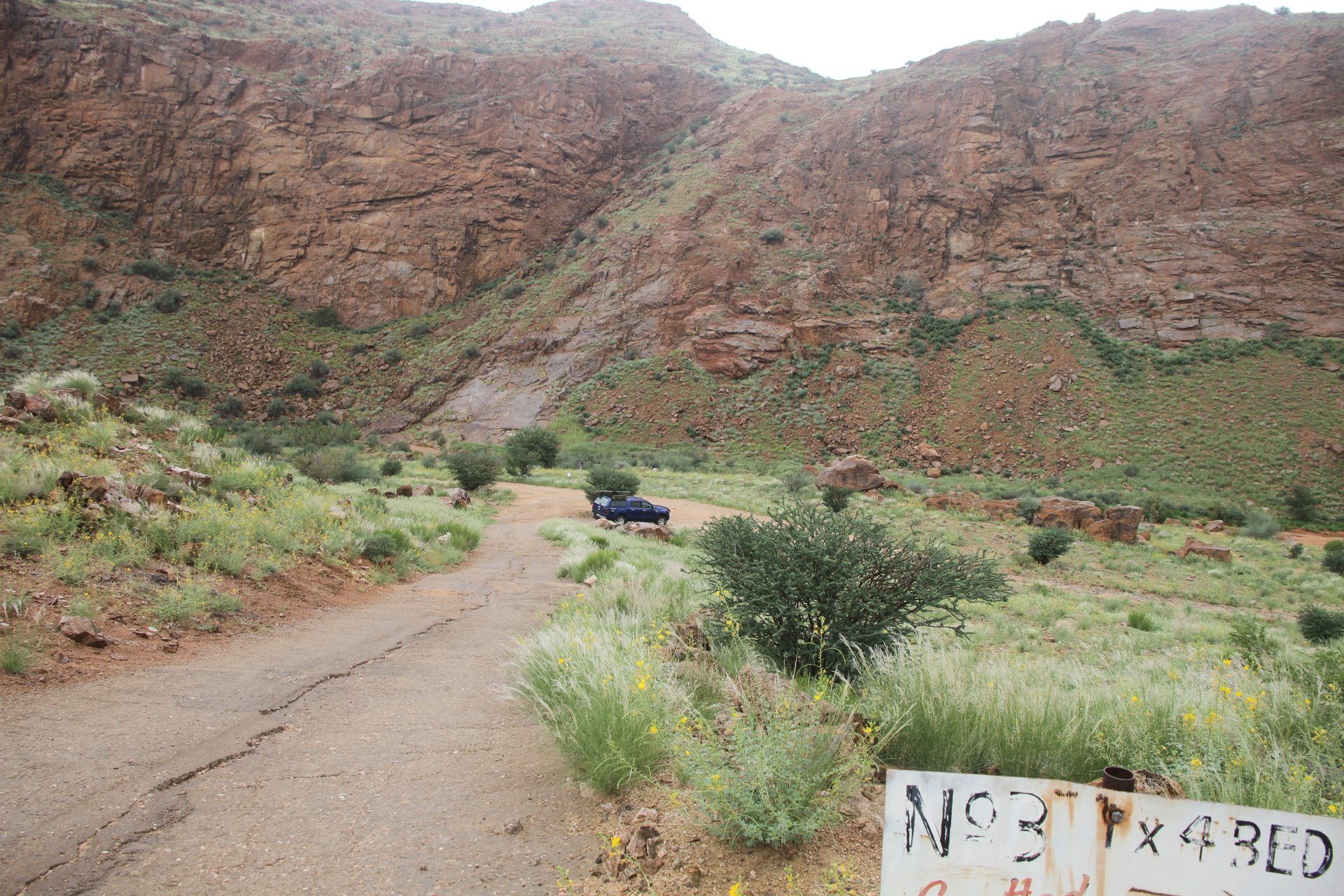
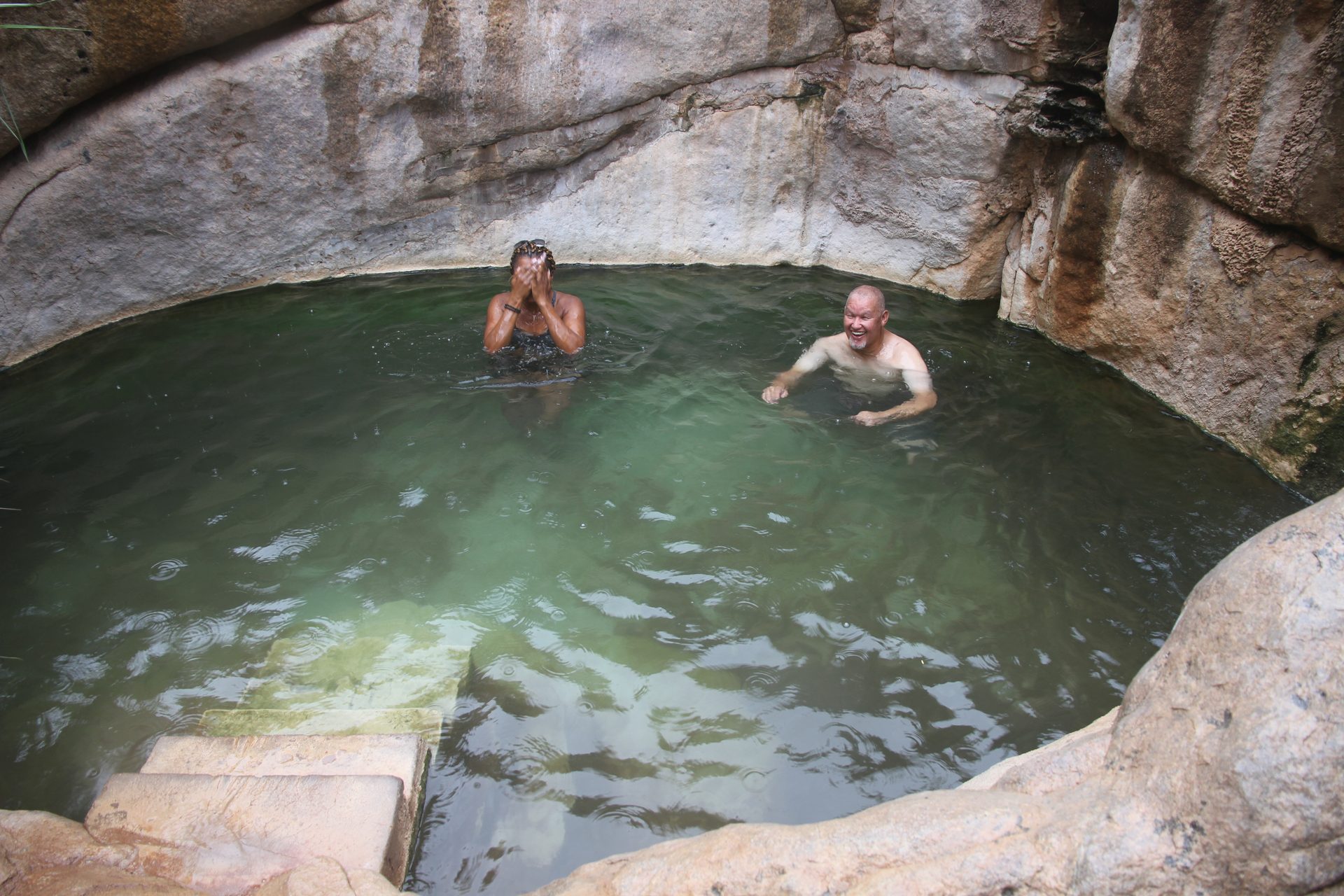
Eventually we pulled ourselves out, dried off, and pointed the vehicles toward Augrabies.
Augrabies Falls
The road between Riemvasmaak and Augrabies is itself worth the drive. The landscape transitions from the close mountain terrain of Riemvasmaak into the broader, more open semi-desert of the Augrabies region — bigger skies, more horizon, the Orange River somewhere ahead doing its slow, heavy work through the oldest granite on the continent.
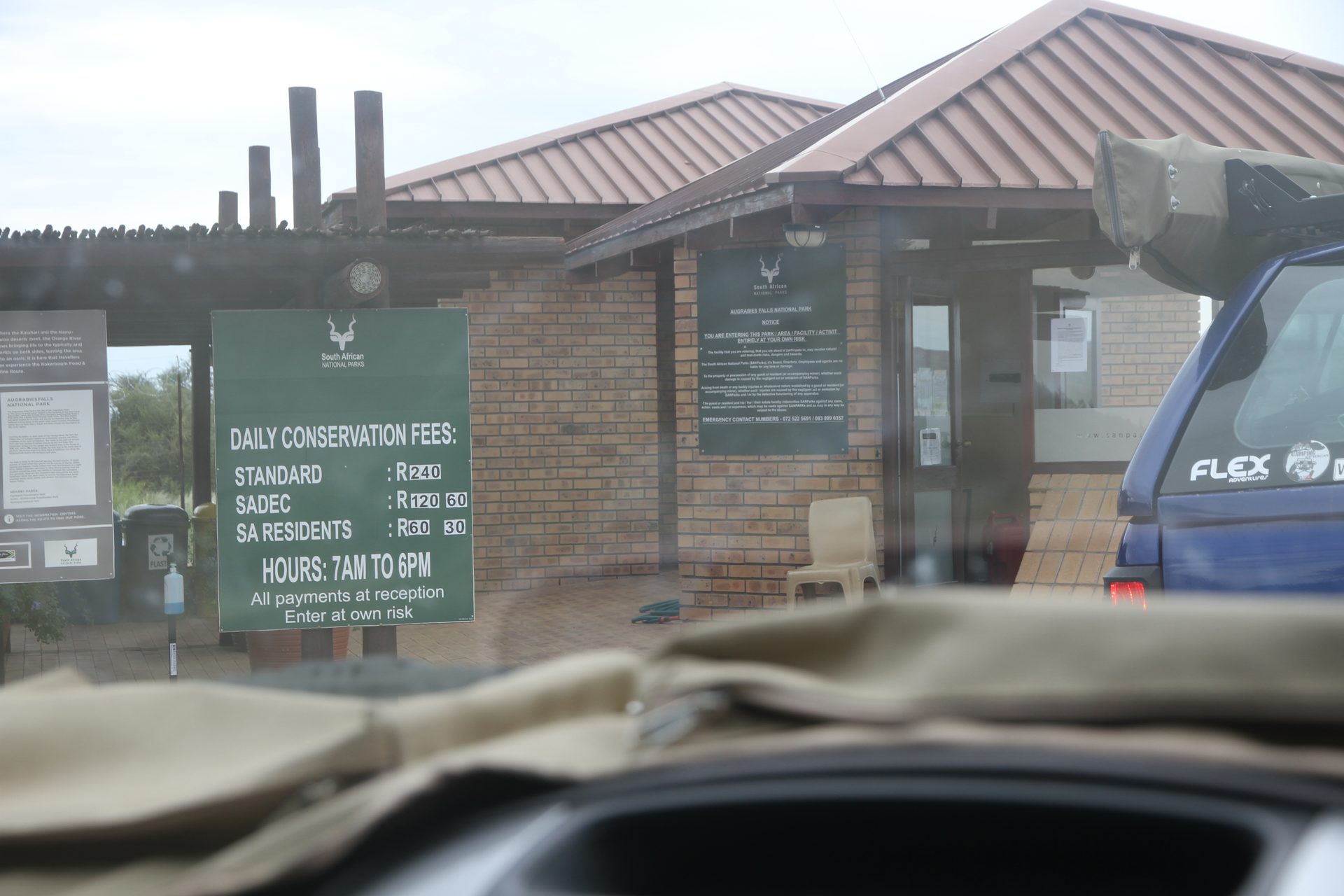
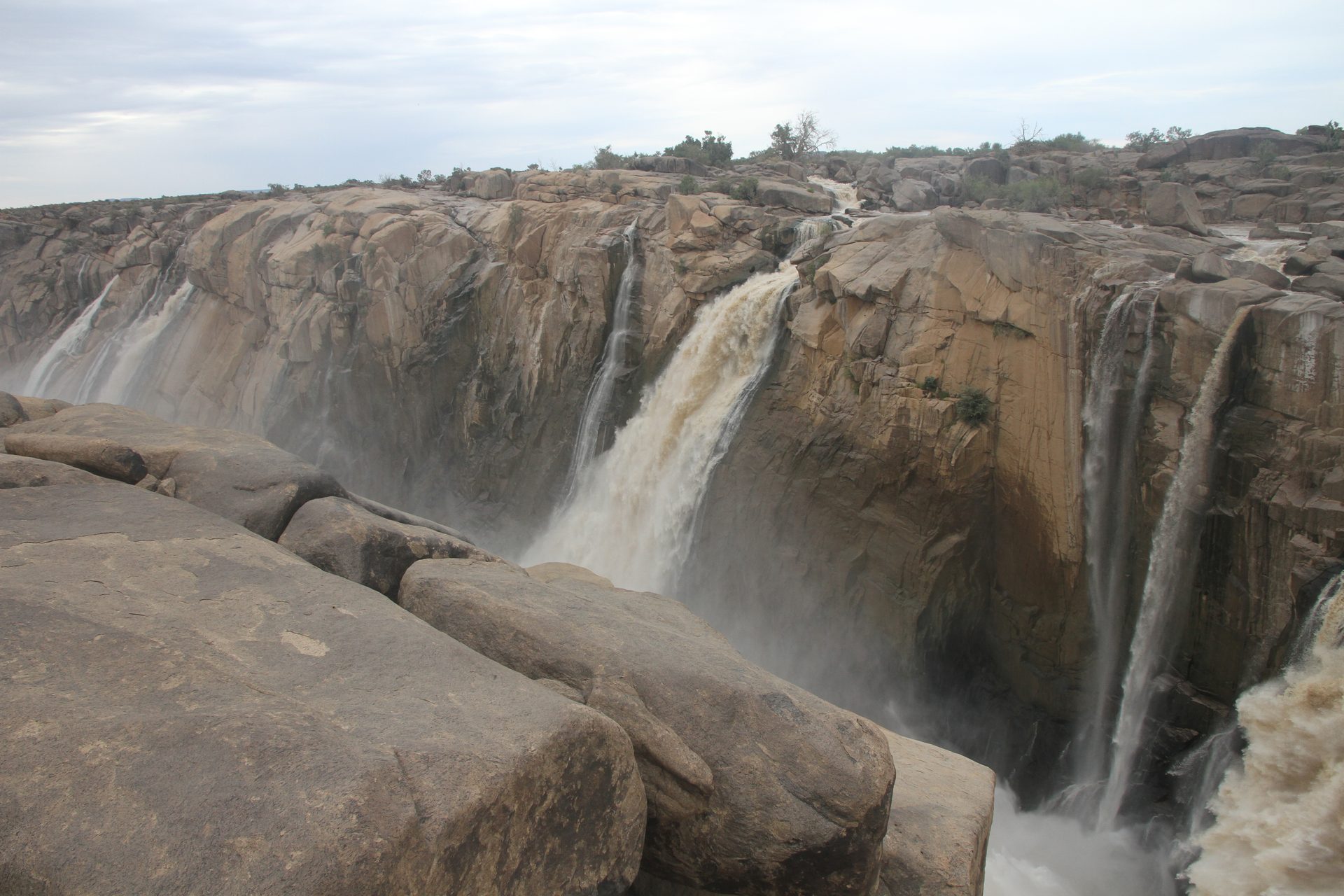
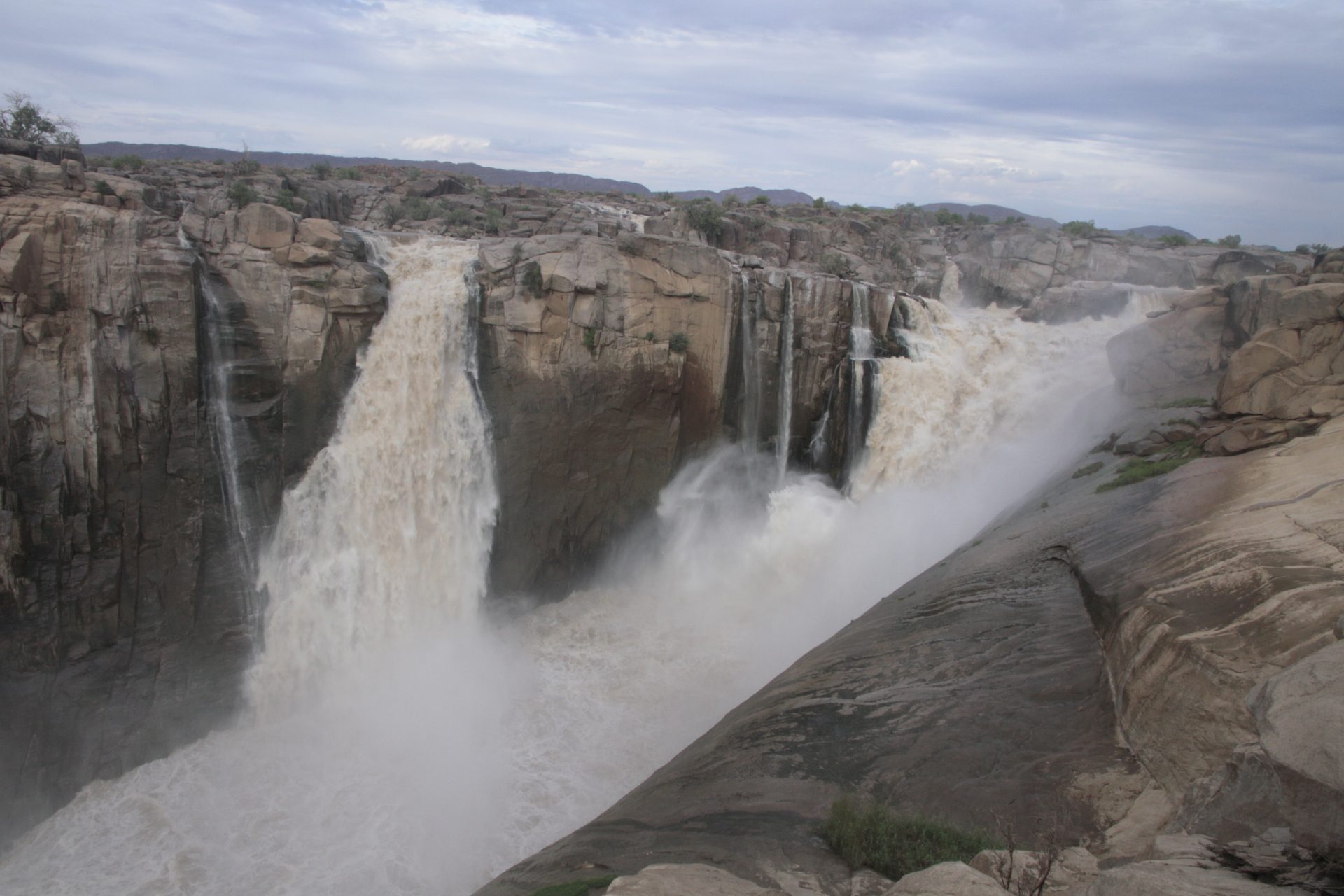
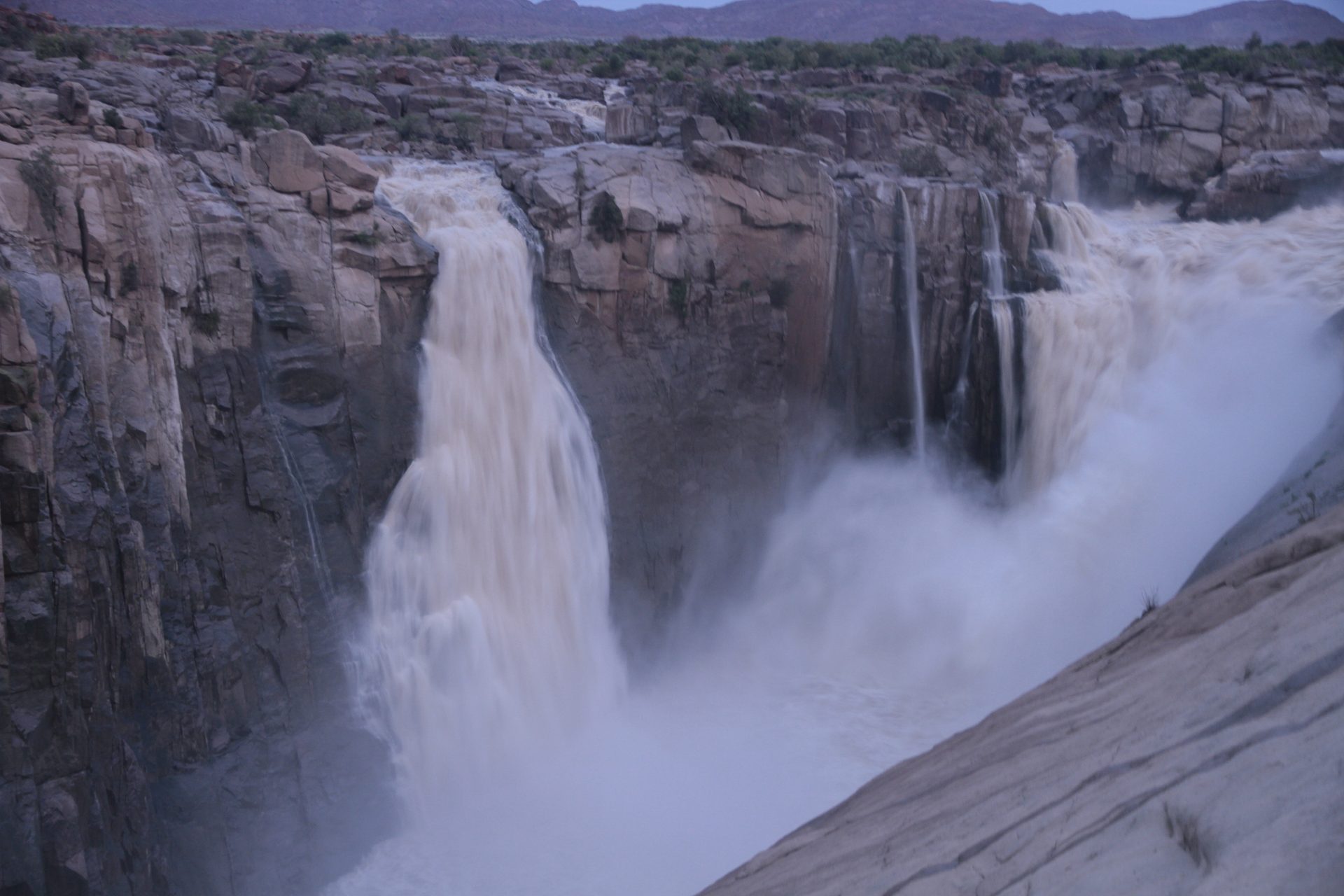
The Augrabies Falls are on the Orange River, about 120 kilometres west of Upington. The Khoikhoi called this place Ankoerebis — “the place of great noise.” When the Orange River is in flood, it earns that name completely. The falls drop 56 metres into a gorge that runs for 18 kilometres, averaging 240 metres deep, carved into ancient basement granite by the weight and patience of moving water.
The park around the falls is quiver tree country. Aloidendron dichotomum — the kokerboom — is the characteristic plant of this part of the Northern Cape: a tree that looks like it was engineered for a planet with extreme heat, infertile soil, and no patience for ordinary vegetation. It was. The Bushmen made arrow quivers from its hollow branches. The silhouette of a quiver tree against an African sky is one of the more particular images the Northern Cape produces, and you see it everywhere around Augrabies.
We arrived in the late afternoon.
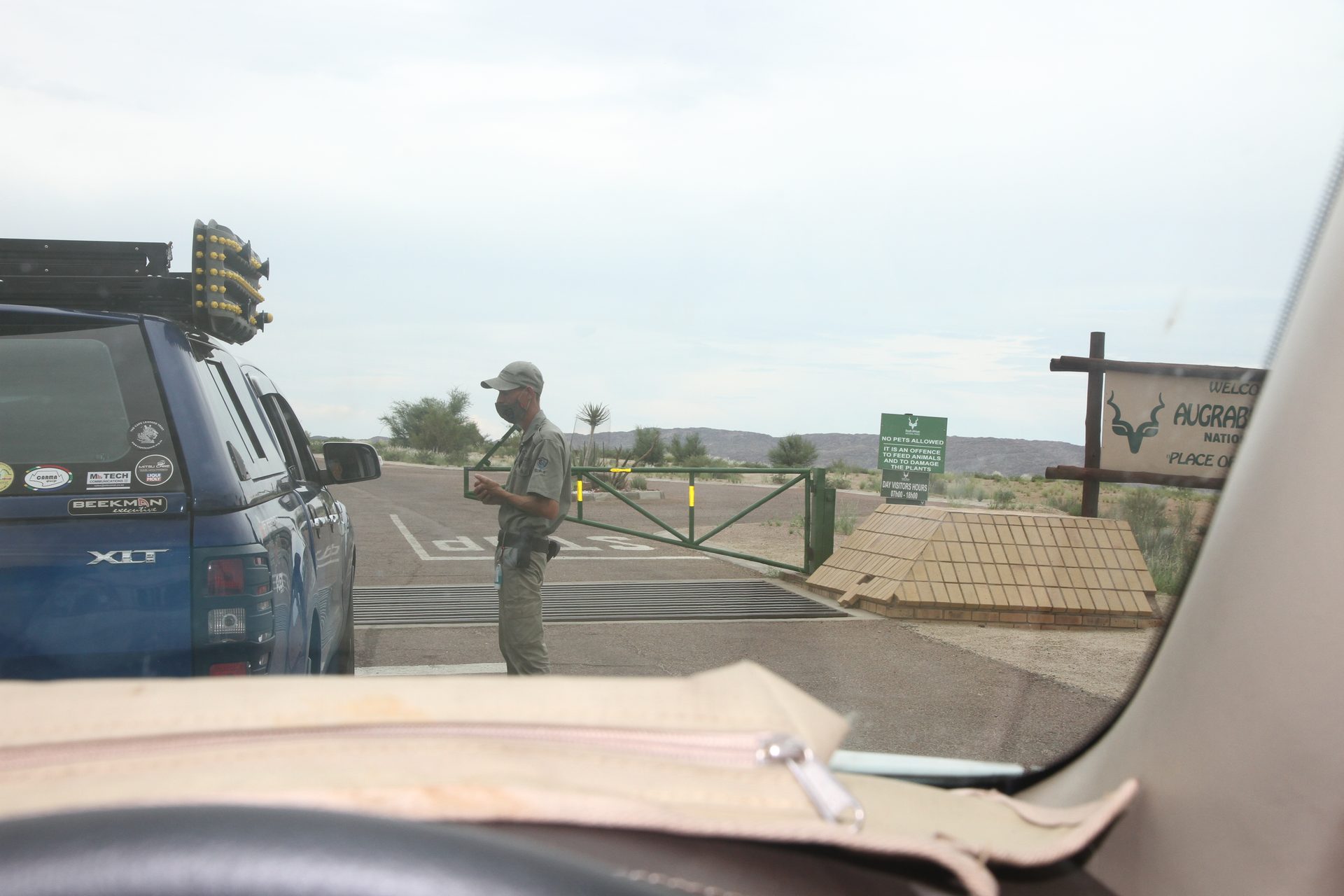
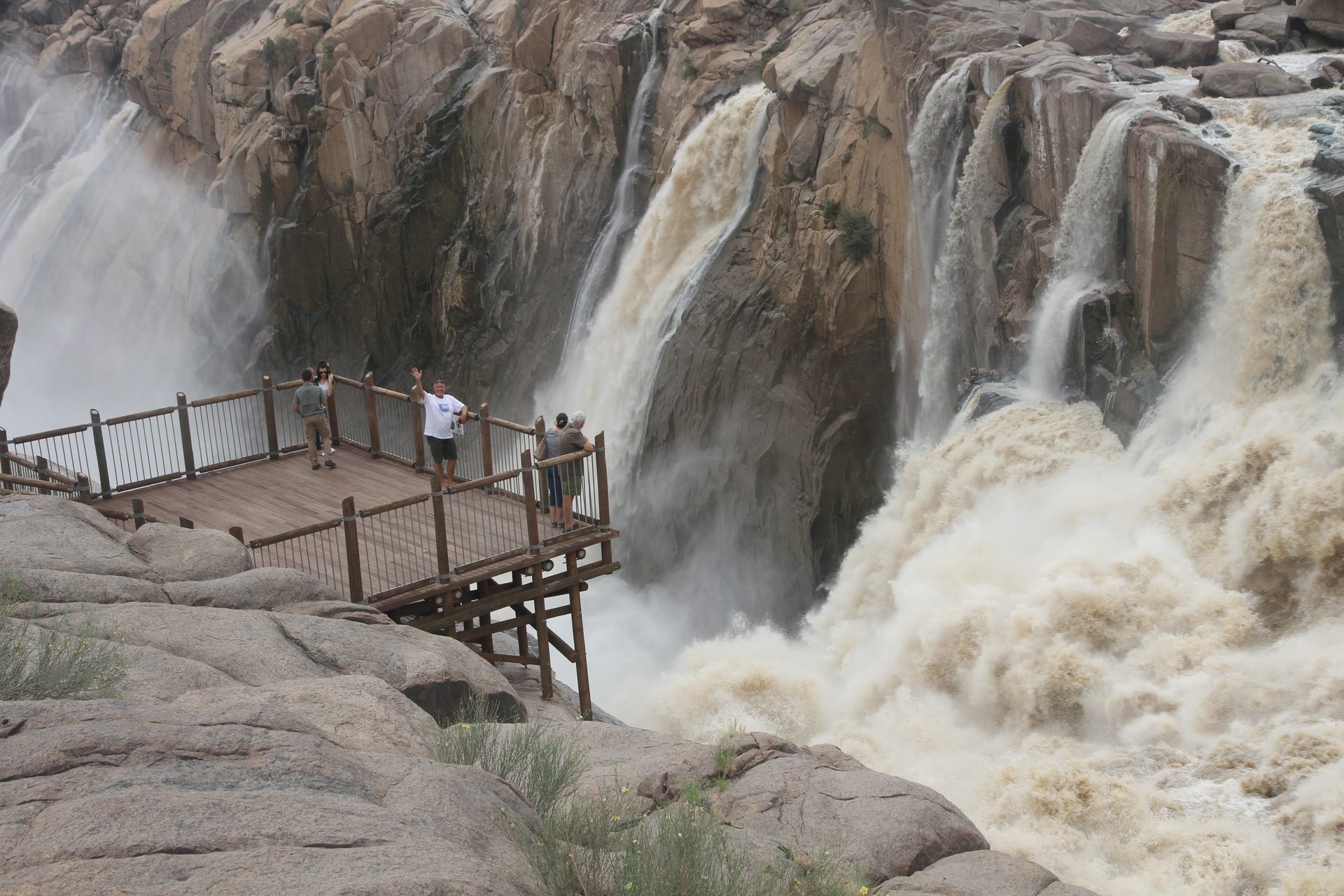
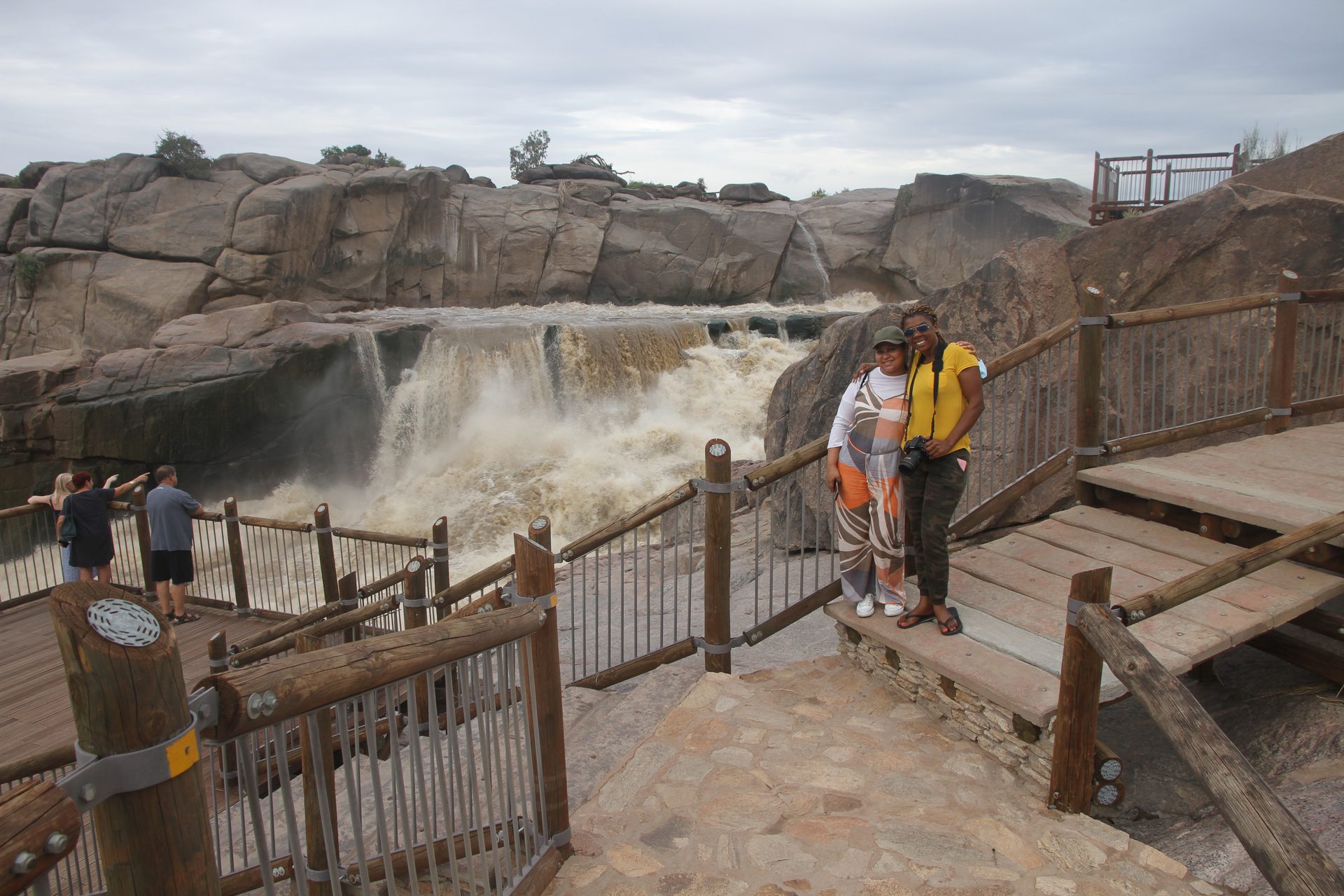
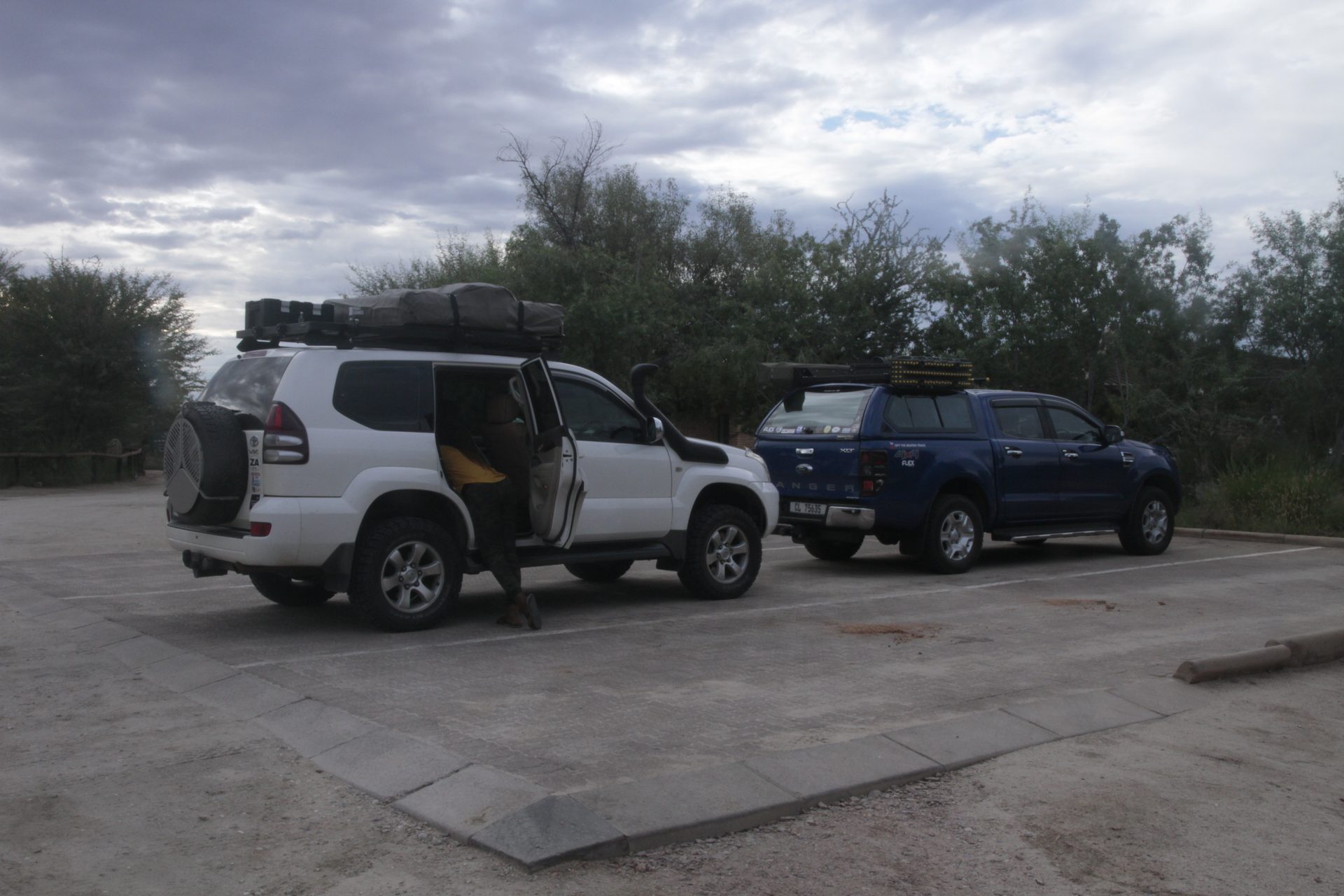
The plan was to camp. We had the rooftop tent on Sarabi. The Wolf Packs were stocked. We had not camped once on this trip and we were absolutely ready to start.
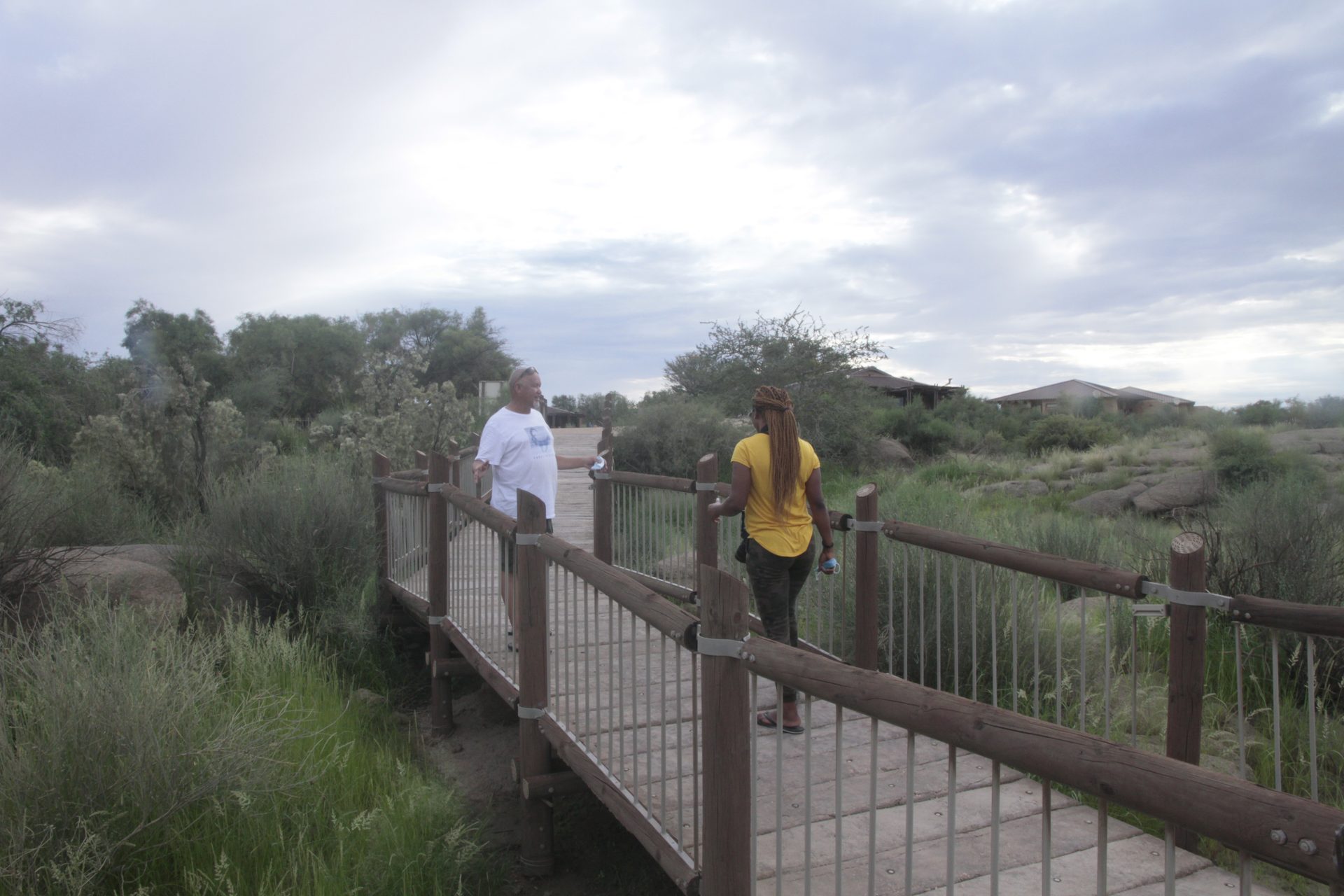
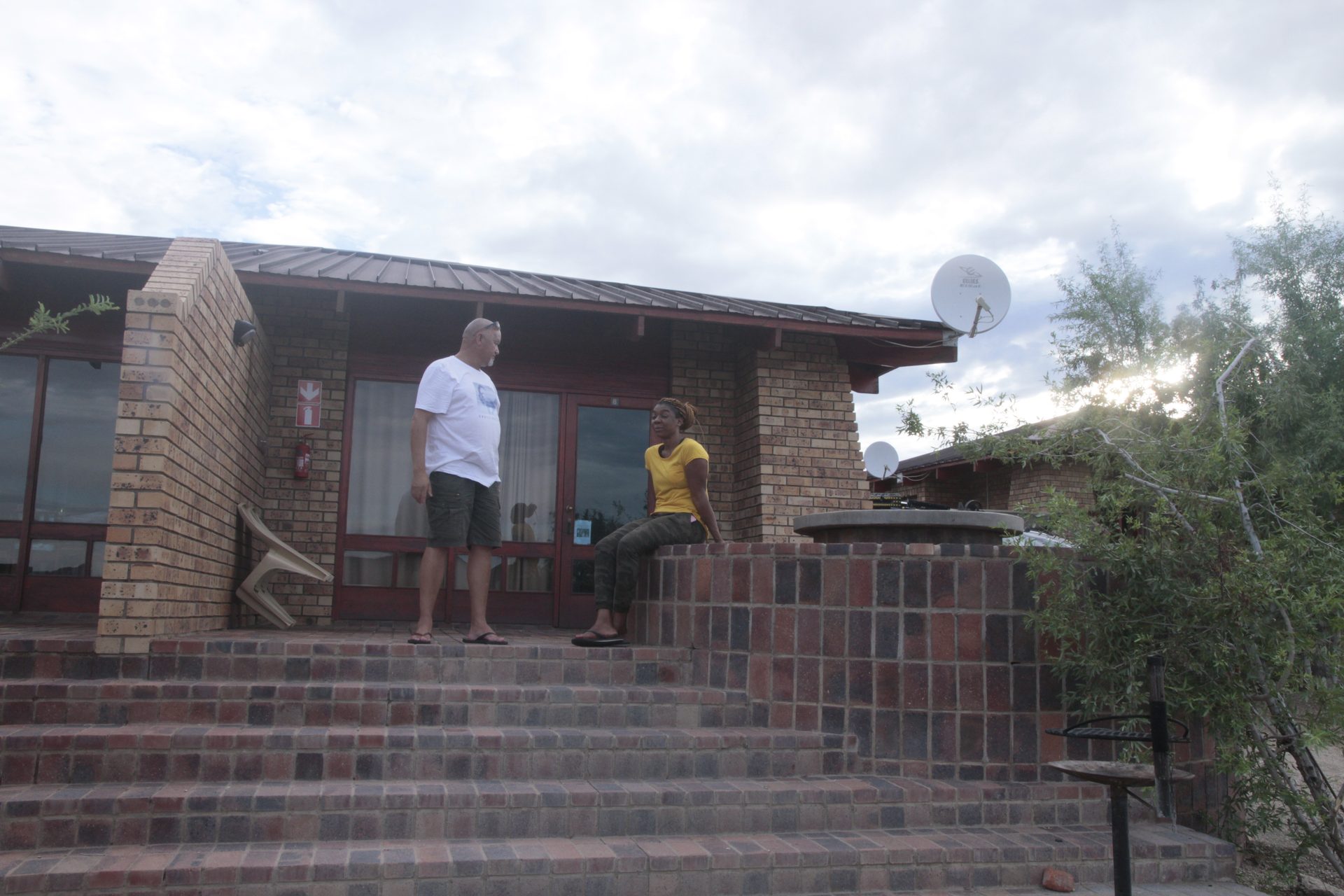
We ended up in the chalets. Campfire outside. A great evening. Nobody was complaining.
Sunrise Over the Falls
We were up early. There’s a reason.
The light on the gorge at dawn is not the same as any other time of day. The granite walls catch it differently — pink first, then orange, then gold — and the water is dark against it, tumbling over the edge at 56 metres with enough force that you feel it as much as you hear it. The Khoikhoi called this the place of great noise and at dawn, when the air is cold and the sound carries across the rock, that name makes complete sense.
We had it entirely to ourselves. Six in the morning, one of the world’s significant waterfalls, nobody else around.
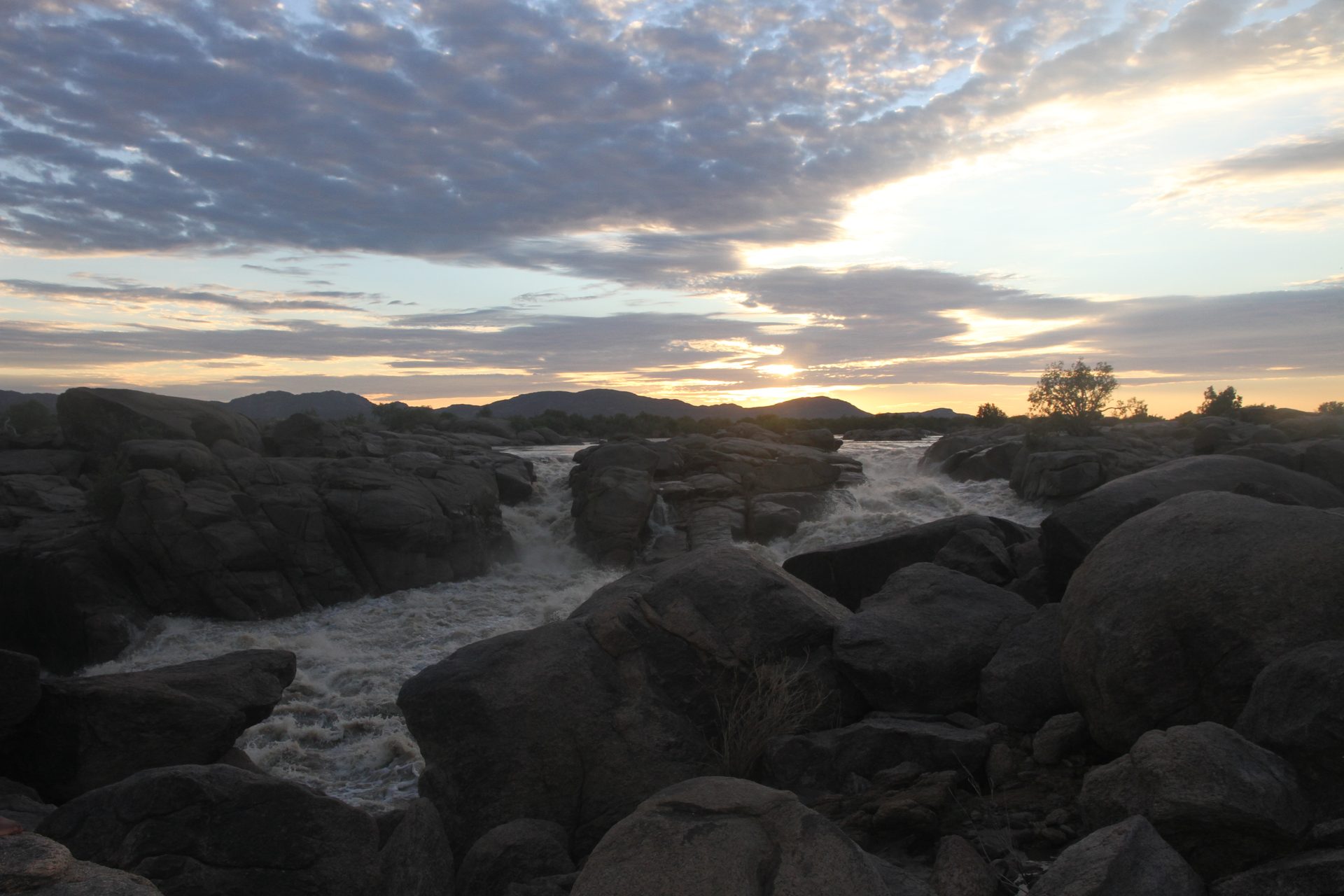
Spectacular is the only word, and it earns the description.
Vioolsdrif — Frontier River Resort
After Augrabies we moved slowly toward Vioolsdrif and the Orange River.
The road between Augrabies and Vioolsdrif is unhurried Northern Cape — long views, dry vegetation, the sense that you could stop anywhere and the photograph would justify itself. We stopped many times. Lunch was somewhere along the road. A snack was somewhere else. The kilometre count mattered less than the light and what it was doing to the terrain.
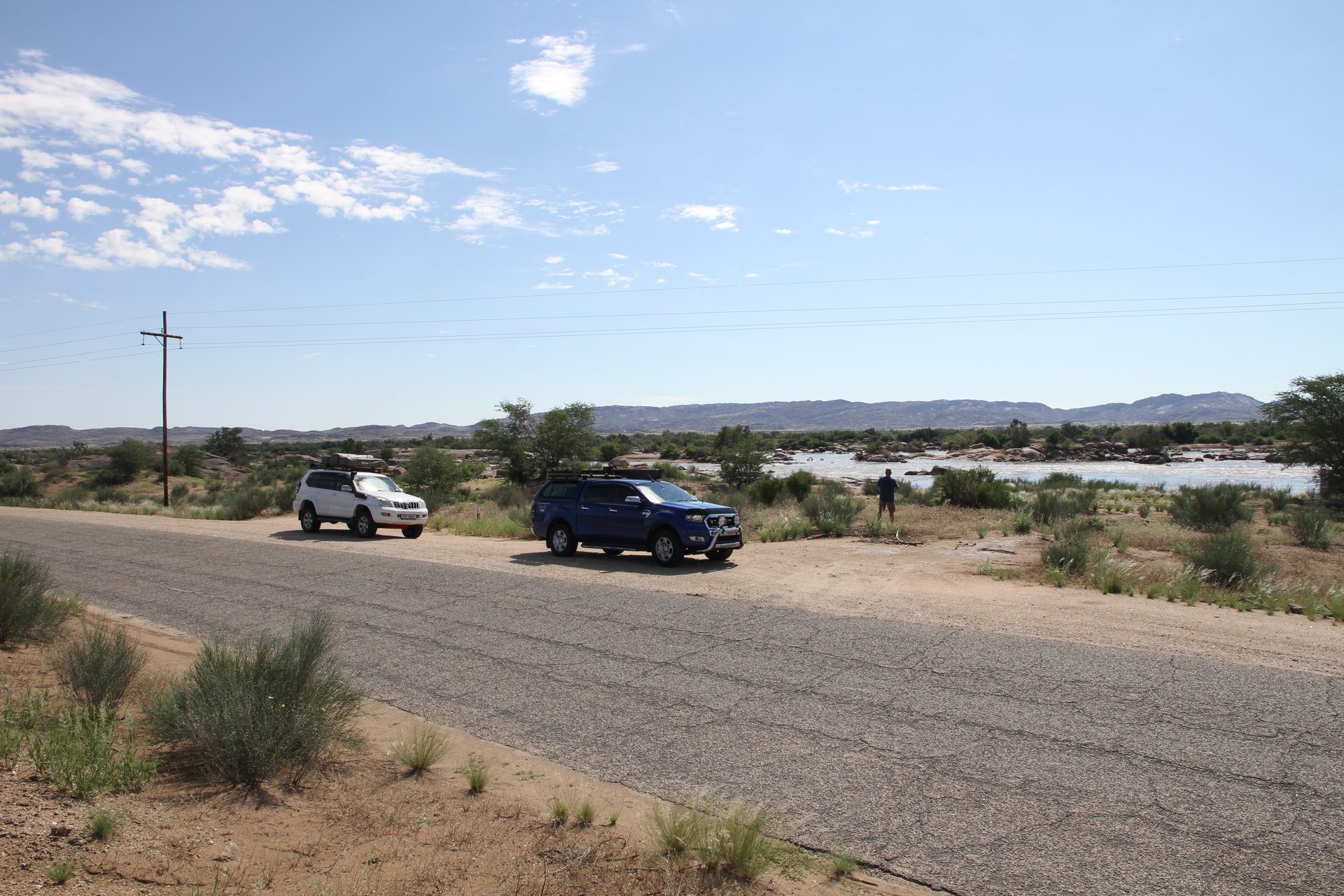
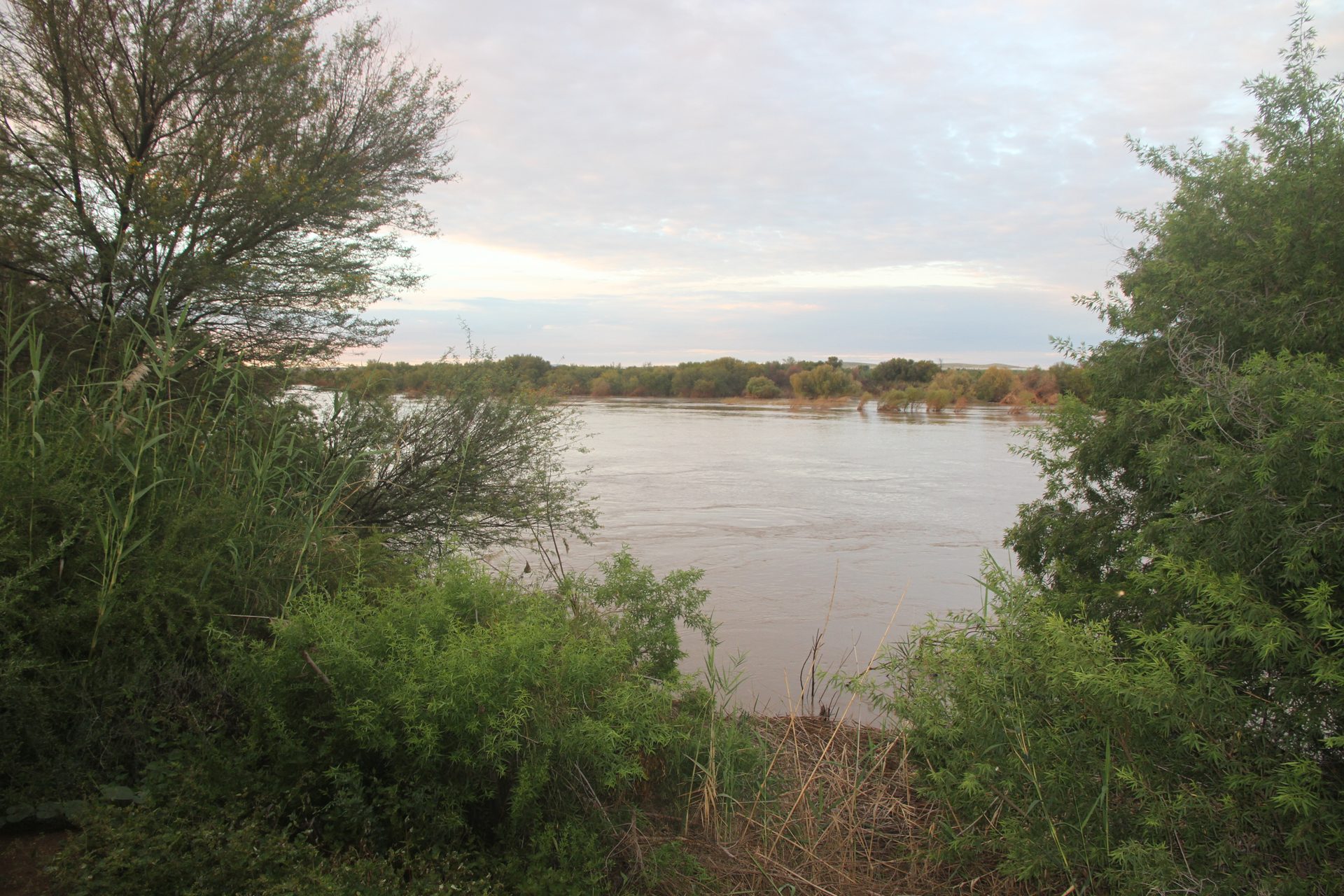
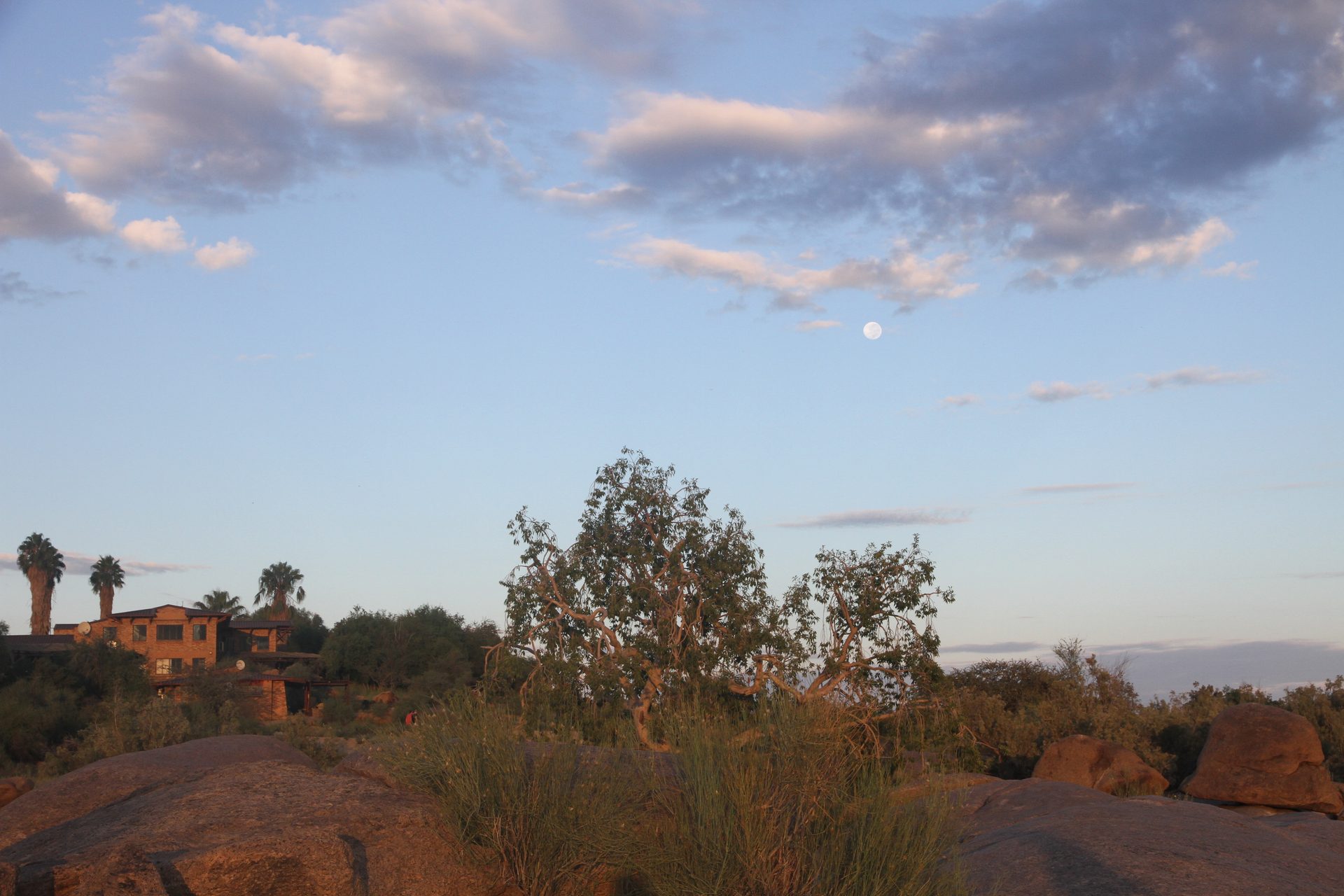
Vioolsdrif sits on the Orange River at the border between South Africa and Namibia. The Frontier River Resort sits on the south bank, looking directly across the water into Namibia. It’s one of those locations where the border concept becomes somewhat abstract — the same sky, the same rock, the same river on both sides, two countries.
Our phones knew what they were looking at. The moment we arrived, roaming notifications started. South African SIM cards, Namibian networks. You could hold your phone toward the river and watch the network switch. As if the phone was saying: I’m not sure where we are either.
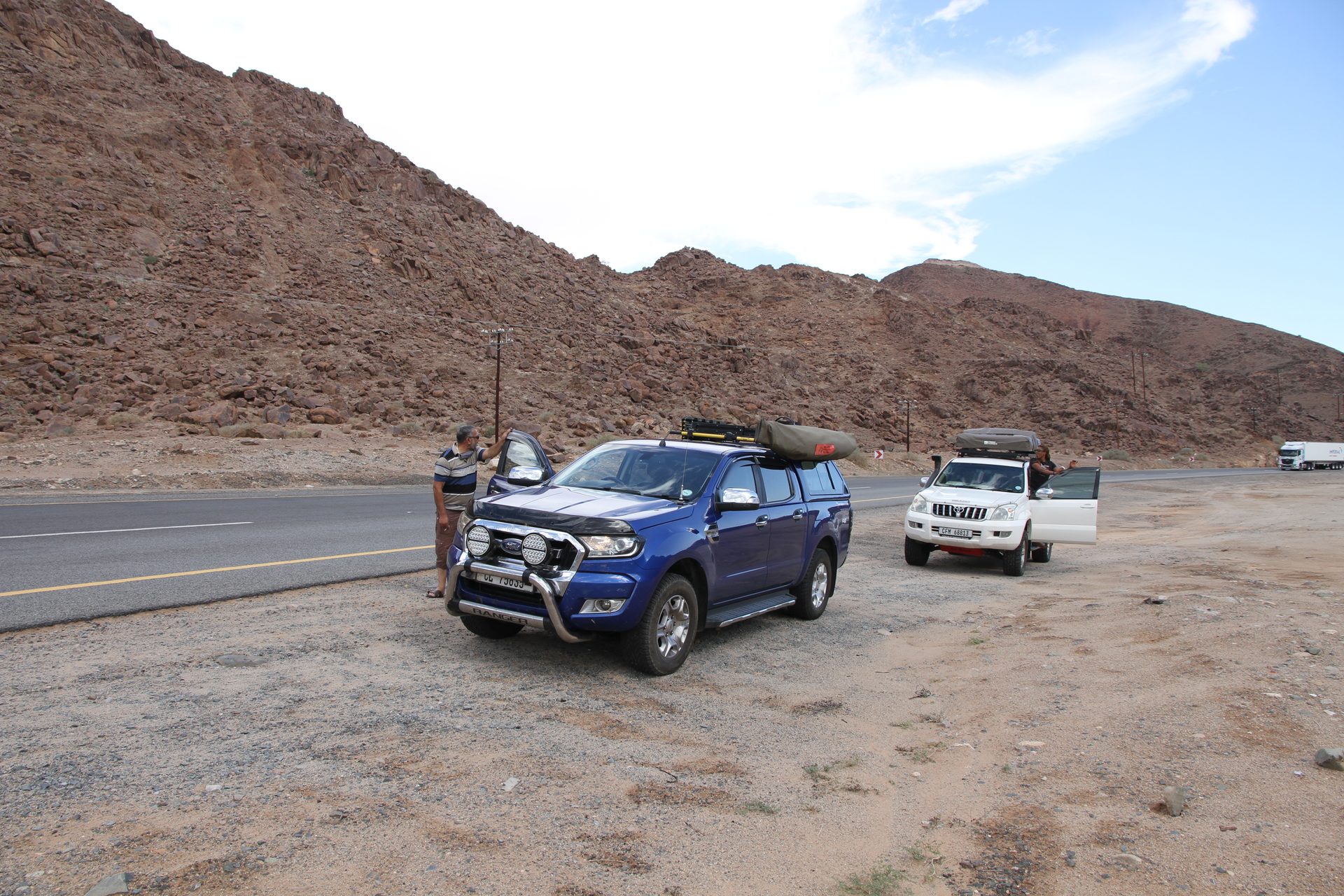
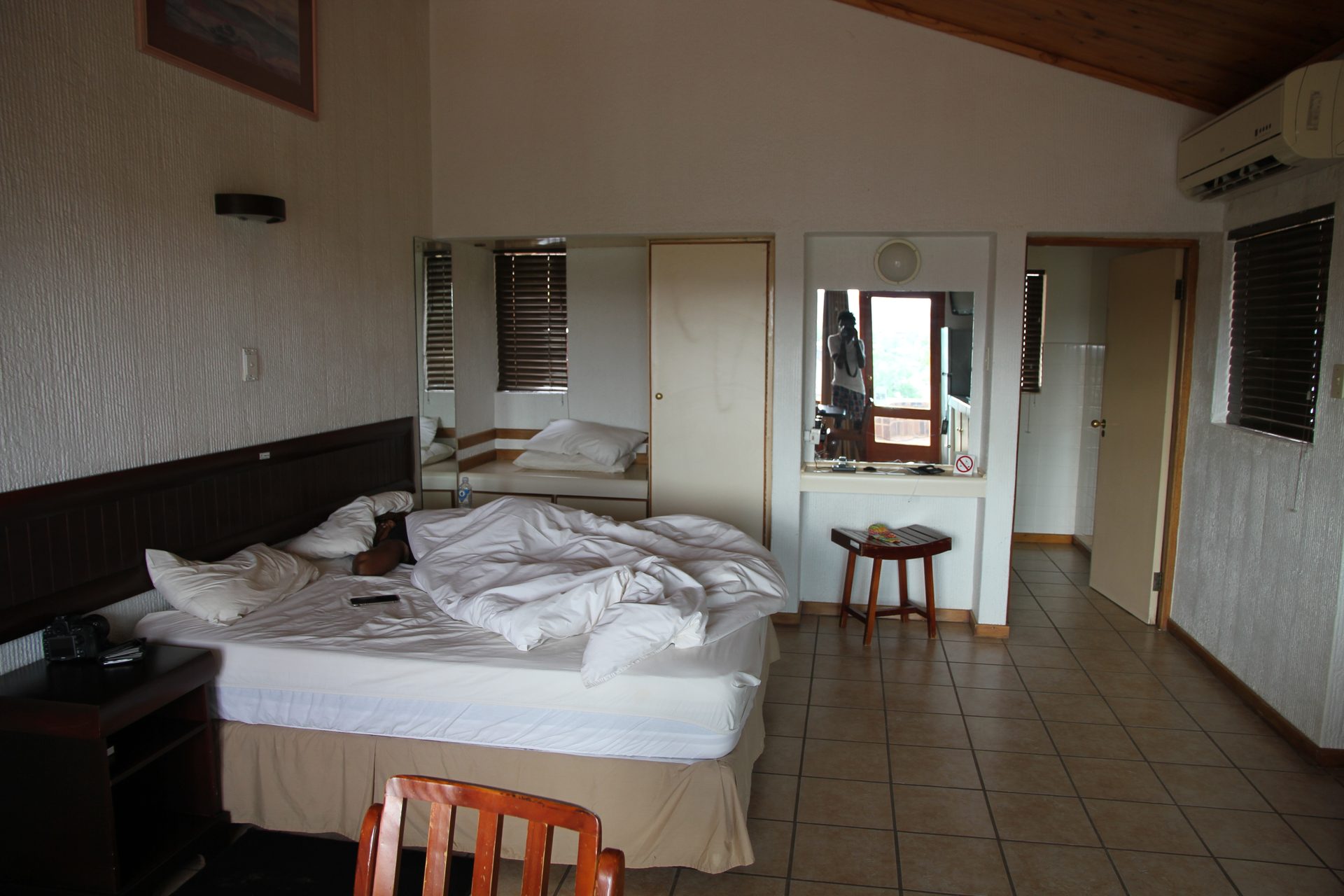
We had planned to camp here. Roof tent, Wolf Packs, the whole setup we’d just had fitted in Johannesburg a few days earlier. The owner had other ideas. No guests, no bookings that night — the tented accommodation was sitting empty, and he felt we shouldn’t be camping when the tented camps were available. That was that.
So we didn’t camp. Again.
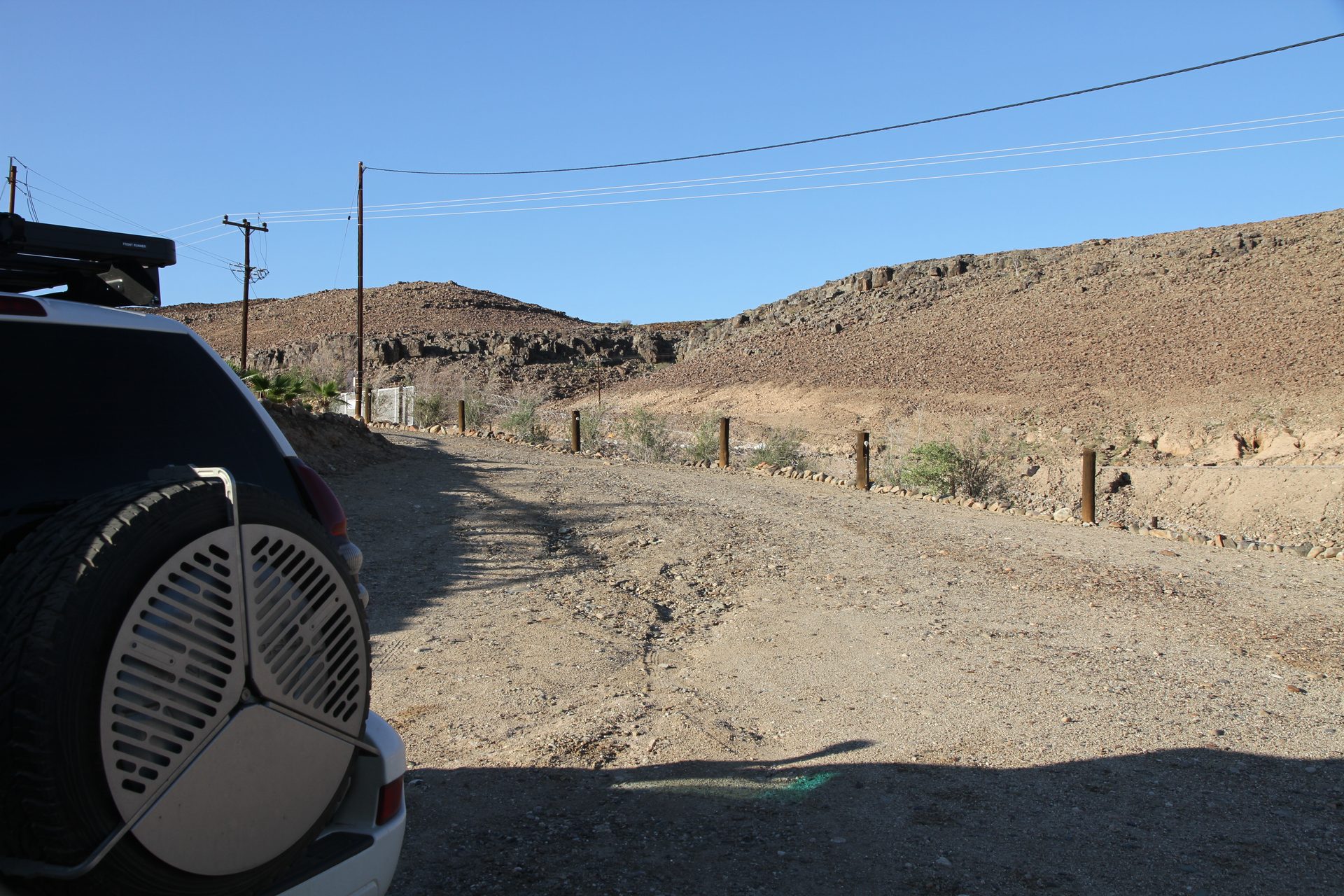
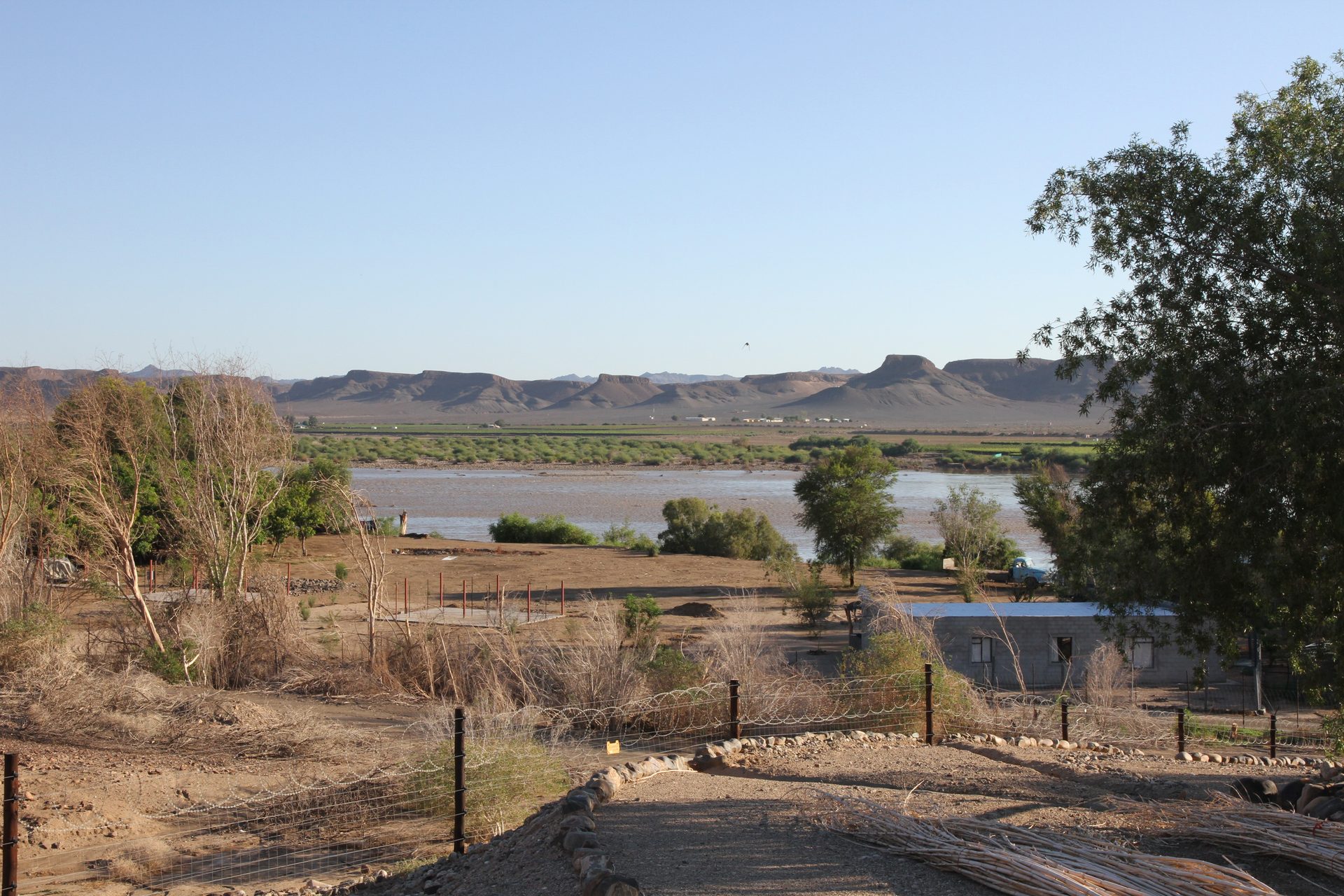
The morning was unhurried. Coffee on the bank with the river moving past, Namibia twenty metres away across the water, phones still announcing occasionally that they’d decided to roam. There’s a particular kind of stillness at a border on a river — the world reduced to water moving and two countries being quiet on either side of it.
The Trip That Never Camped
Here is the full accounting.
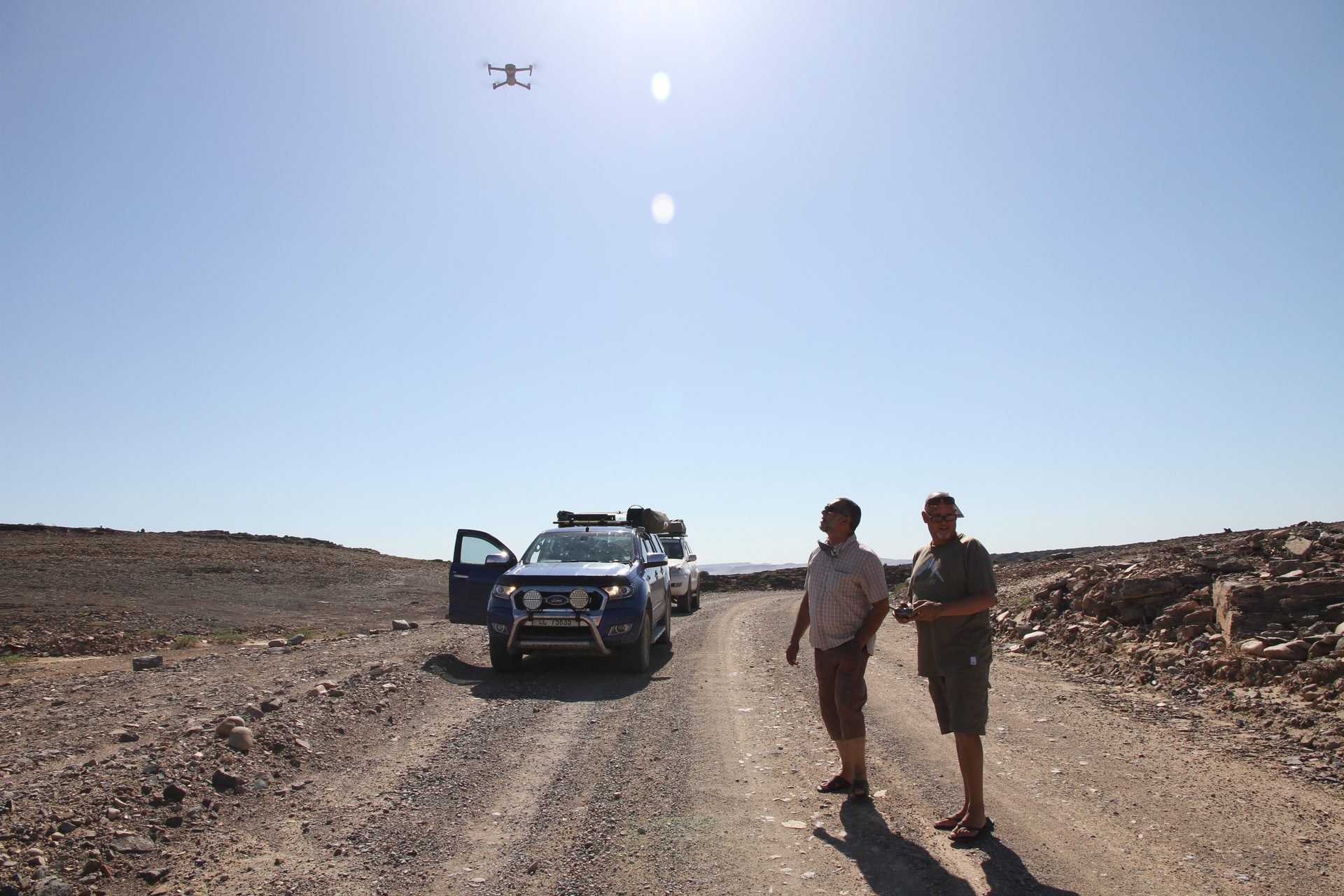
We left Cape Town and drove to Johannesburg to fit Sarabi with a rooftop tent, a roof rack, a 40-litre water tank, and three Wolf Pack boxes. We then left Johannesburg and drove south-west through the night into the Northern Cape to go camping with the new kit we’d just had fitted.
We stayed in chalets at Khamkirri. We stayed in chalets at Augrabies. We stayed in tented accommodation at Frontier River Resort. Every single host, independently and apparently without any coordination, decided we should be inside rather than pitching a tent. Nobody planned this. It just happened, three times in a row.
The rooftop tent crossed Cape Town, crossed the Highveld, crossed the Northern Cape, looked at the Orange River, and came home unused.
This is how trips work sometimes. You plan to sleep under the stars and you end up watching the stars from a chalet window instead. The kit was ready. The rig was right. The places we stopped at had different ideas, and frankly every single stop was better than we’d have managed on our own anyway. The rooftop tent is still on the roof. It is ready. The next trip is the one.
The idea is to go with the flow but always be ready.