This was the first wild camping trip since Sarabi received her off-grid camping gear. None of it had been used yet, so there was a particular kind of excitement in finally putting it to the test. A seven-day wild camping trip might have been an ambitious place to start, but this is what we live for.
Most of the group were on leave. As usual, I would be working and travelling.
Day 1 — North on the N7
I left while it was still dark, getting an early start on the first day and heading north on the N7. Sarabi was loaded and ready, with all the new gear packed for its first proper run. The road to Springbok was quiet at that hour, with the dawn only starting to lift behind the mountains.
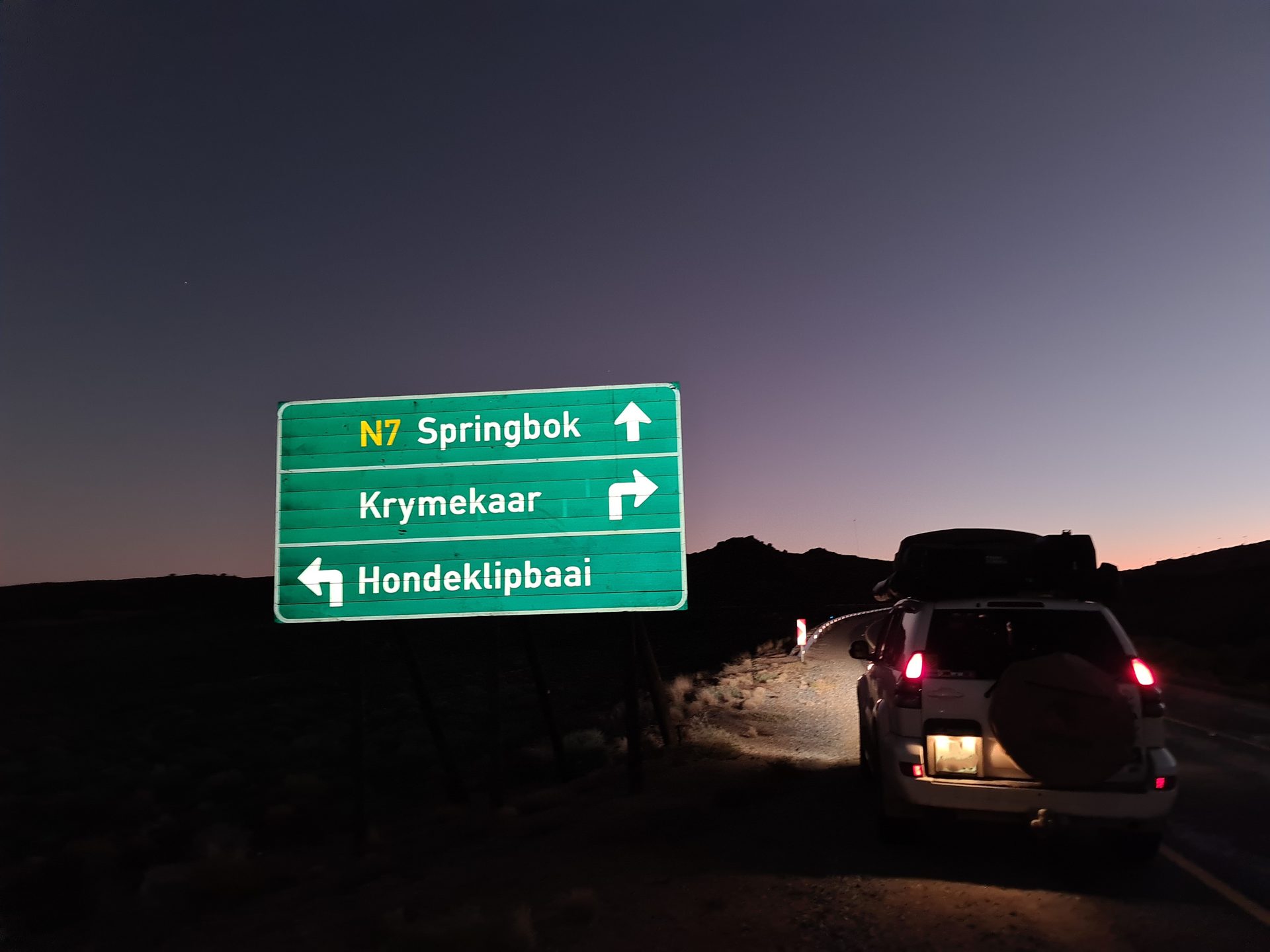
There is something satisfying about leaving before the rest of the world has started moving: the road is yours for a while, the plan feels possible, and the camp waiting at the other end begins to feel real.
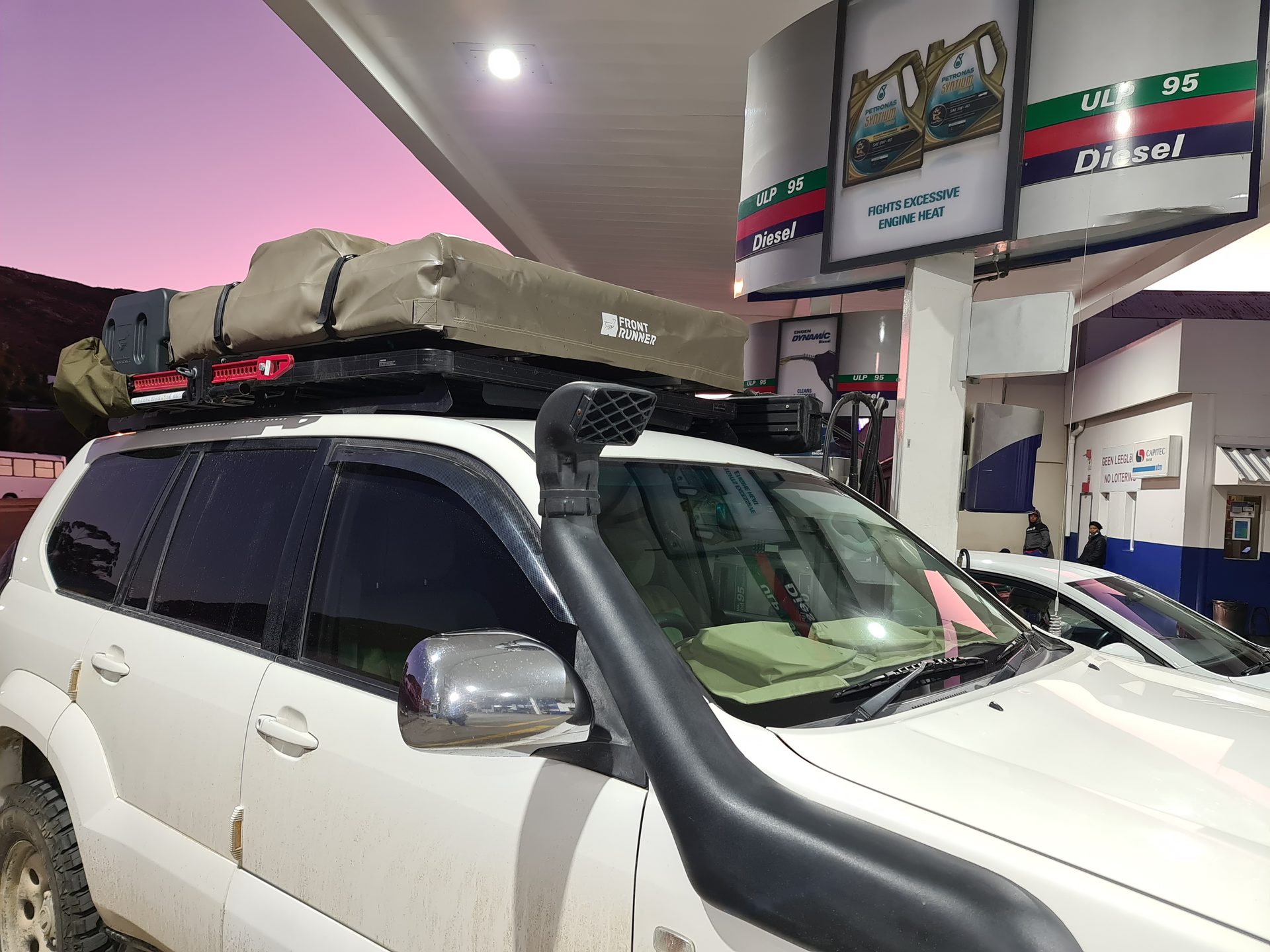
A Workday in Springbok
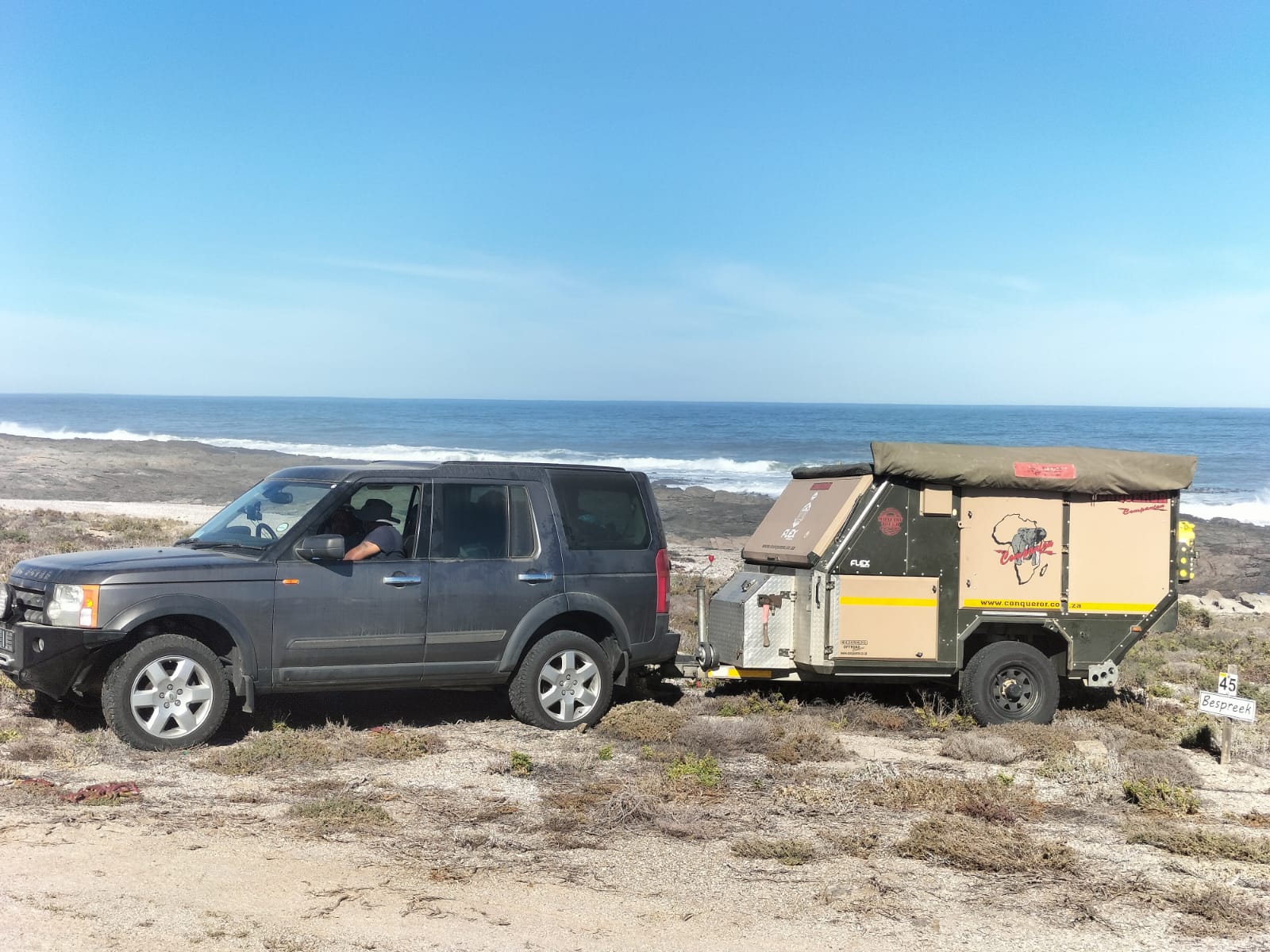
I arrived in Springbok well ahead of the convoy, which was only expected around midday. That left enough time to set up a different kind of camp: the trusty Flexo 555, the laptop, coffee, and breakfast. With the workday started early, I could get on with what needed doing while still being exactly where I needed to be.
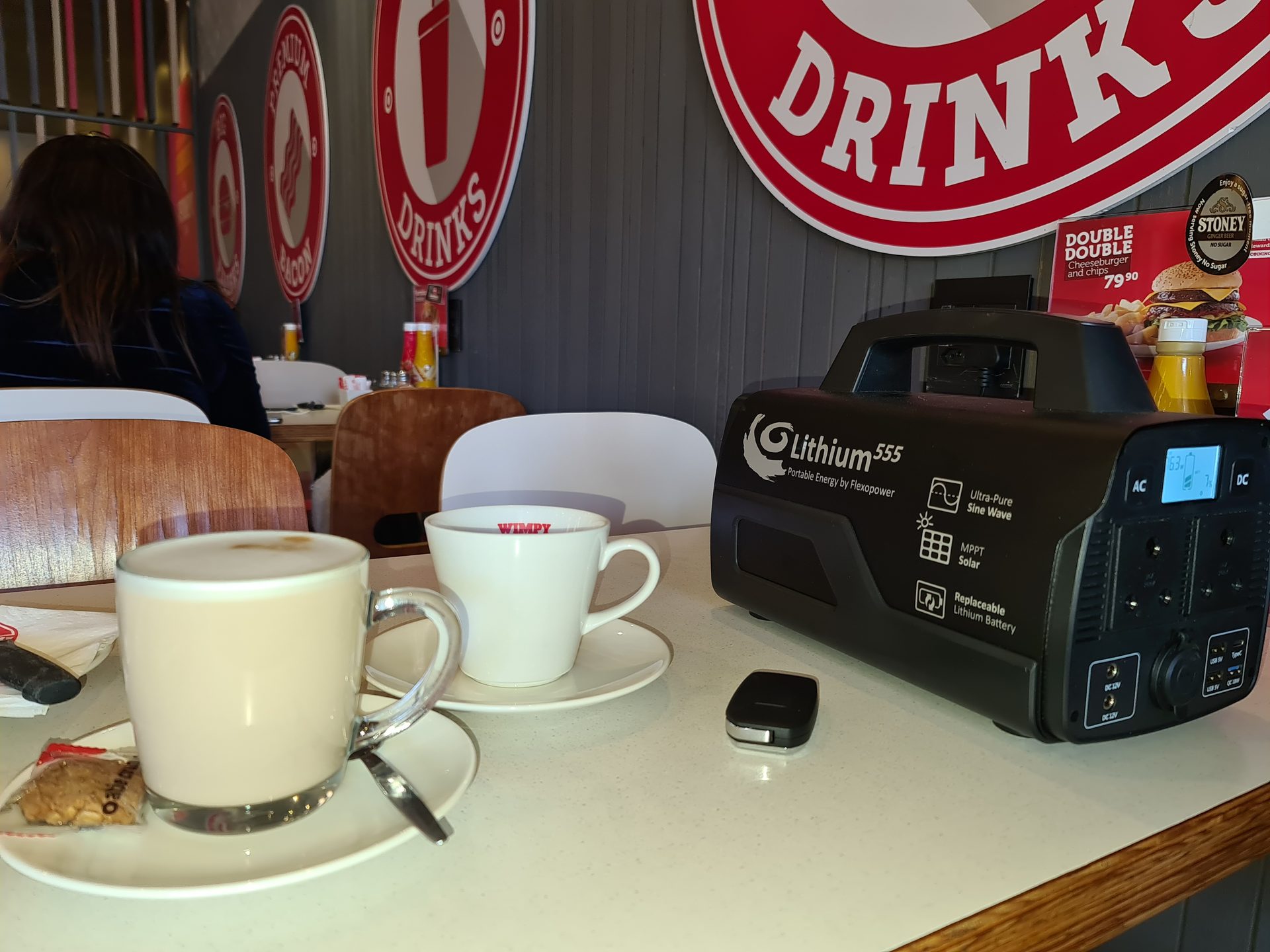
The convoy had not arrived yet, but the trip had already begun. Sarabi had made the run north, the off-grid setup was finally earning its place, and the West Coast was waiting.
The Convoy Is Whole
While I worked in Springbok, the group WhatsApp chat kept moving. From around 07:00, messages and photos came through as everyone reached fuel stops on the long run north from the Western Cape. By then I was already in Springbok, laptop open and workday underway.
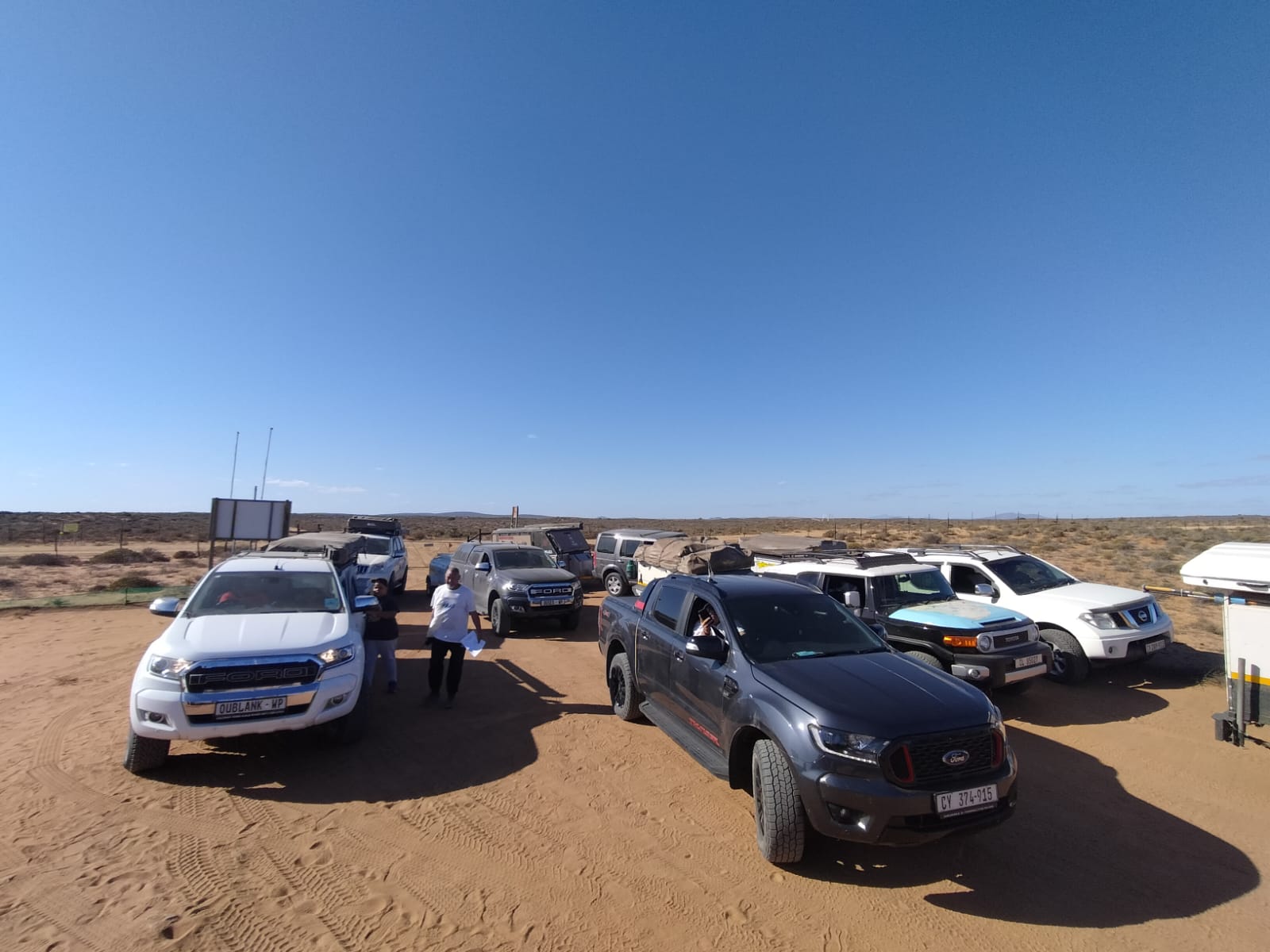
Just after 12:00, the convoy was whole again. I joined the group and we headed for our first campsite on the Diamond Coast.
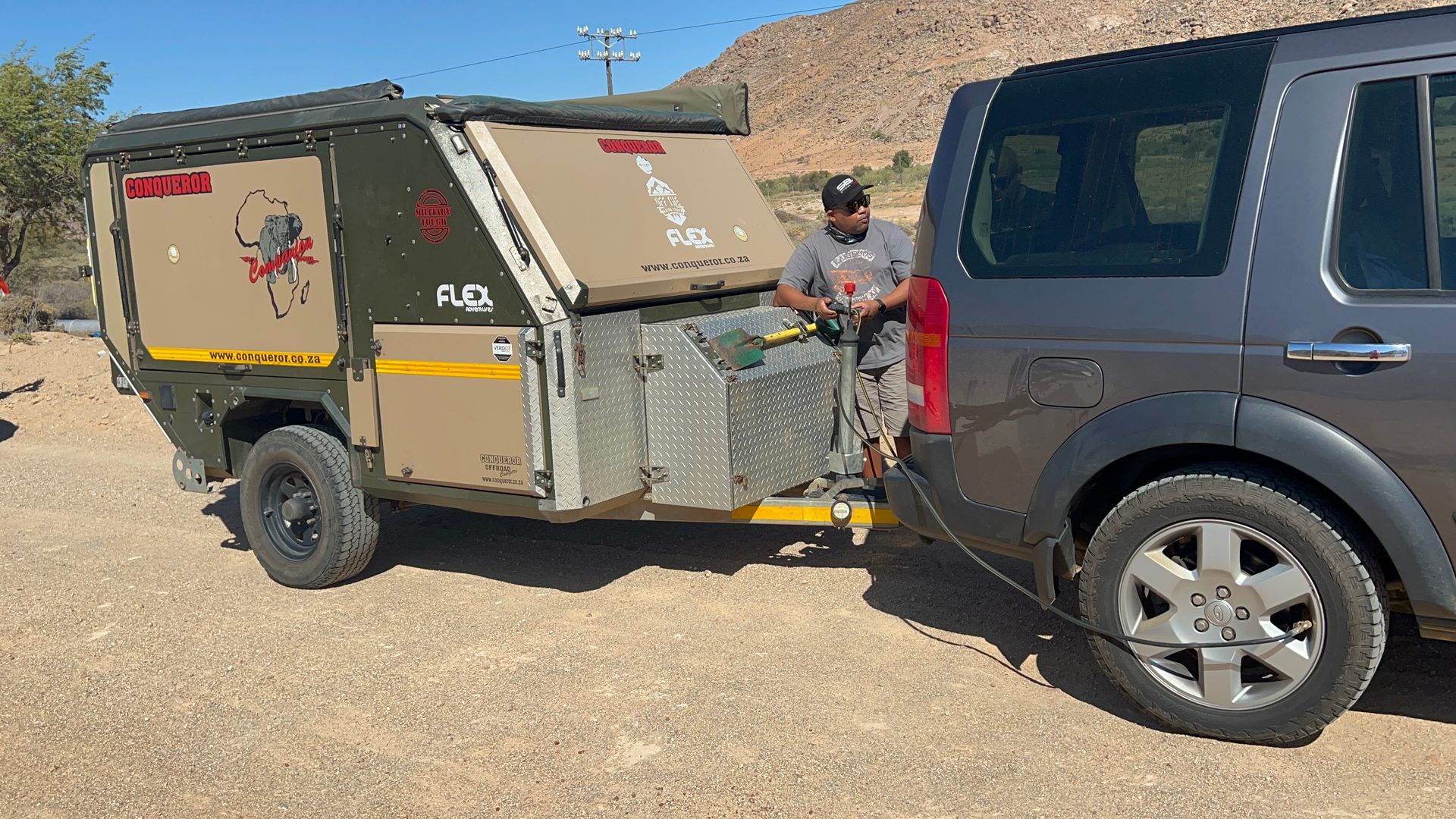
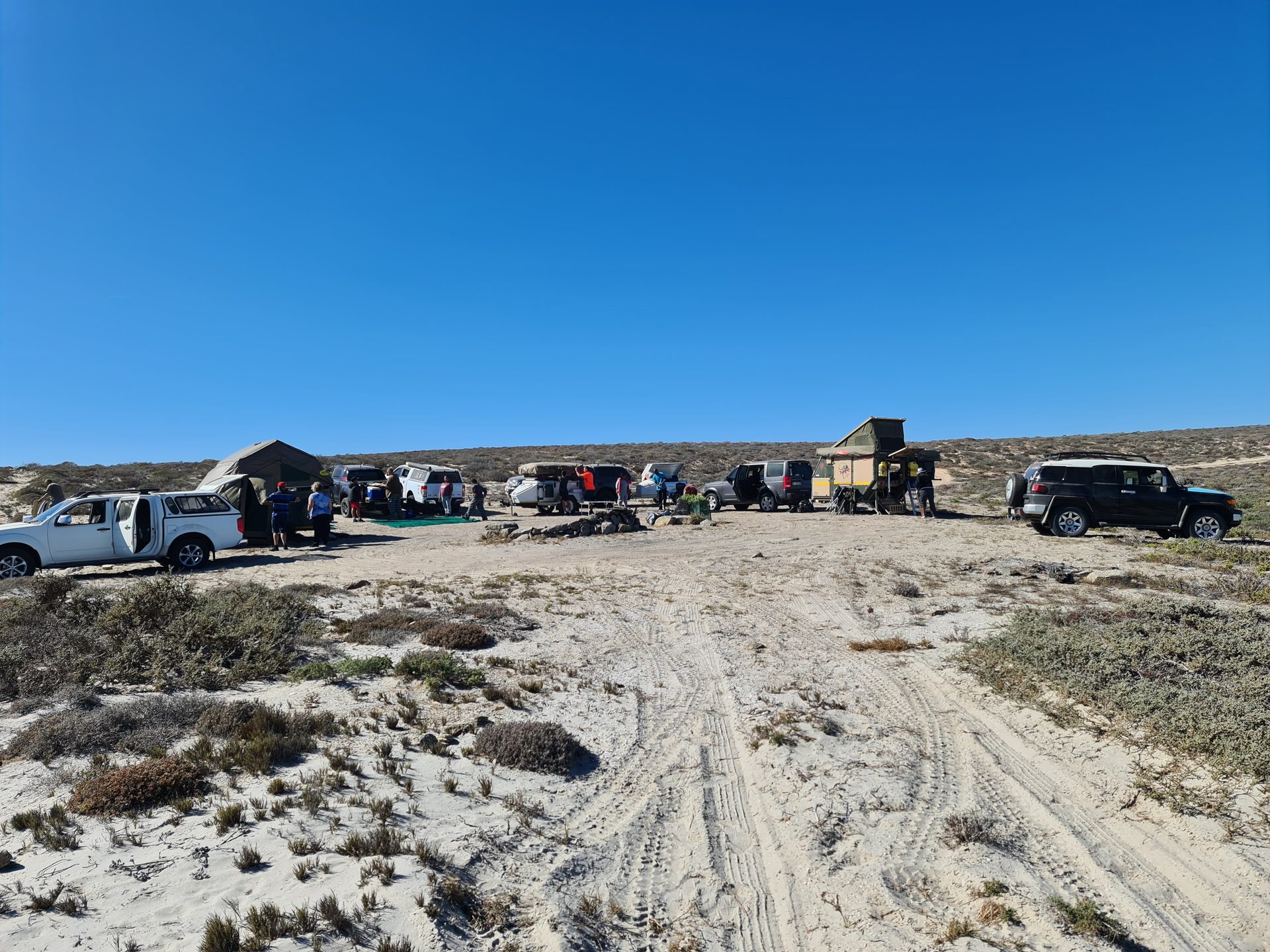
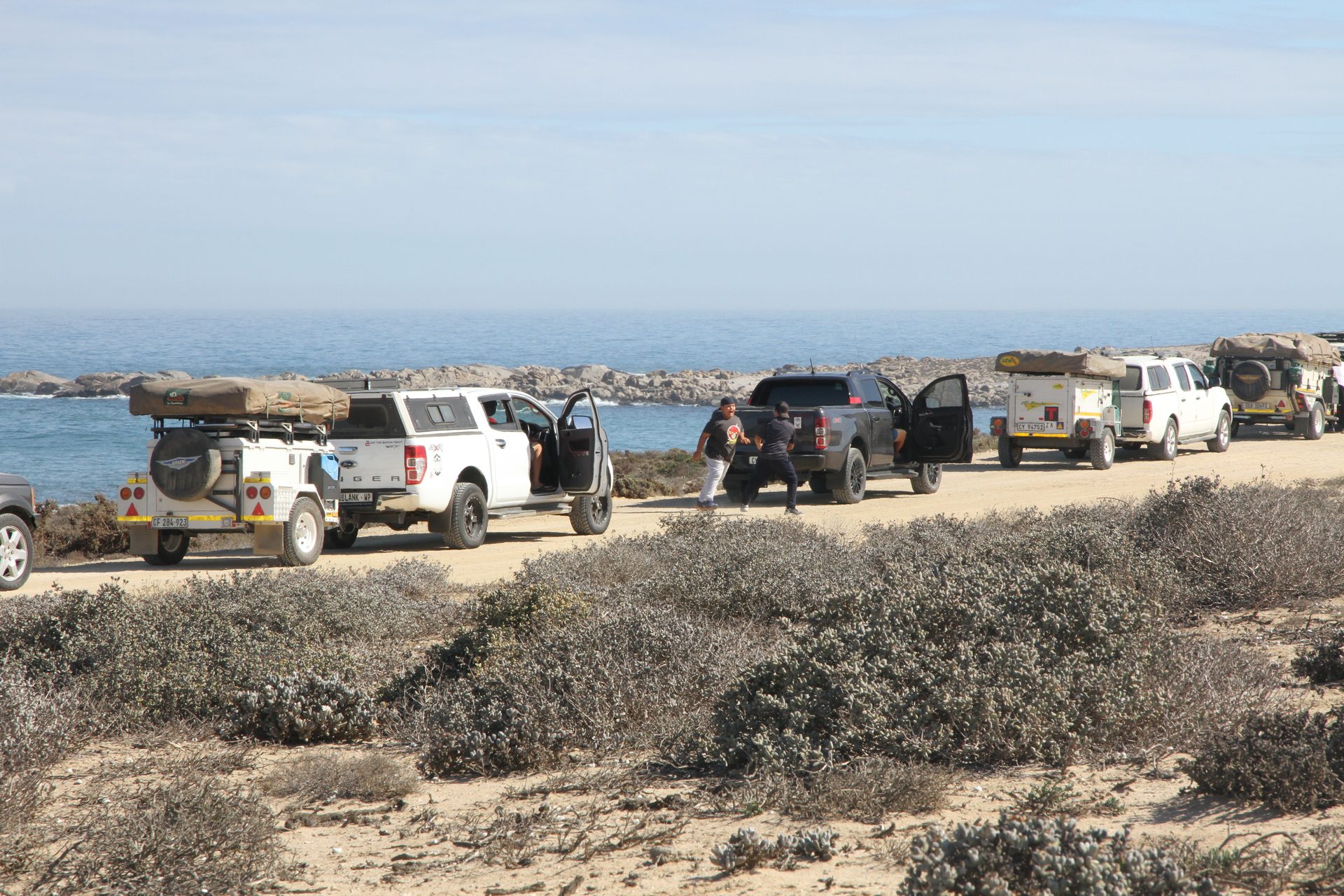
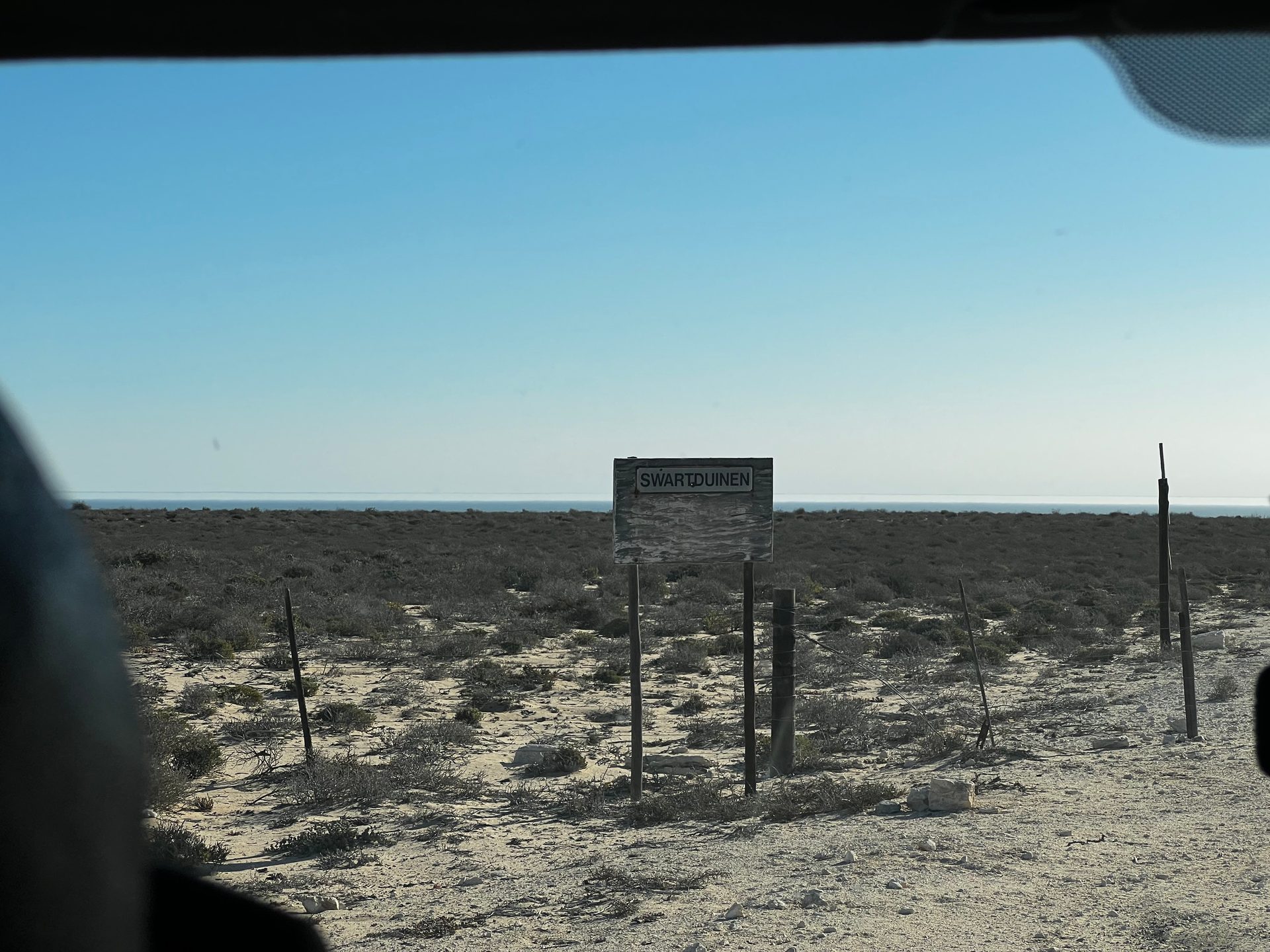
We made a last stop in Kleinzee for the things that only become necessary once everyone is already on the road, then continued toward the coast. Ralton opened the first farm gate and the vehicles rolled through. The music came on, the dancing began, and the trip officially started.
First Night on the Wild Coast
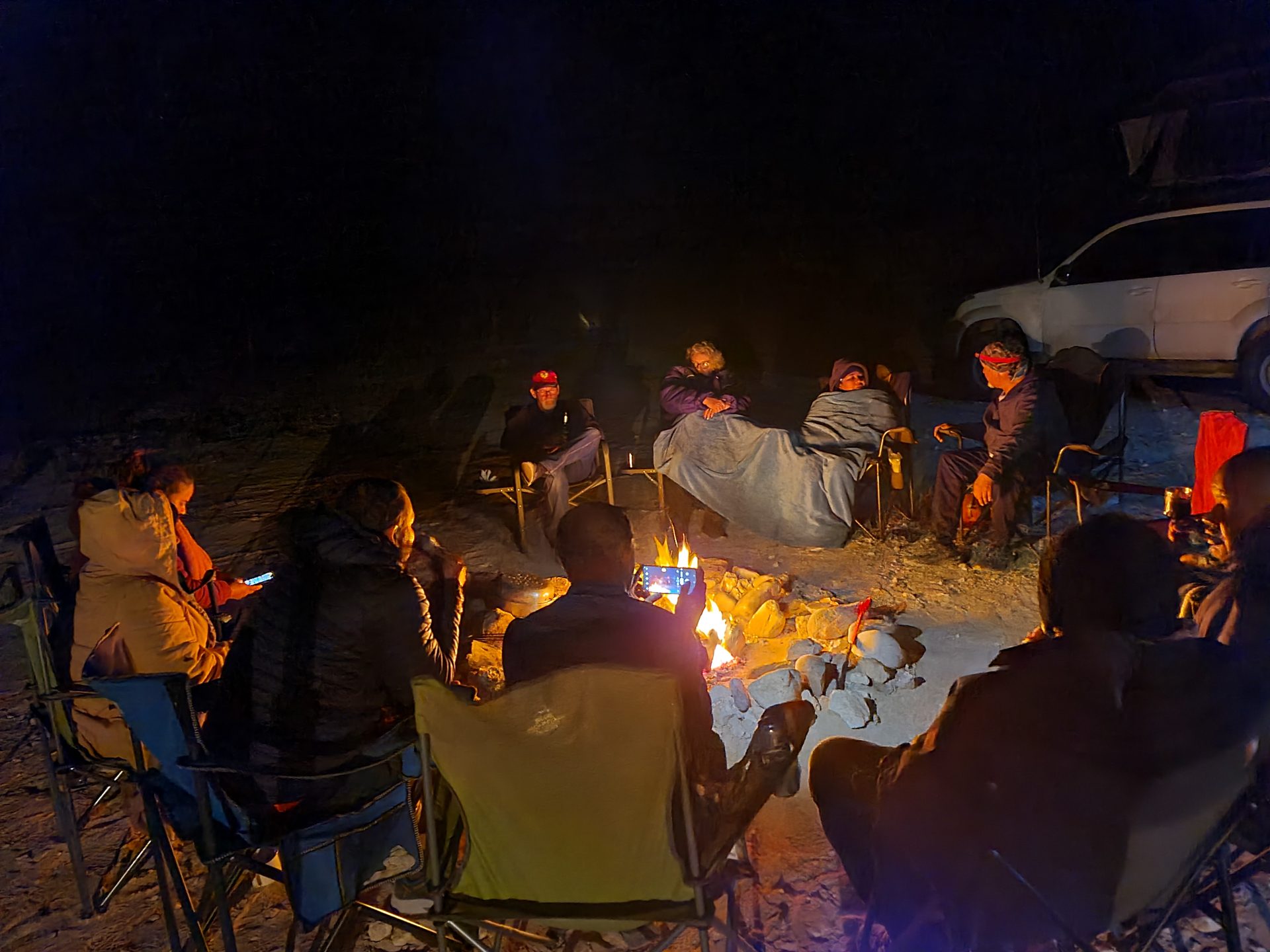
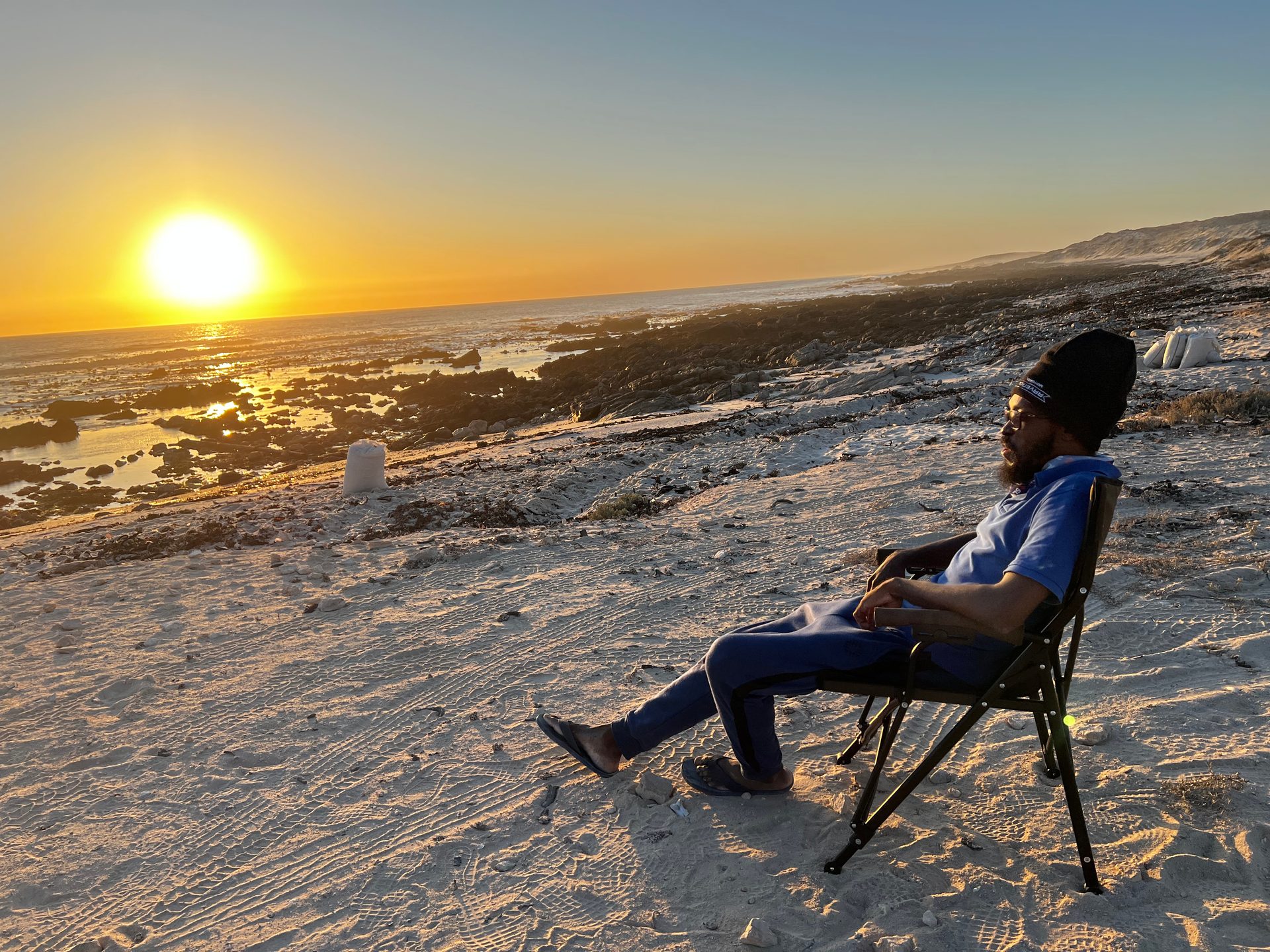
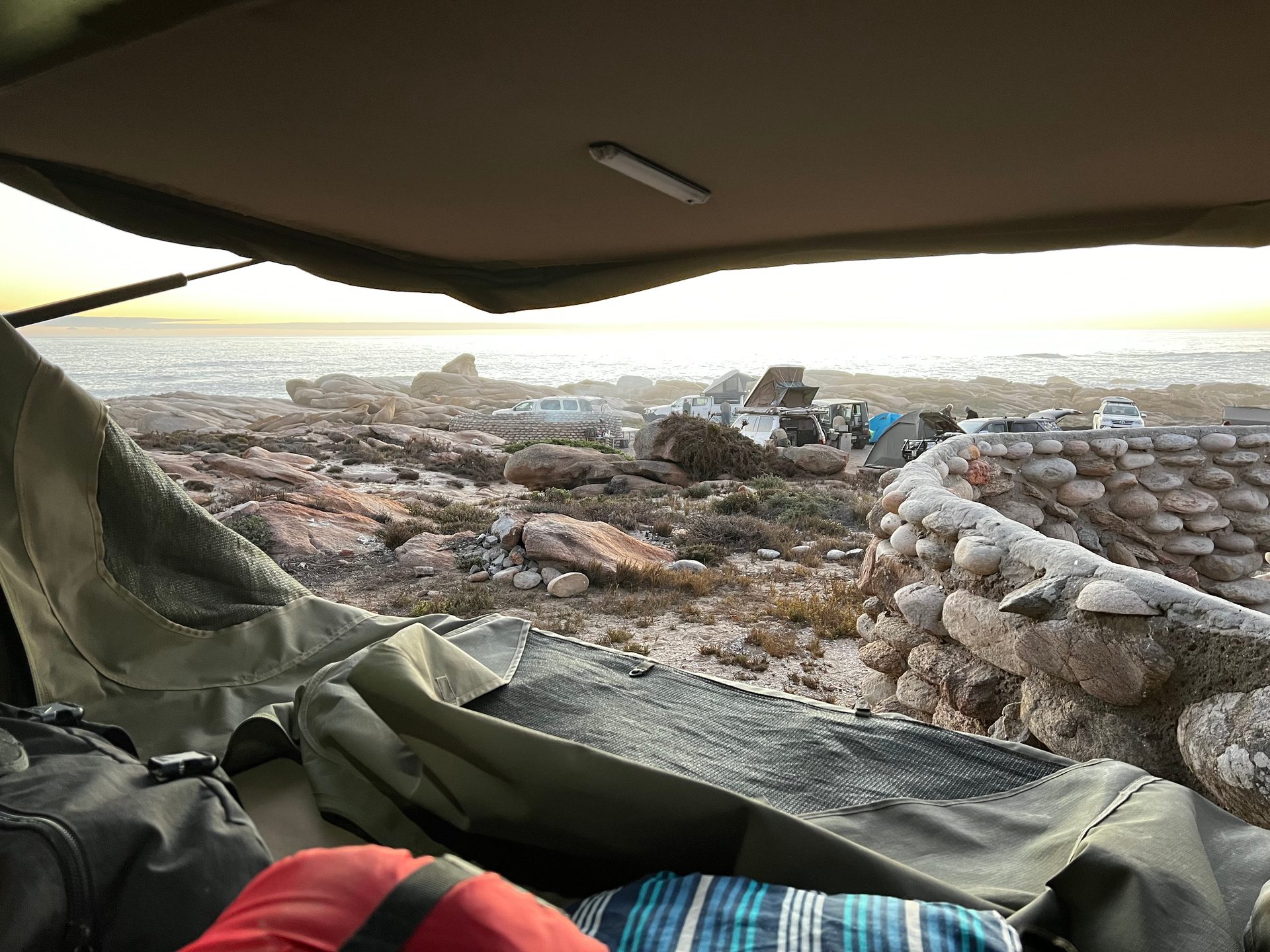
Camp went up around the fire on the wild West Coast. As the sun dropped over the sea, the long drive and workday gave way to that first proper evening of the trip.
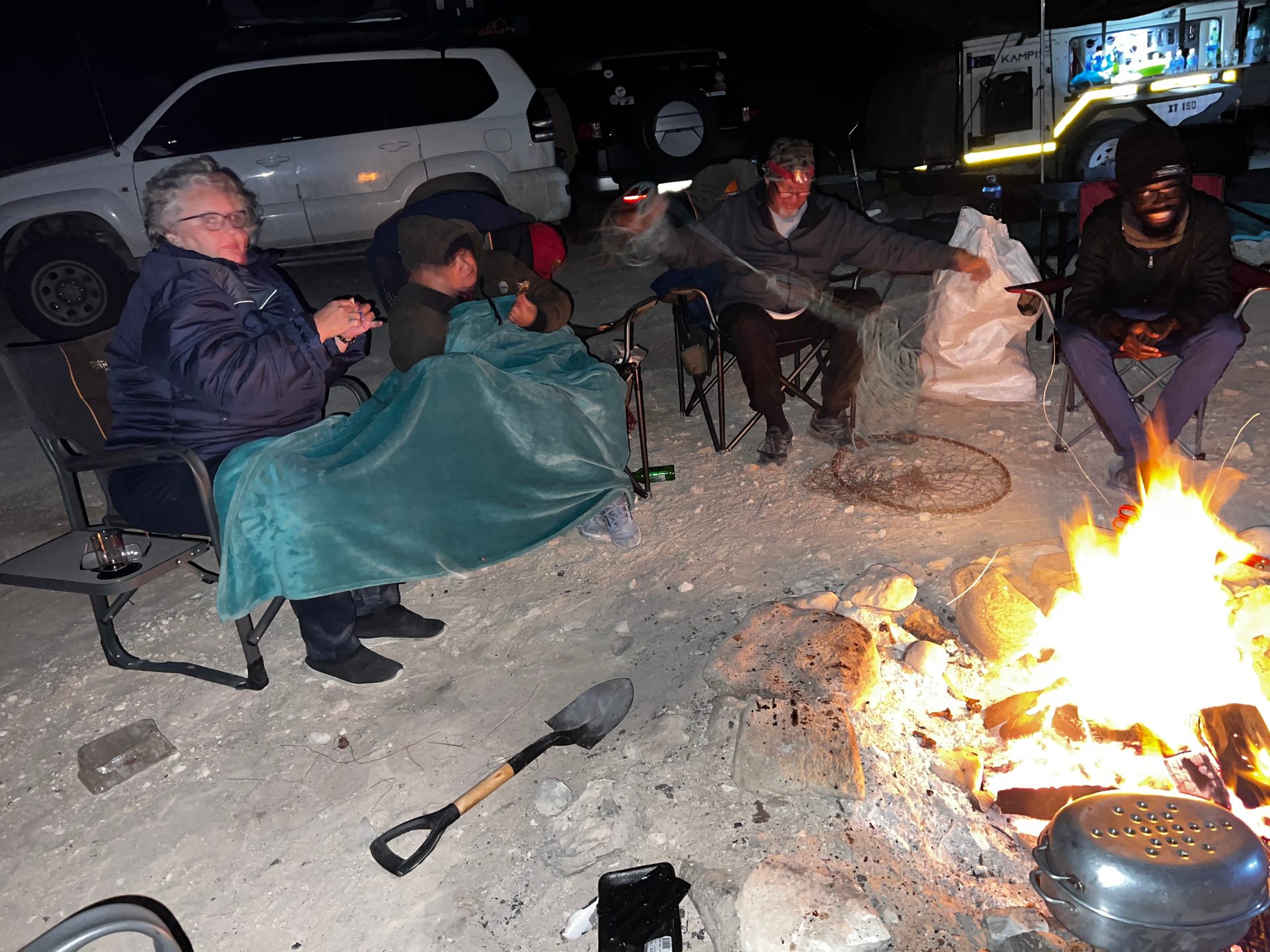
It was cold, but the fire did its job. It became a long night of stories, music, and people settling into the rhythm of being away. I think the fire was finally quenched around 03:00. We did not know it then, but that first night would set the theme for the days ahead.
Day 2 — Wrecks, Work, and Soft Sand
Day 2 was set aside for exploring. We knew there were shipwrecks along this stretch of coast, so the convoy headed out to find them. I joined a little later: work still had to happen, and I found a spot about 12 km from camp with just enough cellphone signal to get through it.
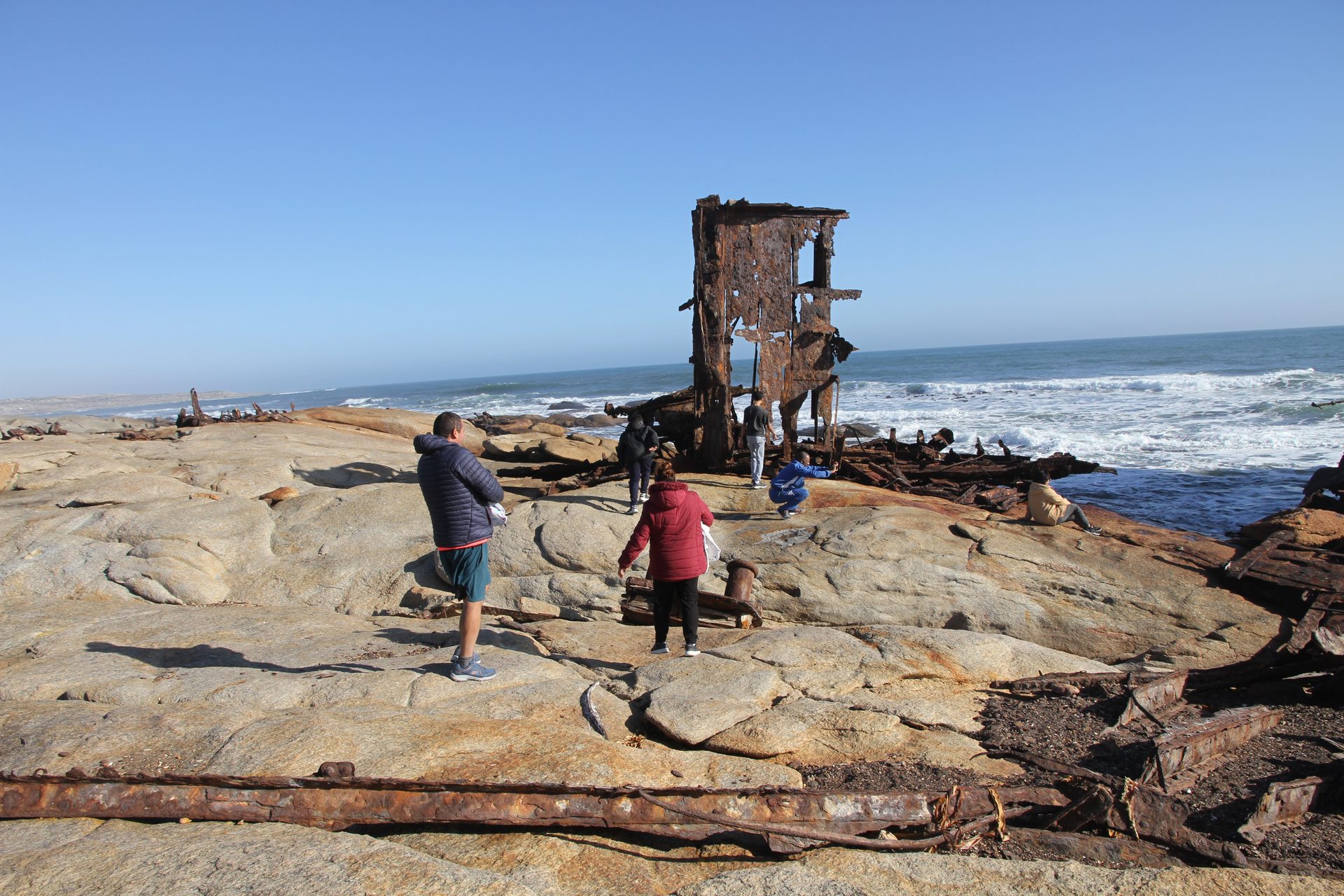
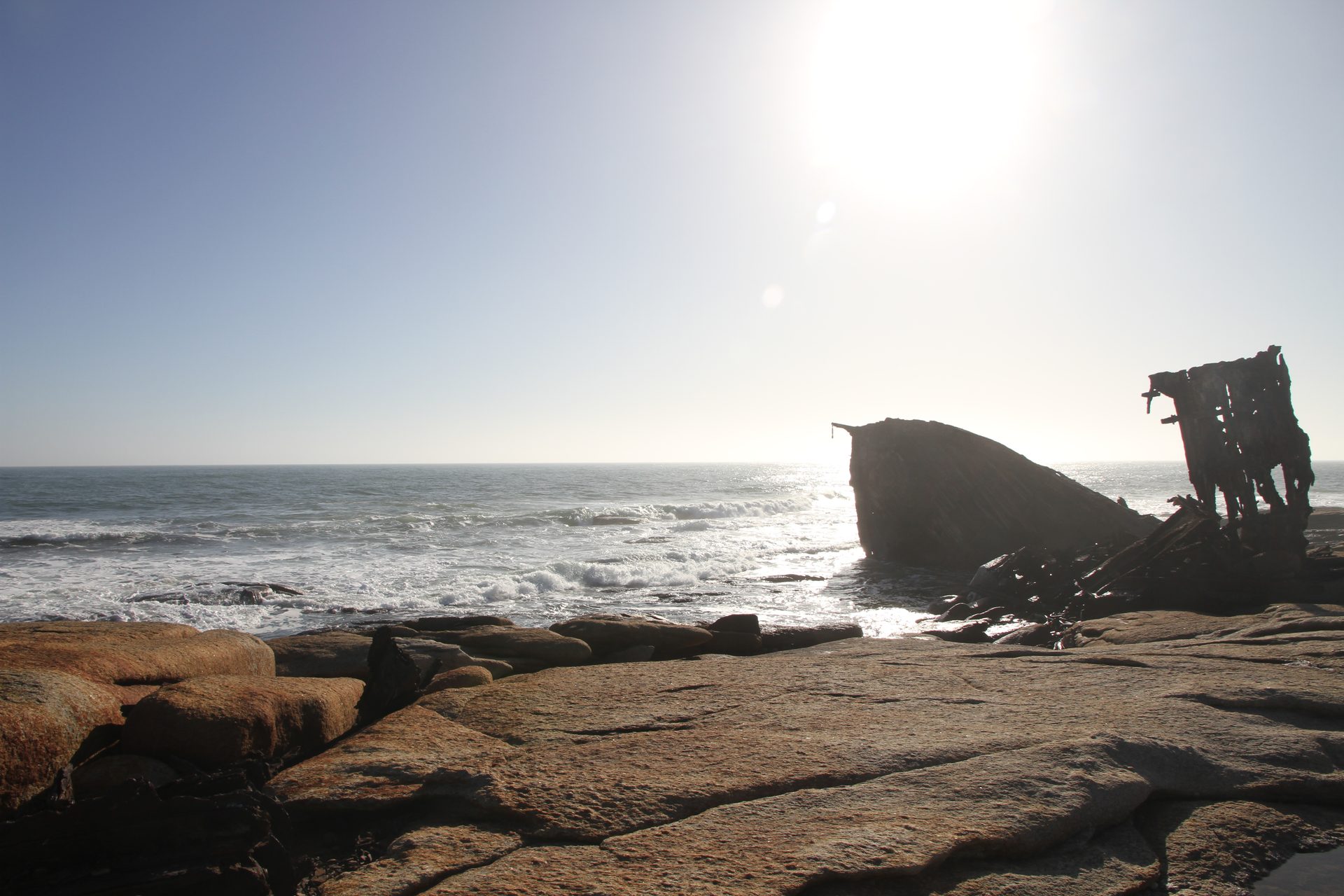
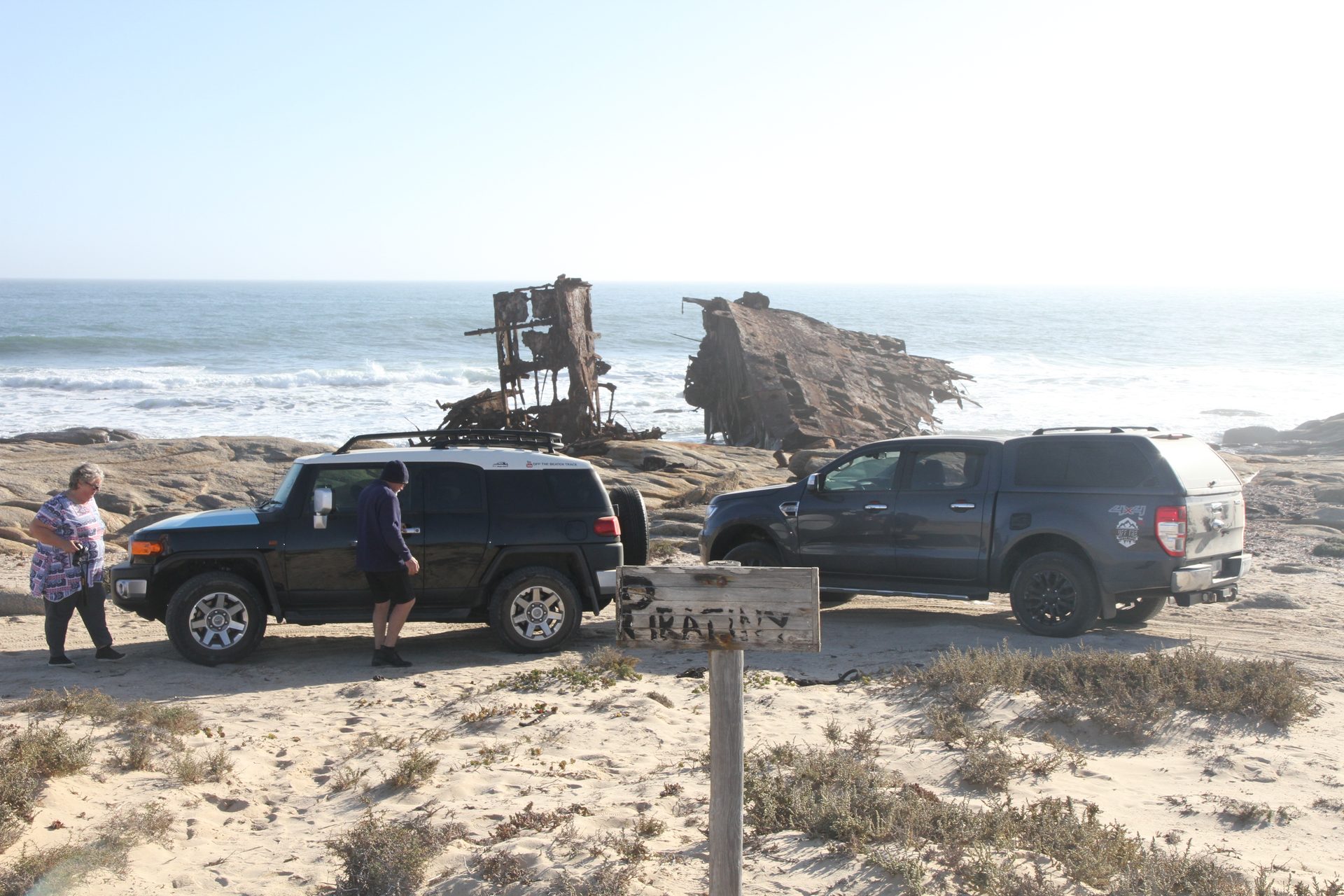
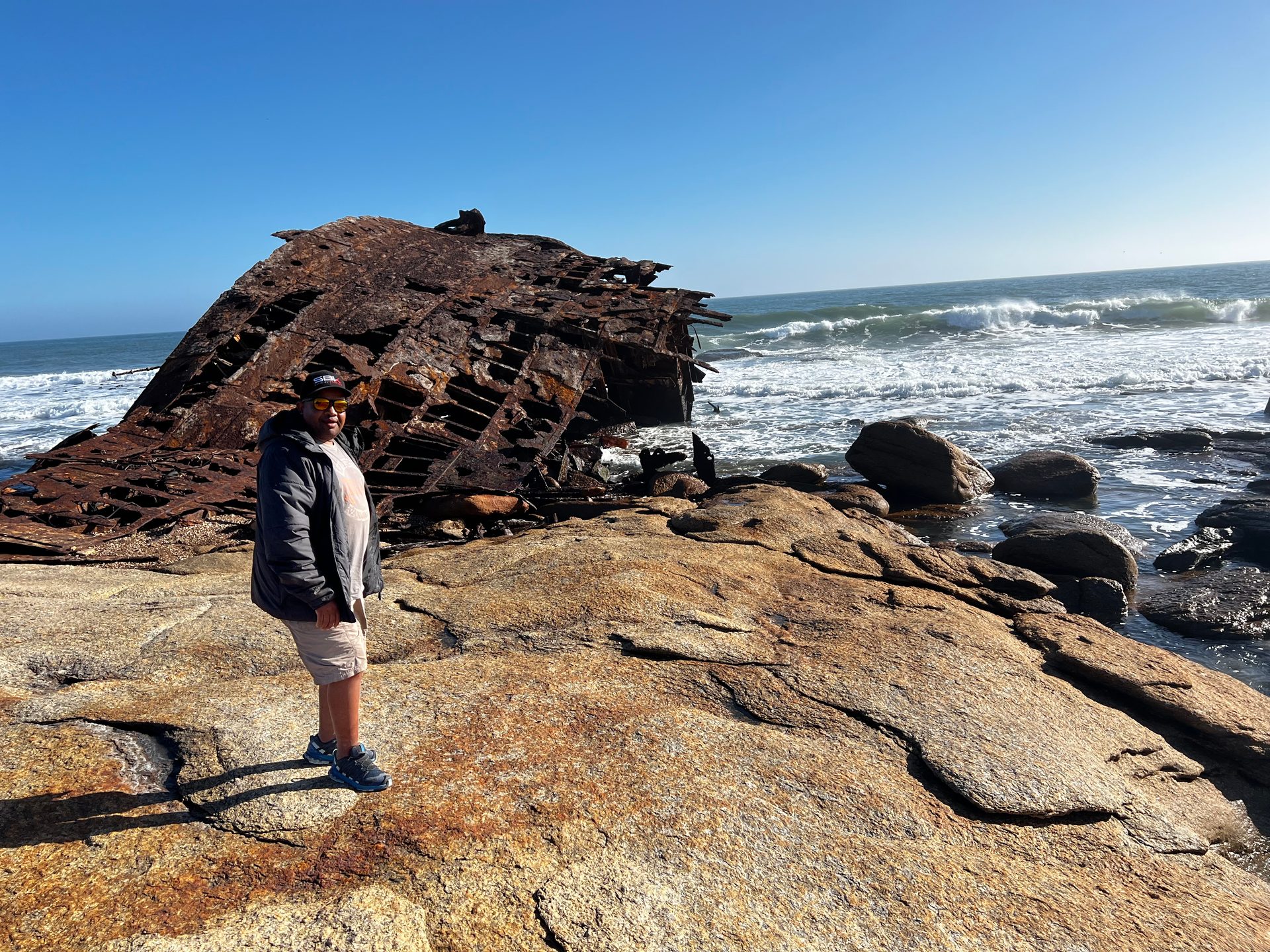
Once I was done, the two-way radios brought me back into the day. I rejoined the convoy at one of the wreck sites, where the old steel sat rusting into the rocks and surf. The group had also visited a ghost town, but I missed that part of the route.
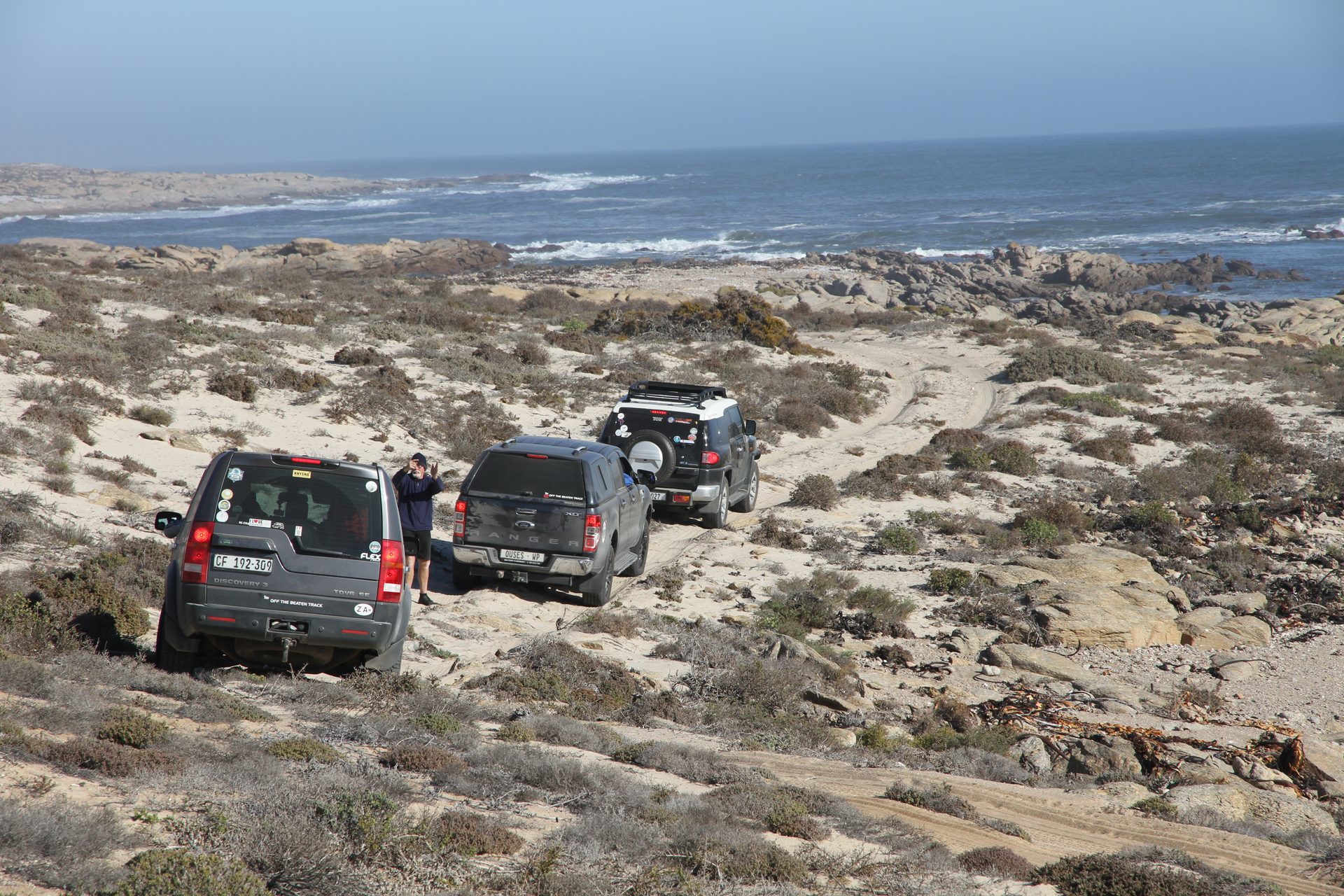
The West Coast made sure the day was not entirely about sightseeing. Ralton’s FJ became the first casualty of the trip when it got stuck in the sand. Bruce was ahead of us, though, and the recovery turned out to be an easy one.
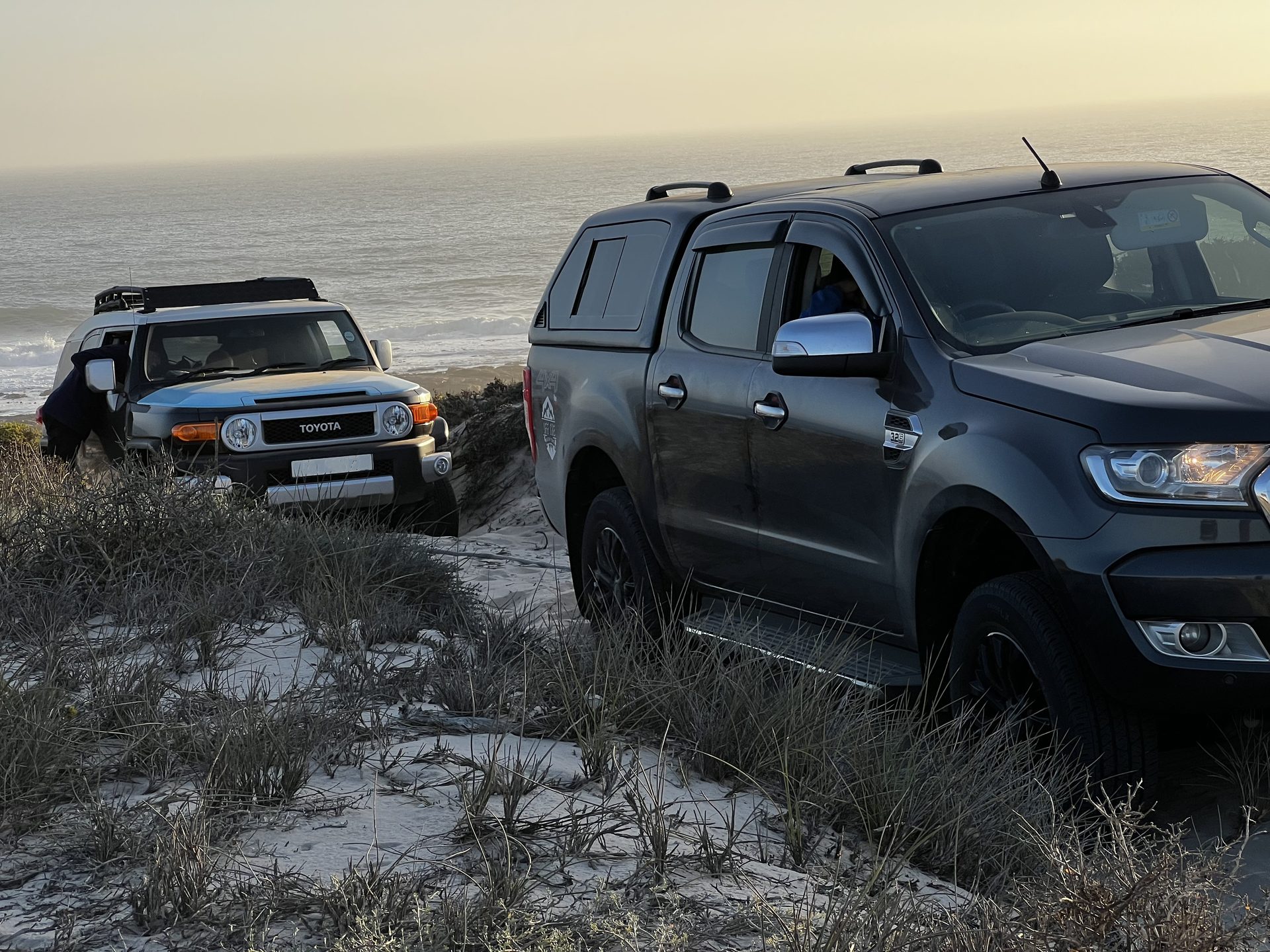
With the FJ free, we turned back toward camp. The next morning we would pack up and move to a different campsite, but for now there was still another night on the wild coast ahead.
Day 3 — Noup, Hondeklipbaai, and Another Recovery
Day 3 opened with another magical morning on the coast. It is a privilege to wake up in a place like this, but my cellphone connection had other ideas. I still needed to work, so I ventured a little farther out and found a spot near the main road. It was close enough to Noup that I knew the convoy would pass through there later.
For an hour and a half, the road stayed completely empty. It was just Sarabi, the laptop, the wind, and the wide-open landscape.
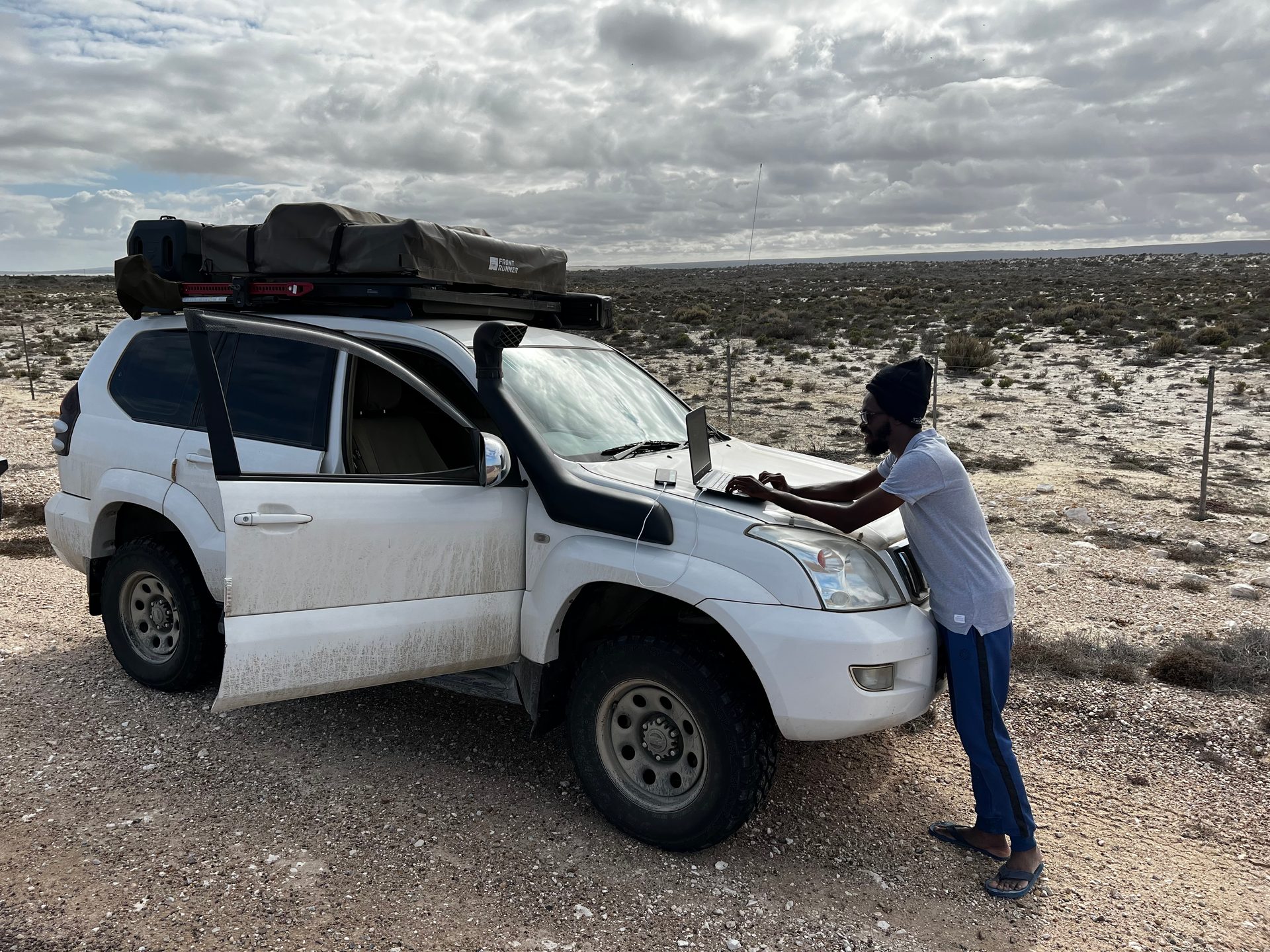
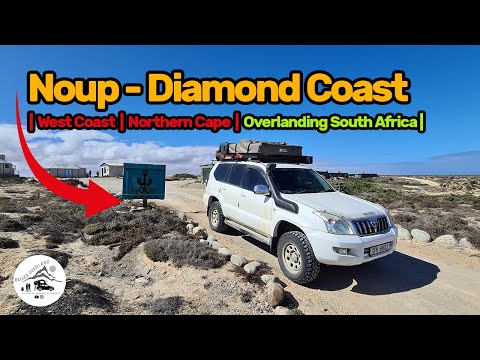
Eventually the convoy appeared, and we regrouped at Noup before continuing to Koingnaas. Some of the group topped up there, then we headed to Hondeklipbaai for lunch.
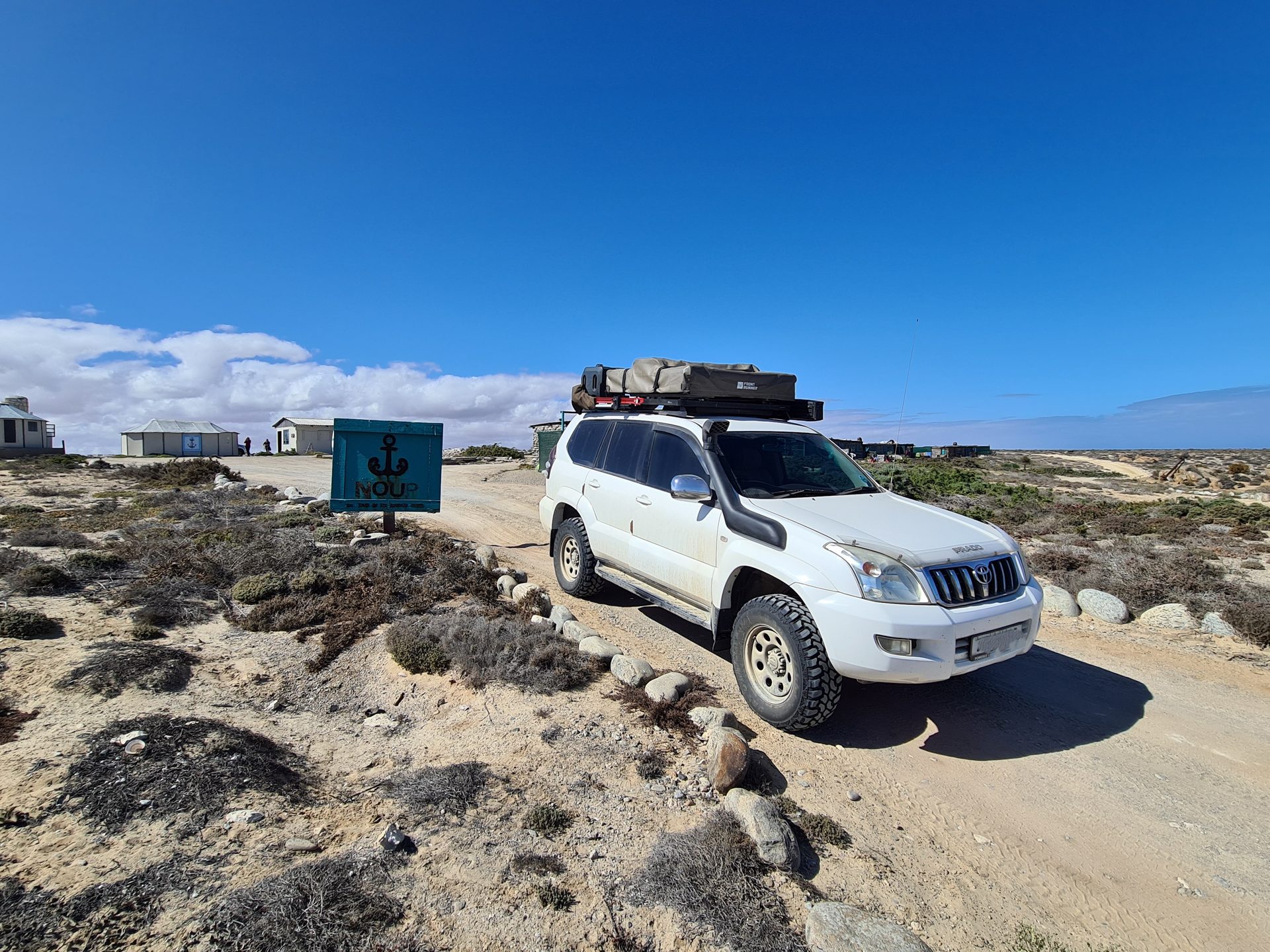
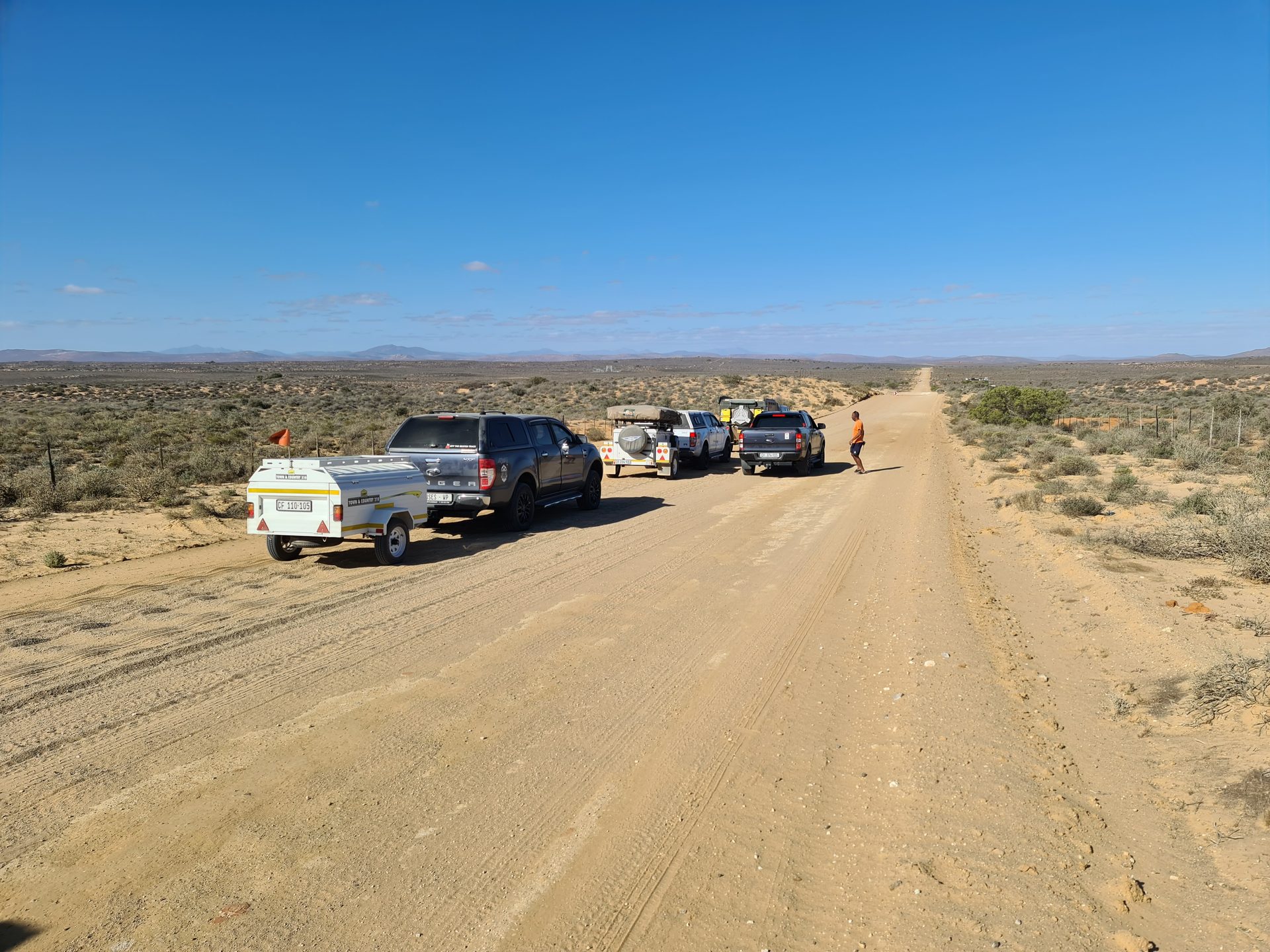
Hondeklipbaai brought us back to the sea. After lunch, the plan was to retrace our tracks for a while and then turn inland to spend our first night in Namaqua National Park.
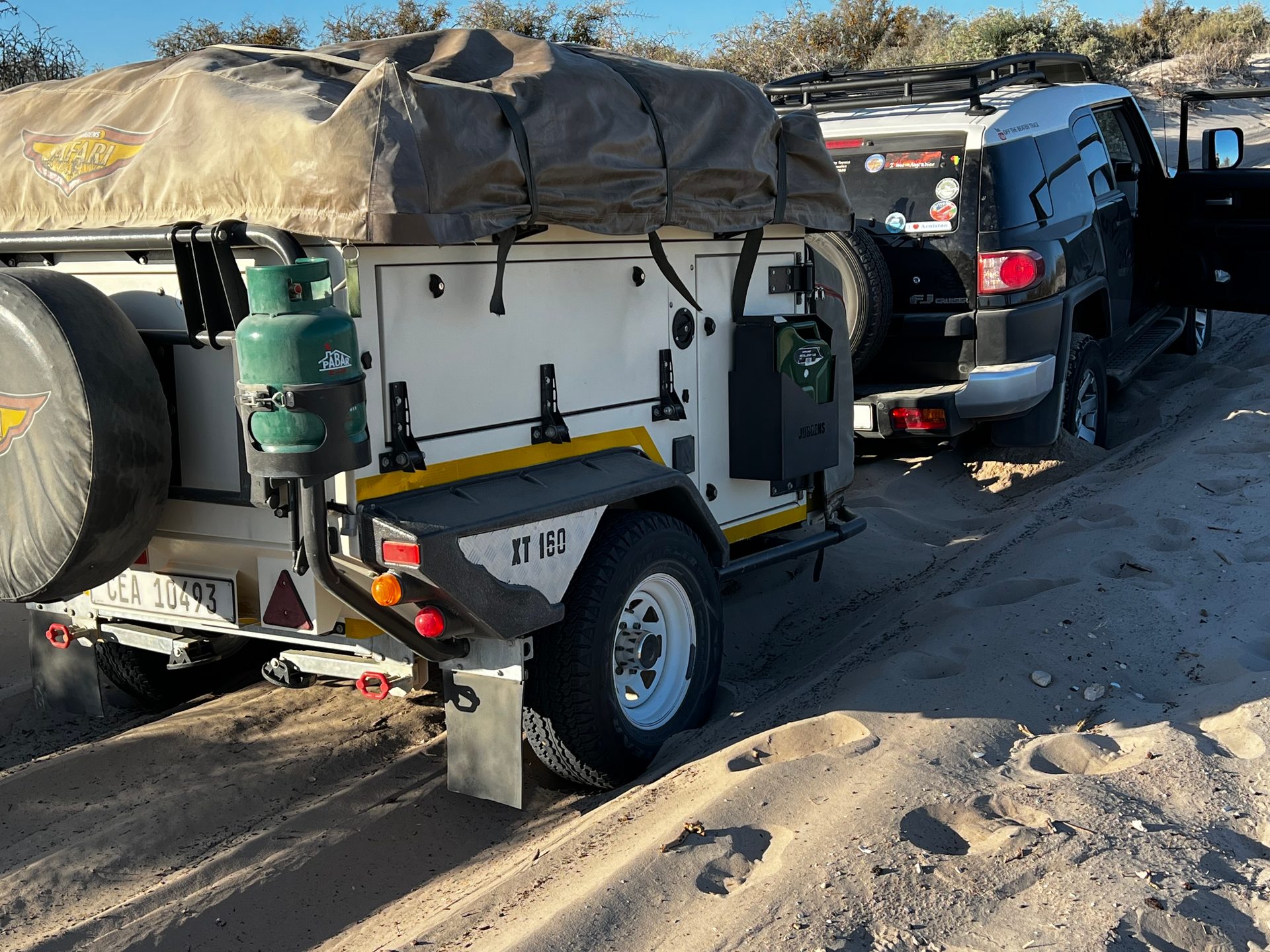
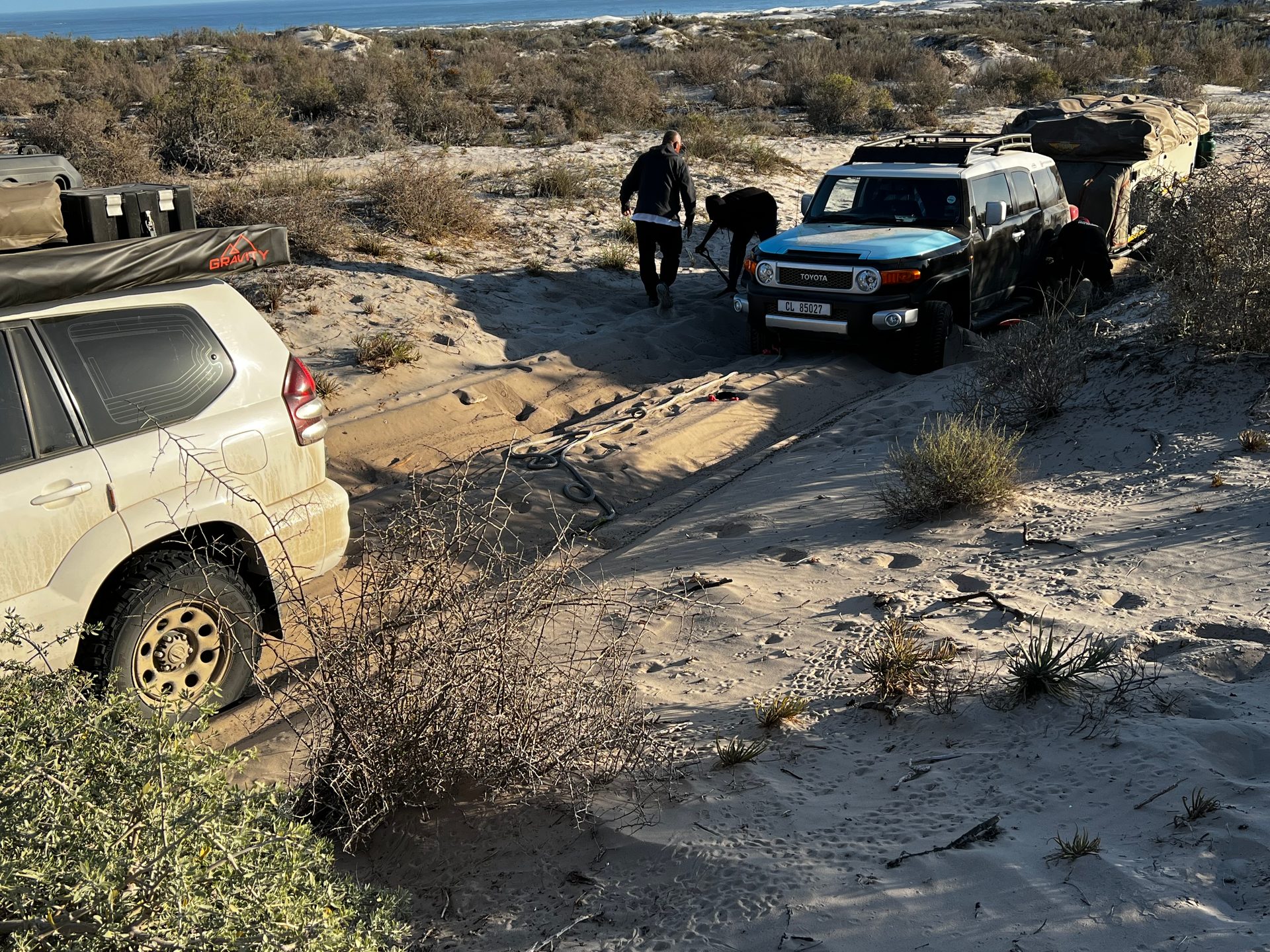
The sand had one more lesson for us before we reached camp. Ralton’s FJ got stuck again, but this time the trailer was still attached. With the extra load, this was not the same easy recovery as the one with Bruce the day before. Sarabi’s V6 was needed, and we got the FJ and trailer moving again.
Once camp was set up in the park, I turned back toward Hondeklipbaai. I still had work to do that evening, so I had arranged a lodge at Honne Pondokkies while we were in the area for lunch. The park staff kindly agreed to let me back in early the next morning, ready to rejoin the convoy.
Day 4 — Taking It Slow
I was back with the convoy early, and Day 4 was exactly the kind of day we needed after the moving, sand, and recoveries of the first few days. There was no big route to chase and no need to go looking for the next destination. We stayed put, enjoyed the surroundings, and took the day very, very slowly.
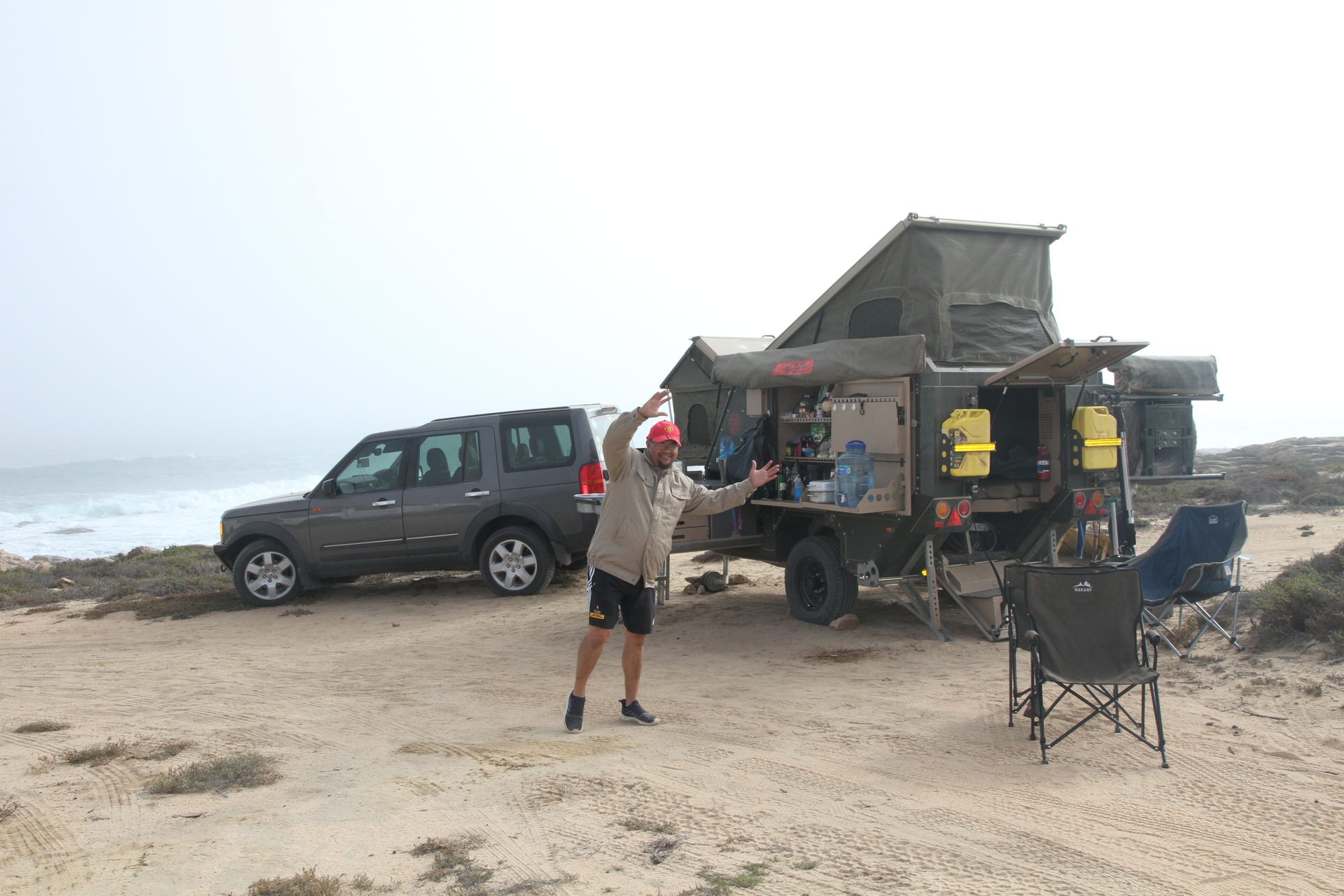
The day unfolded around the camps: food being prepared, gear being sorted, and people wandering between awnings. Portable solar was out, the trailers were open, and there was finally time to enjoy the setups we had brought along.
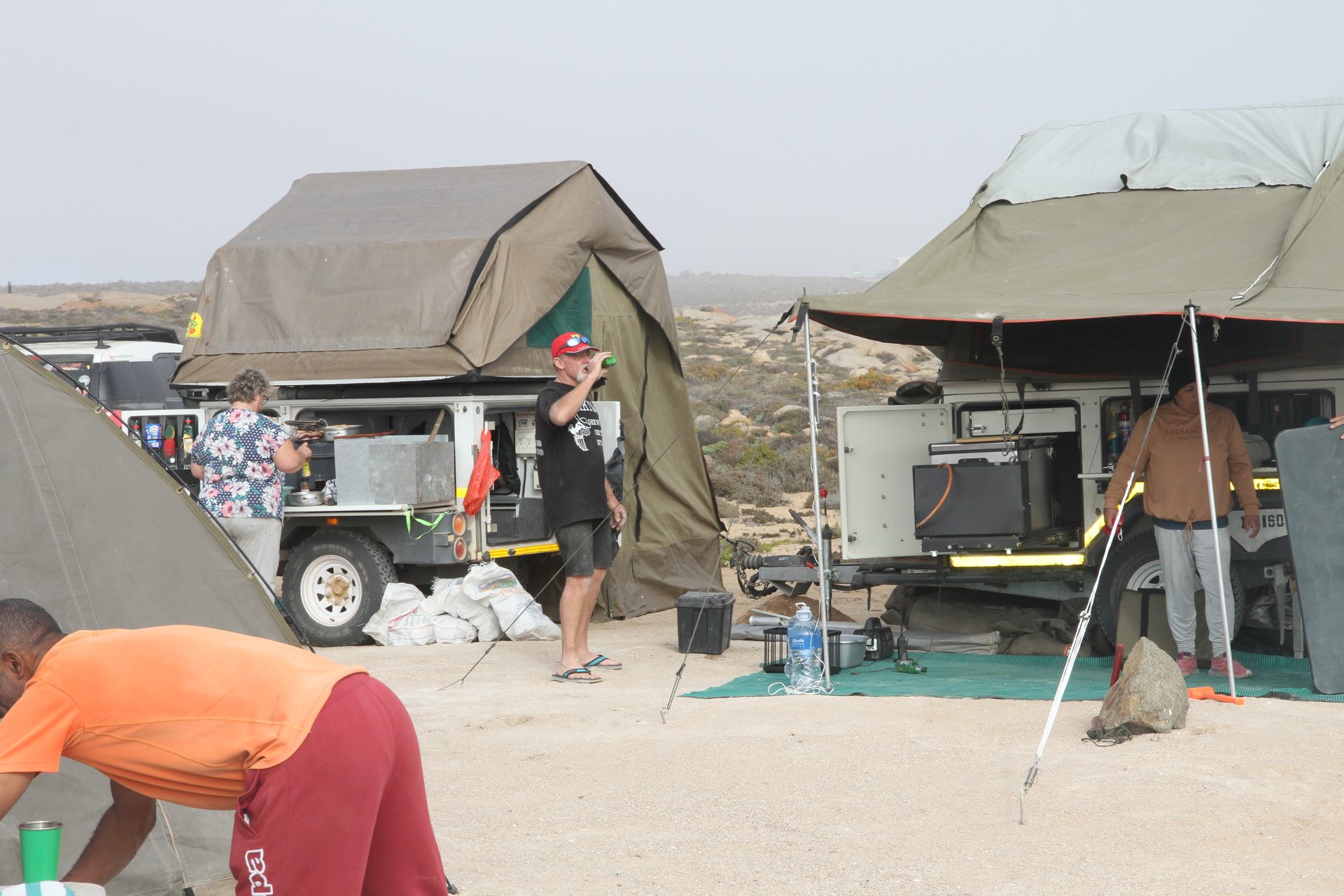
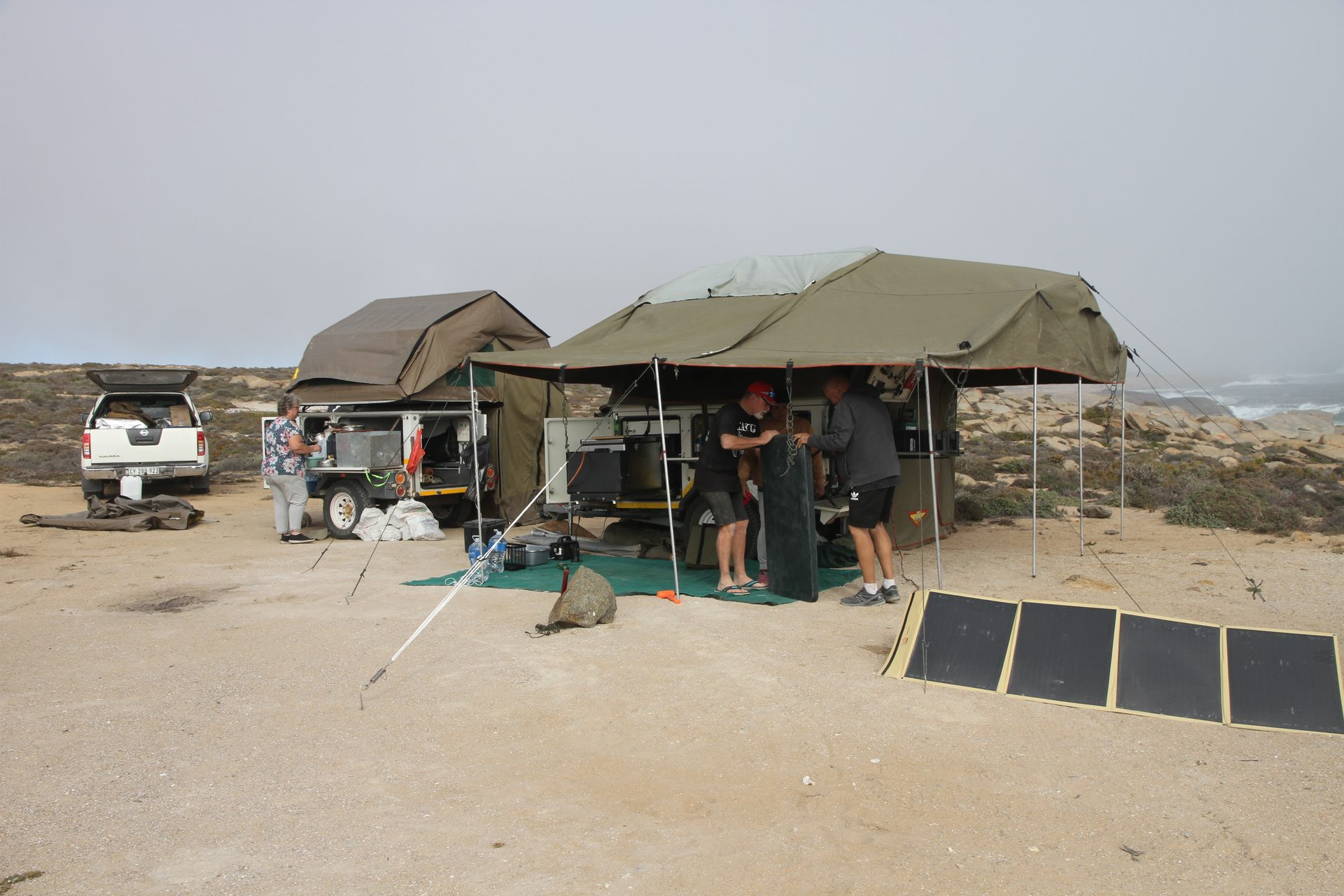
As the light softened, the camp stayed easy and unhurried. Not every day needs an itinerary; sometimes the best part of a trip is simply having nowhere else to be.
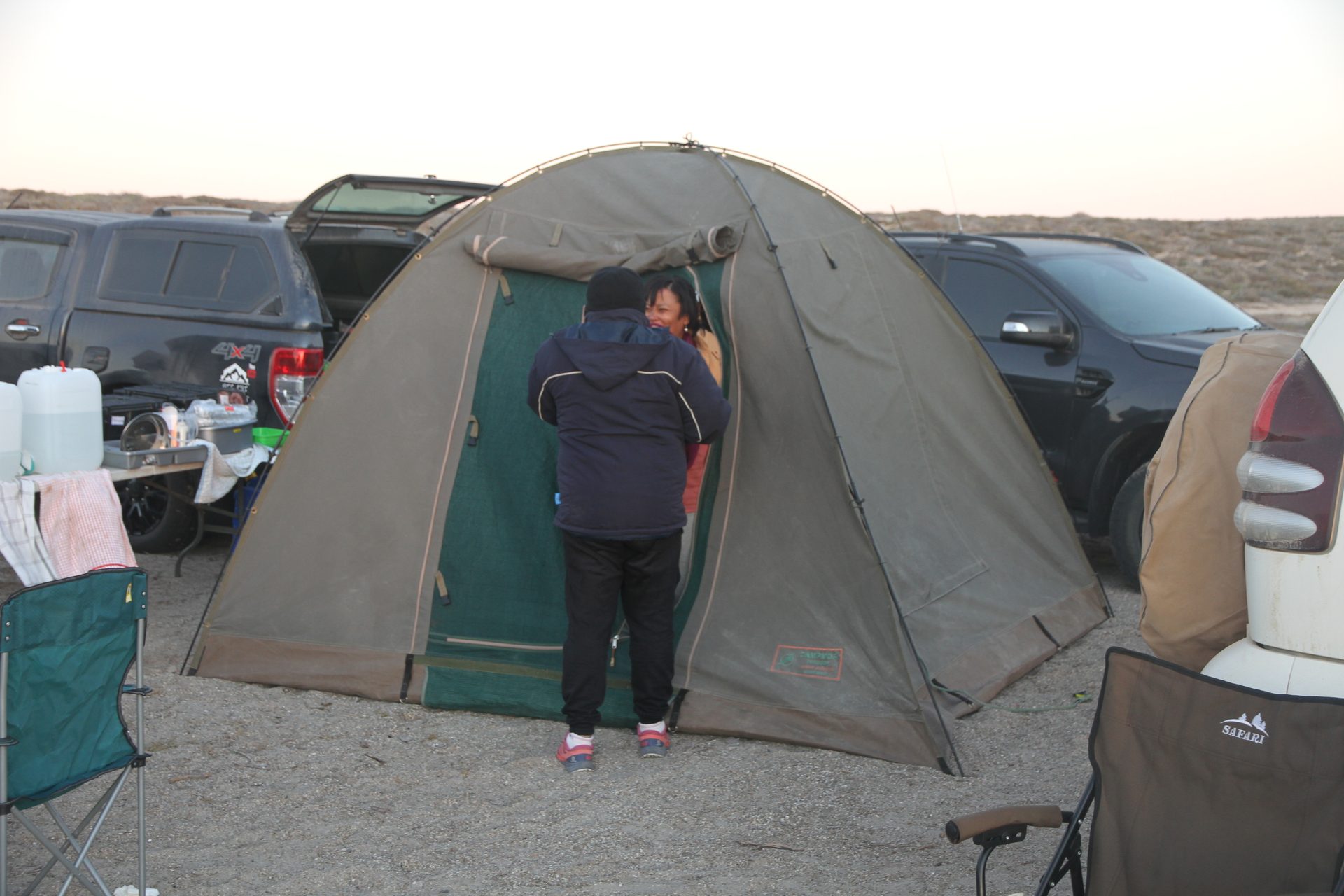
Day 5 — South to Groenriviermond
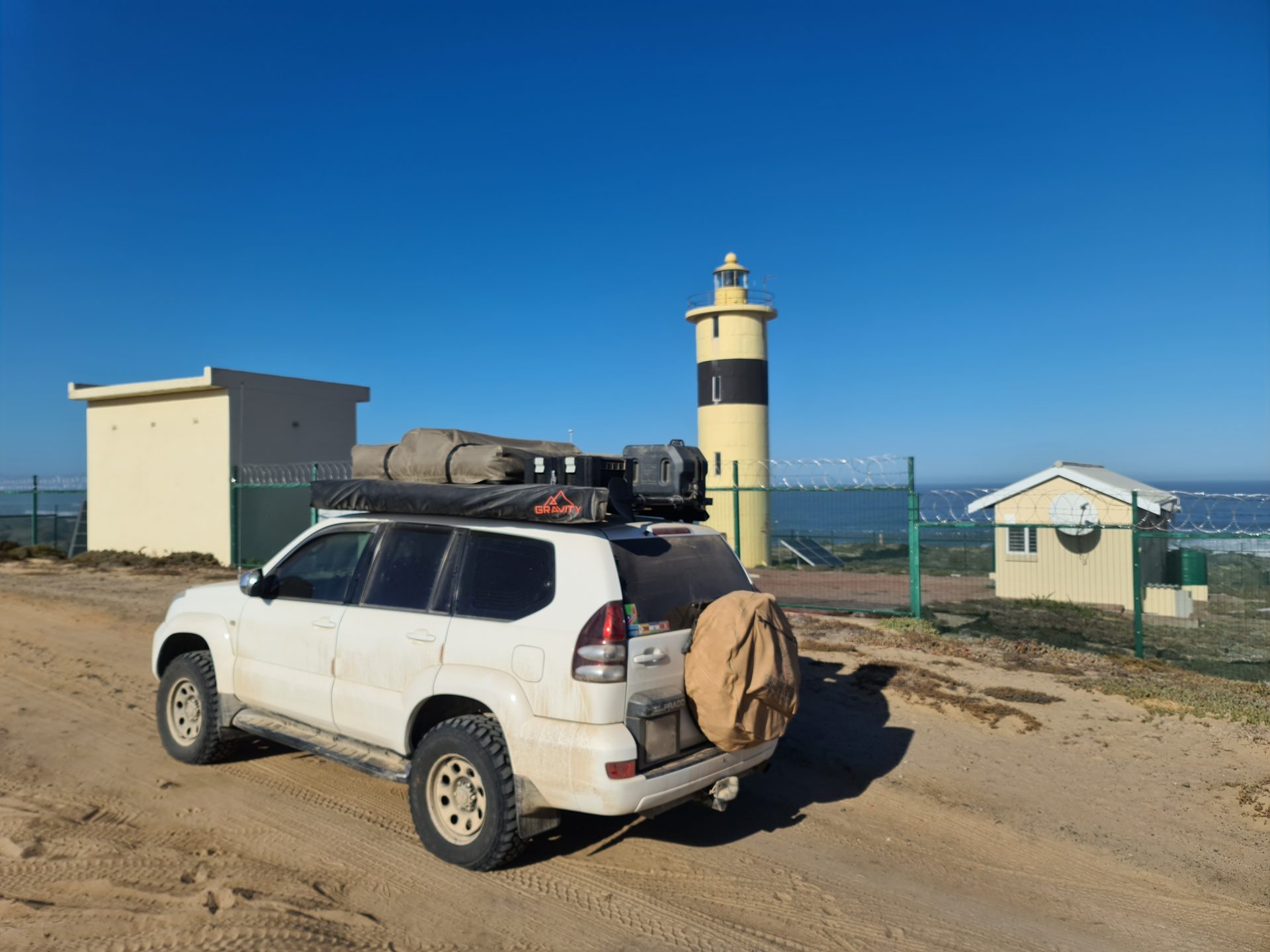
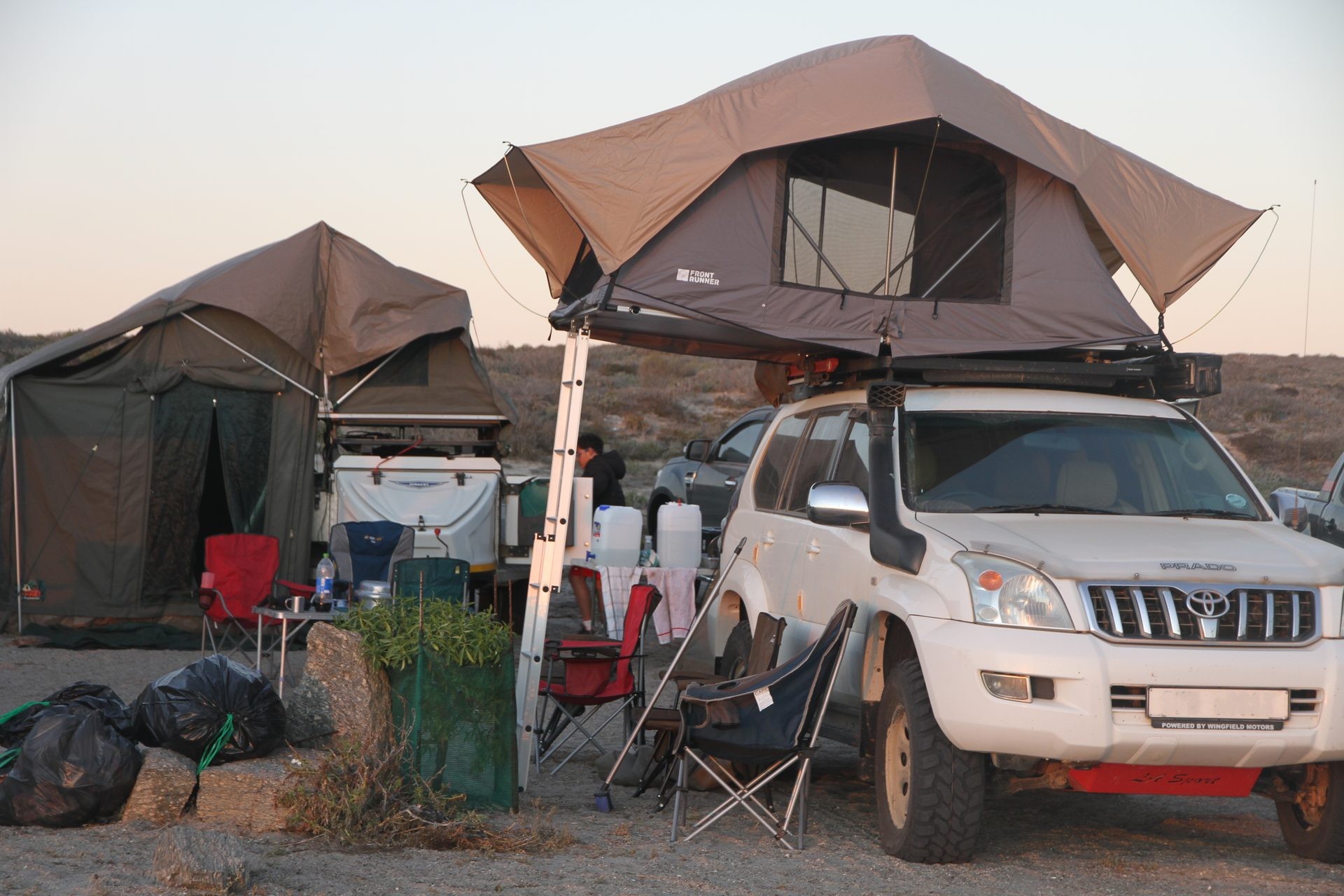
Day 5 was another easy one. We packed up and moved south through Namaqua National Park to our next campsite near Groenriviermond, closer to the lighthouse. There were no recoveries, no vehicles getting stuck, and no reason to rush; just the convoy rolling through the sand with the coast alongside us.
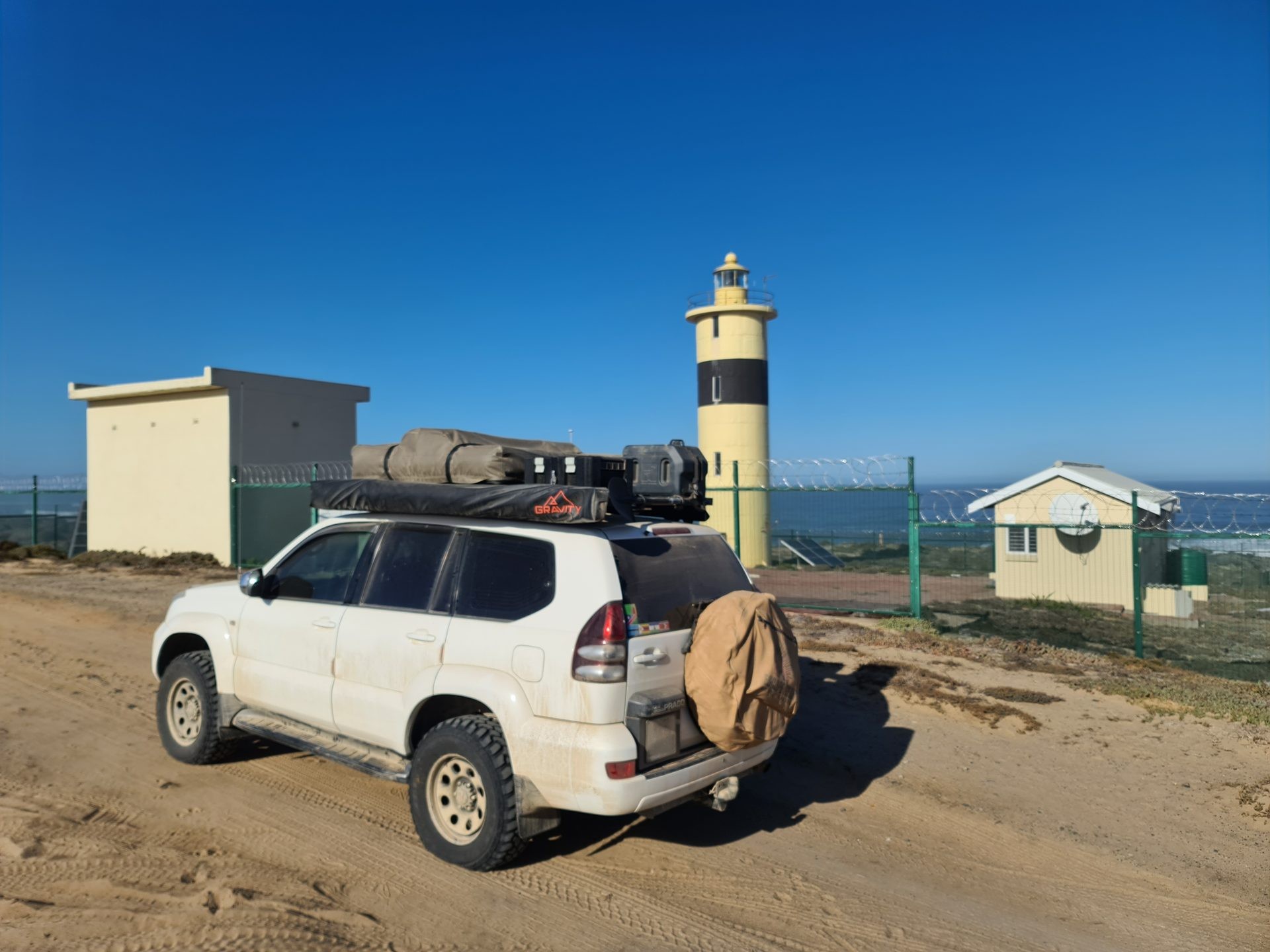
The lighthouse was a proper marker that we had moved on, even though we were still inside the park. The route to camp followed the coastal track through low fynbos and pale sand, opening up every so often to wide views over the Atlantic.
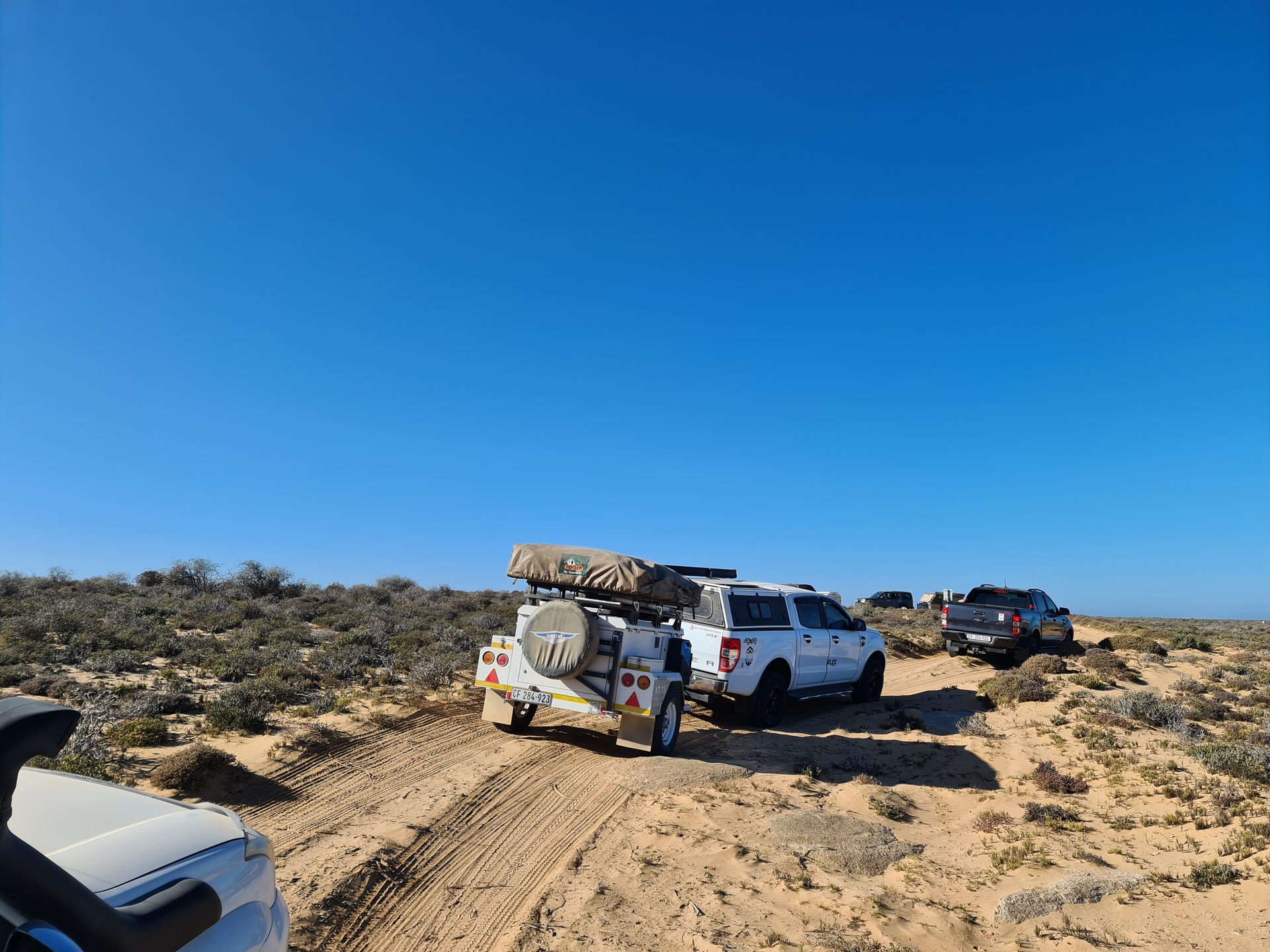
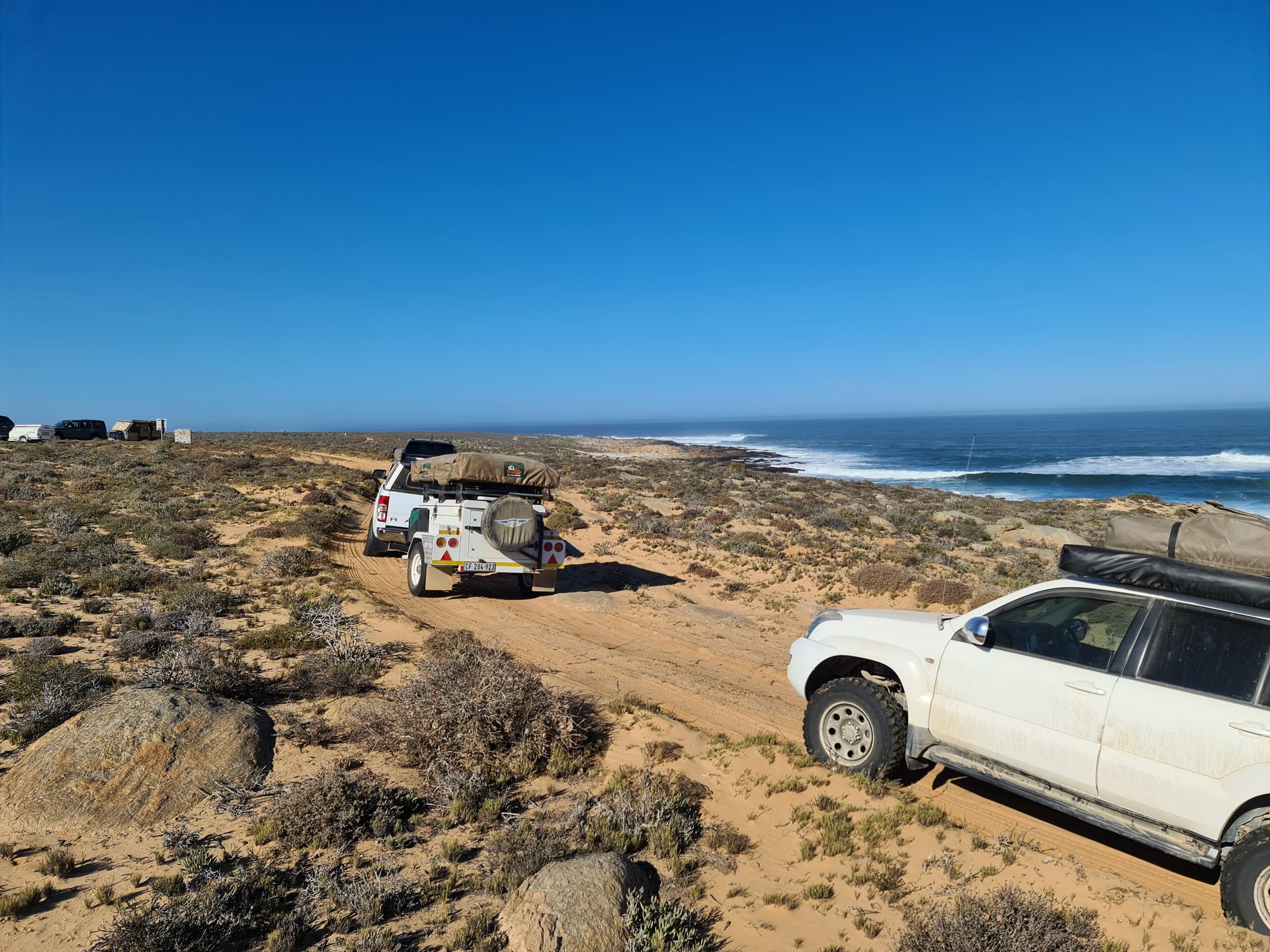
The Groen River Coastal Camp Site sits close to the rocky shore, with sandy beaches just south of the lighthouse. It made a fitting place to stop: ocean in front of us, camp behind us, and a whole afternoon with nothing more demanding than getting comfortable.
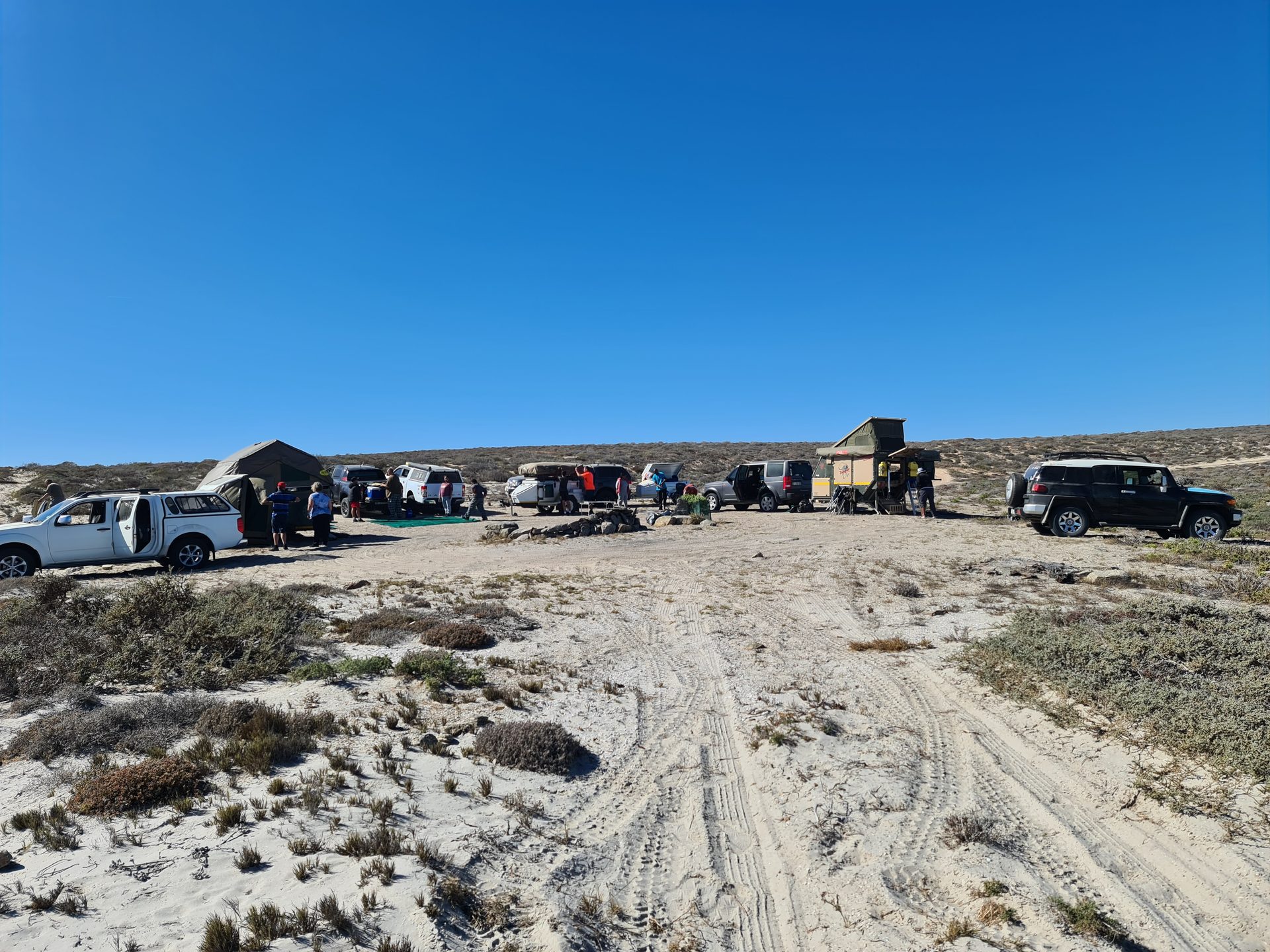
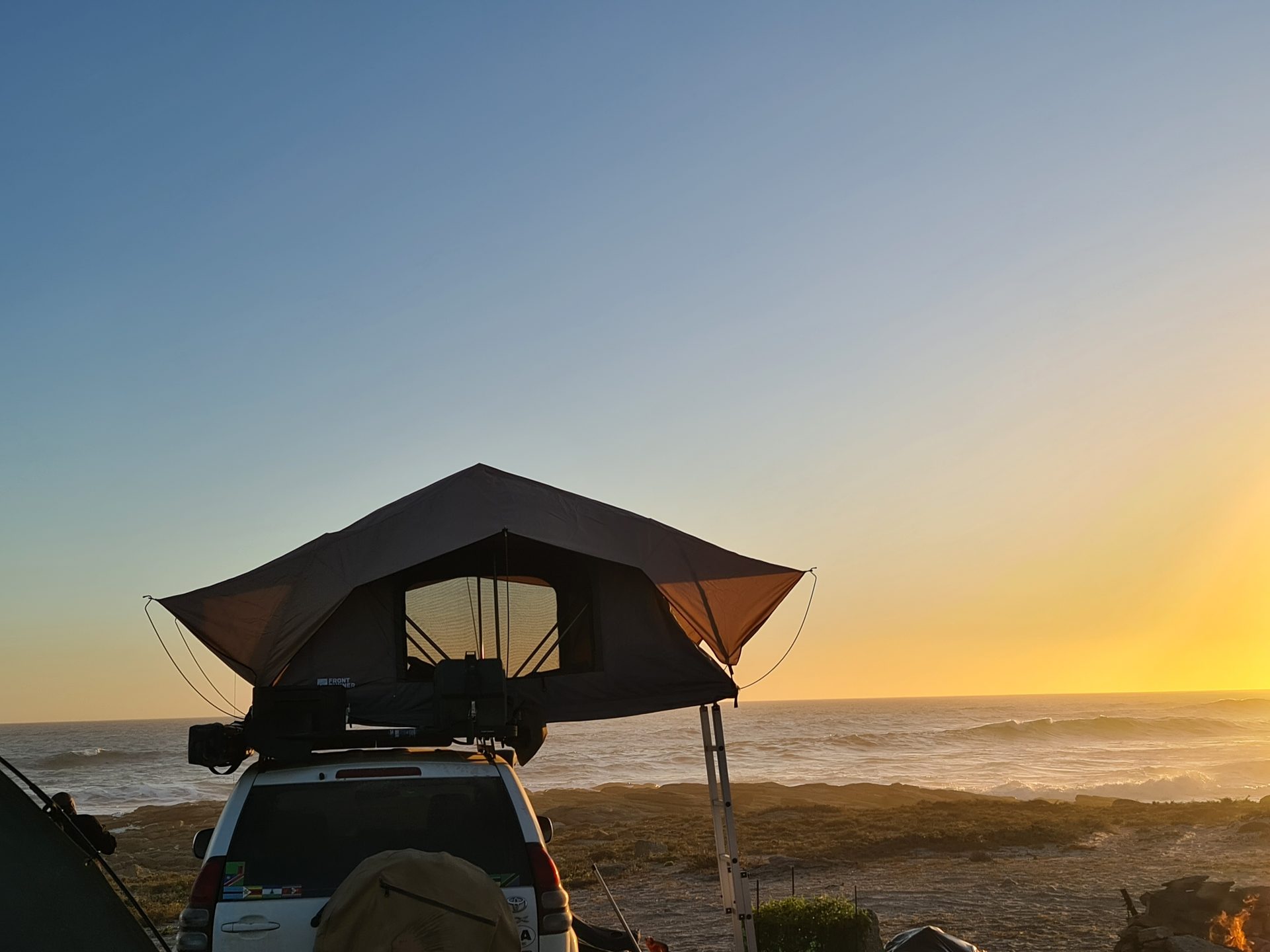
By sunset, the tents were up and the day had settled into the same easy rhythm as the drive. It was one of those uncomplicated days that make a long trip work: move camp, enjoy the view, light the fire, and let the West Coast do the rest.
Day 6 — Waterval, Next Level
On Day 6, we crossed out of Namaqua National Park and into Waterval, a private campsite on this raw stretch of the Namaqualand coast. After several excellent camps inside the park, we thought we had already found the best spots of the trip. Waterval had other ideas.
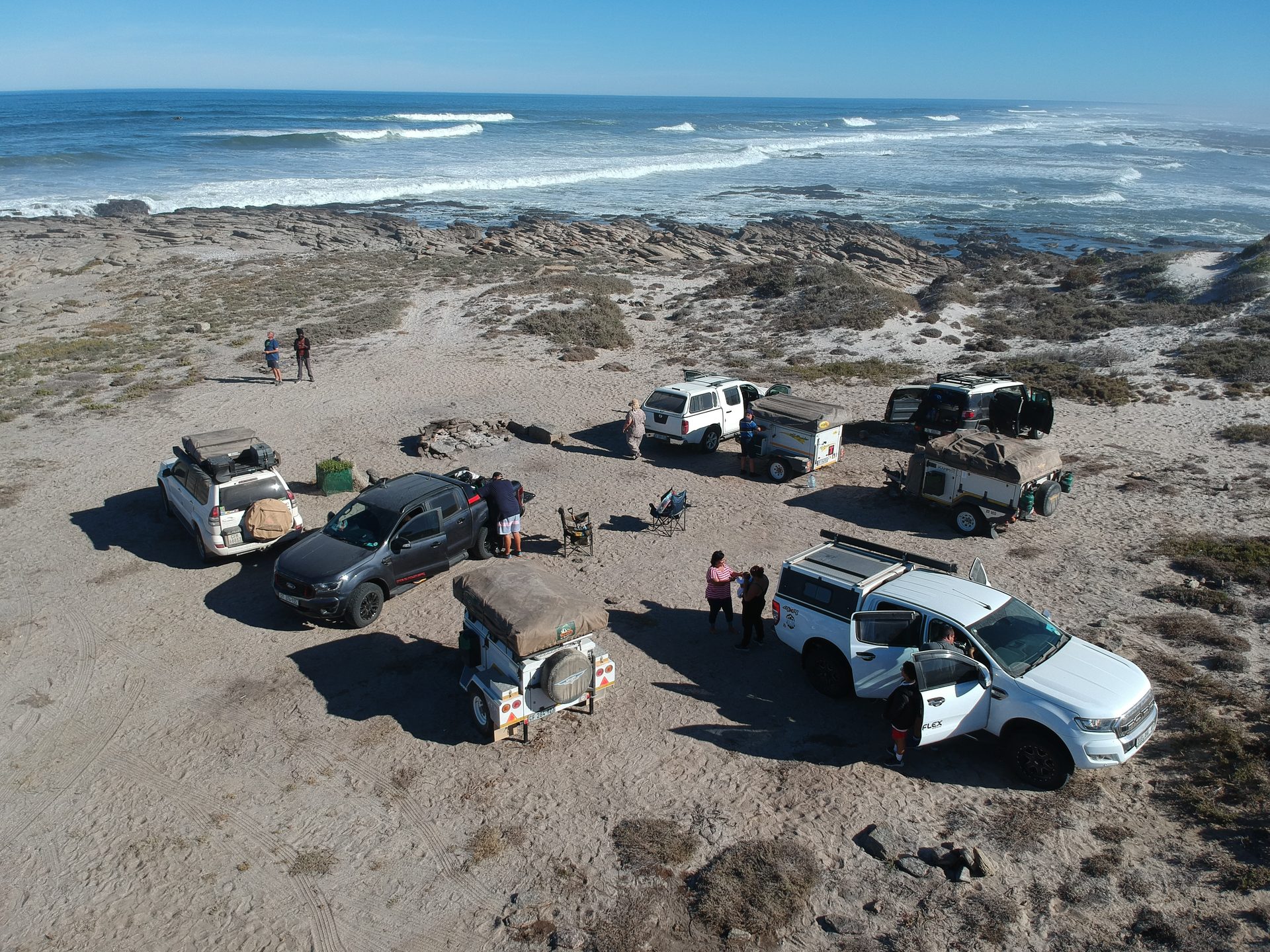
The coastline here is all rock shelves, pale sand, and the Atlantic working away below camp. It felt wonderfully remote, but the private campsite gave us the space to settle in properly for the last two nights. We could park close to the water, hear the sea from camp, and watch the light change over the rocks.
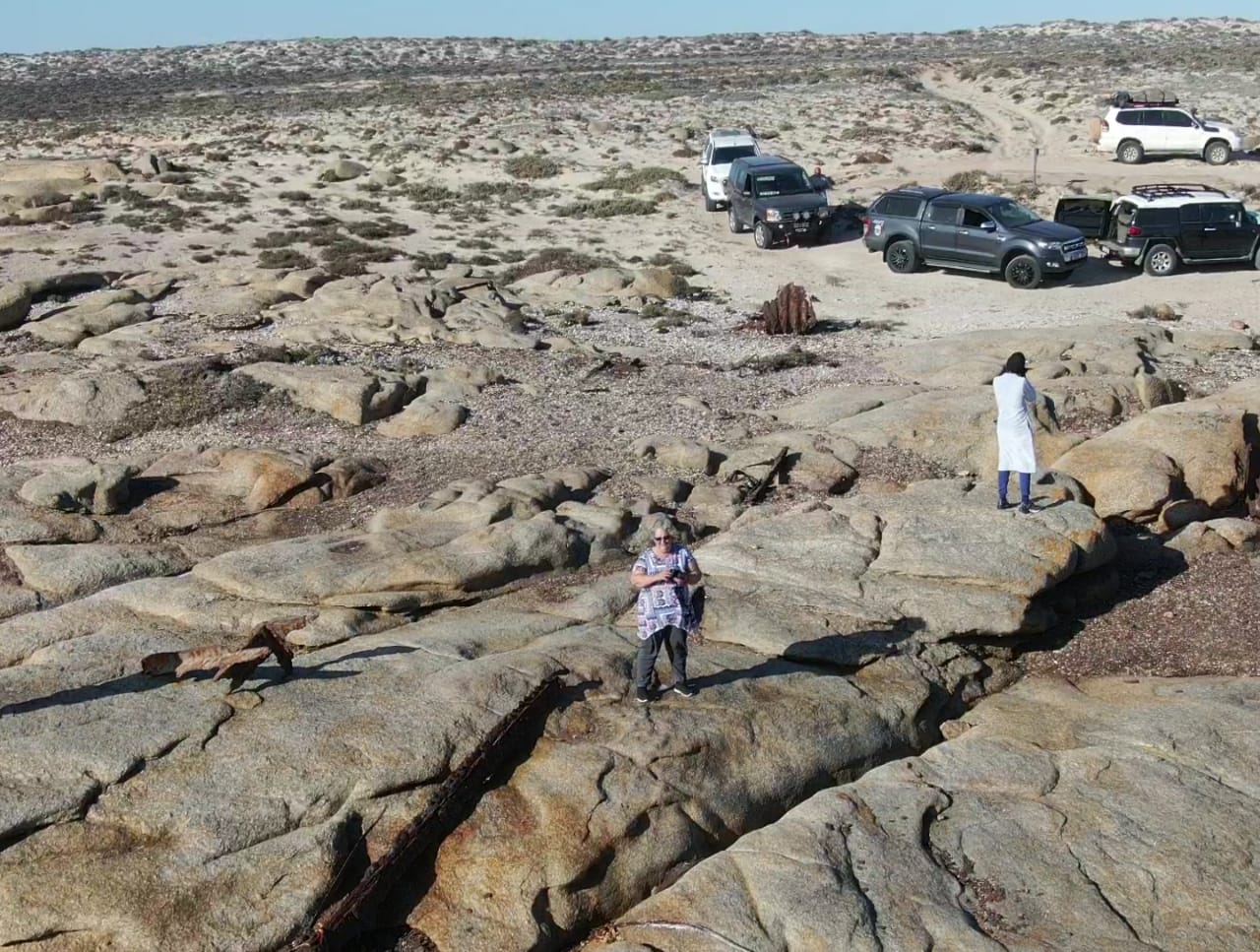
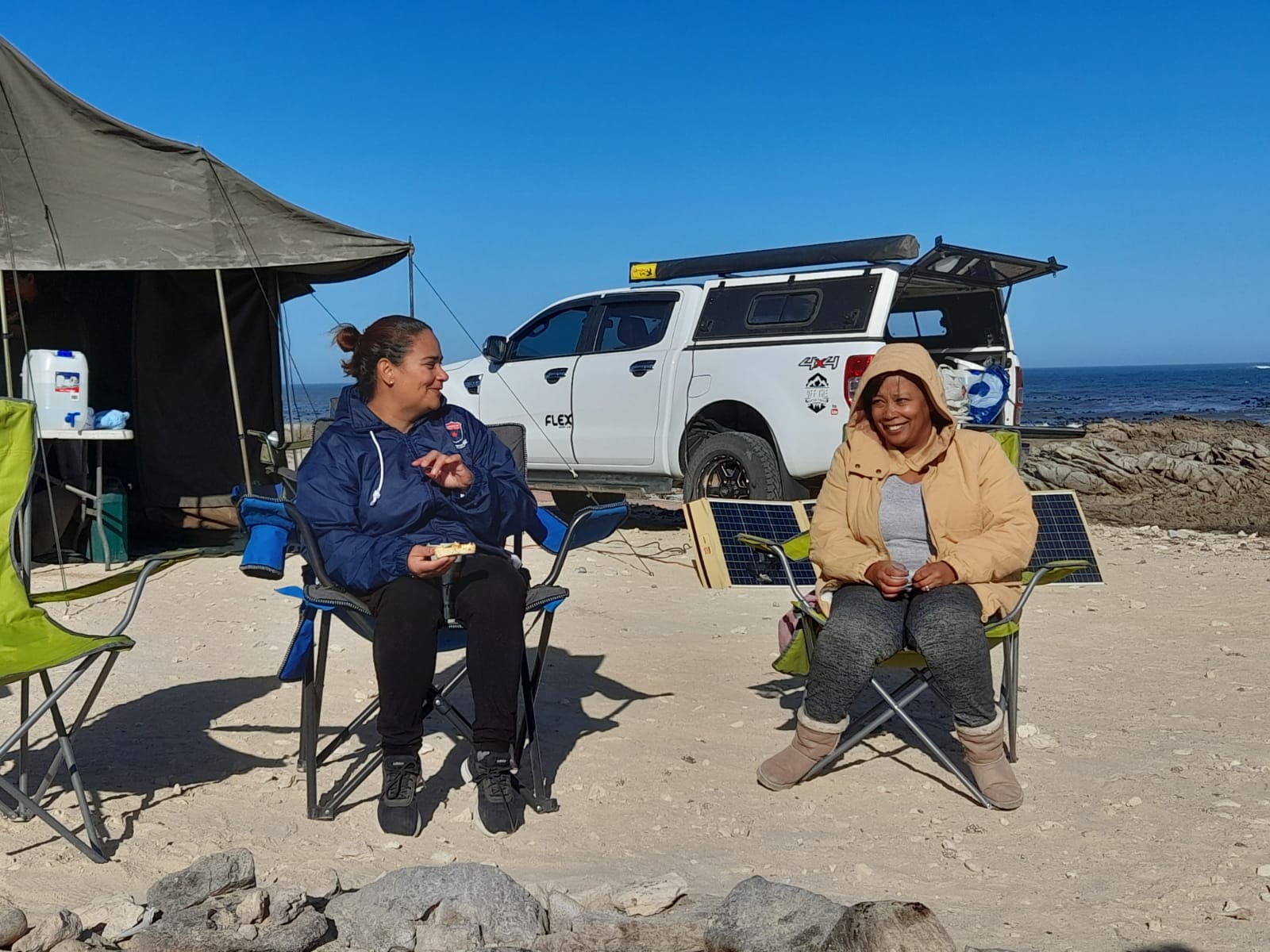
Once camp was up, there was nowhere else we needed to be. The day became a mix of coffee, camp chairs, solar panels, and long conversations while the ocean did its thing in the background.
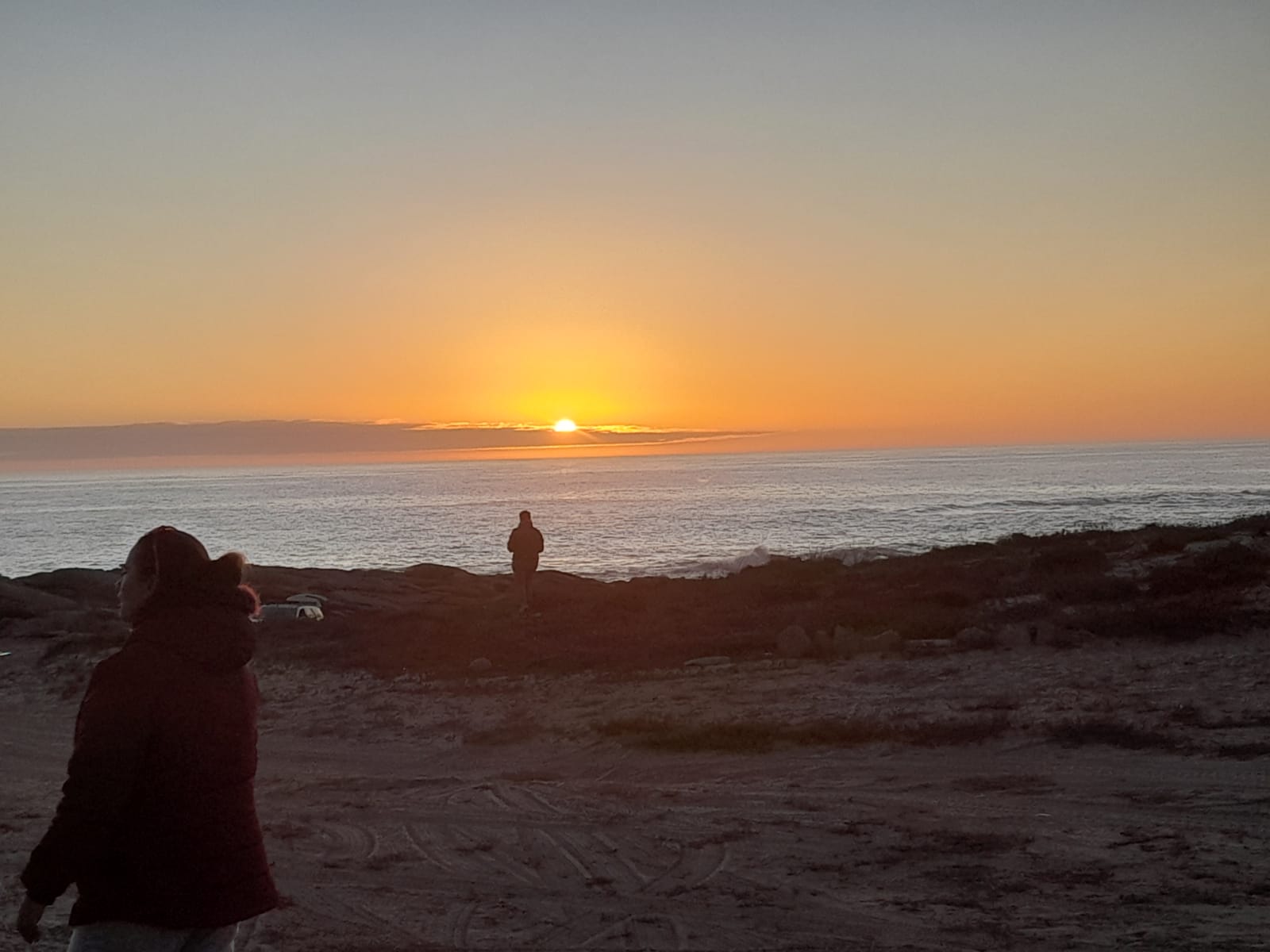
As the sun went down, Waterval became even better. The whole coast glowed, the sea kept rolling in, and it was hard to believe we had only booked two nights here.
Day 7 — Not Long Enough
We could not get enough of Waterval. For our last two nights, it was the kind of camp that made us slow down completely and reconsider the plan for next time. The scenery, the space, and the sound of the ocean right below us put it on another level.
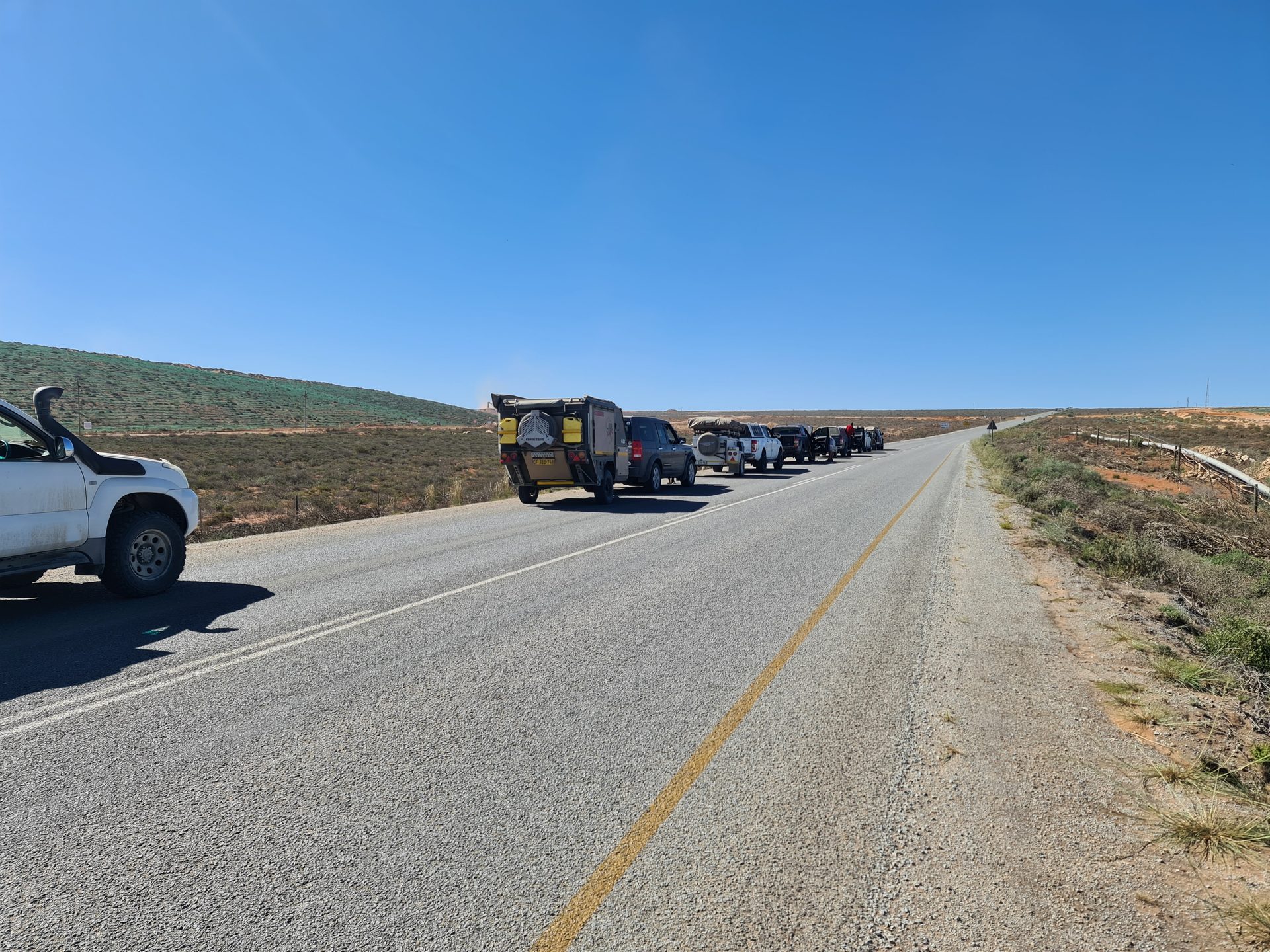
Eventually, though, it was time to pack up. We left the coast and headed back past Namaqua Sands, with the convoy stretched out on the road and the trip beginning to feel like it was drawing to a close.
Waterval was one of those places that stays with you after the dust has settled. We should have booked longer, and next time we will.